G7 leaders back Ukraine, plan greater pressure on Russia — SkimNews

Get the Geopolitics newsletter
Daily geopolitics — wars, elections, sanctions, the diplomatic moves that move markets. Free.
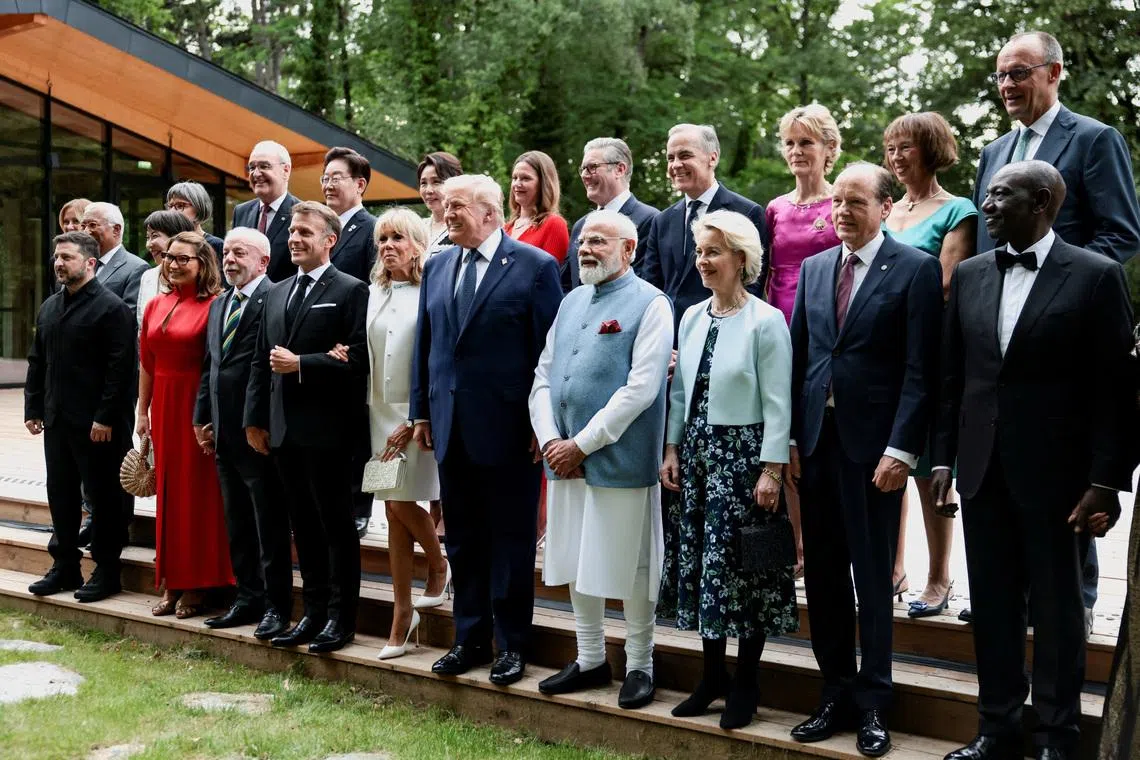
- G7 leaders issued a joint statement on June 17, 2026 supporting Ukraine's territorial integrity and agreed to increase sanctions on Russia — a unity notable given past friction with the Trump administration on how to end the war.
- Trump called his June 16 meeting with Zelenskyy and other G7 leaders "very good," sparking optimism for a peace deal; Zelenskyy said he could meet Trump again that same Wednesday.
- G7 leaders welcomed the preliminary US-Iran peace deal Trump signed on the summit's eve and pledged to help implement it, while also committing to diversify energy supply routes and reduce dependence on the Strait of Hormuz.
- France is pushing G7 partners toward a critical minerals statement with price supports, market standards, subsidies, and guaranteed purchases aimed at reducing Western reliance on Chinese rare earths, tungsten, and antimony — though diplomats cautioned any measures would be "first steps."
- China's 2025 export curbs on rare earth permanent magnets — which nearly halted some Western industries — exposed deep supply chain dependence in energy, defense, and tech sectors and directly seeded the new G7 agenda item.
- The EU recorded its largest-ever trade deficit with China of over €360 billion last year, framing France's diagnosis of global trade imbalances: "China produces too much, the U.S. consumes too much and the Europeans invest too little."
- Anthropic CEO Dario Amodei and OpenAI's Sam Altman are expected to attend Wednesday's G7 lunch, where leaders will discuss AI liability and how AI determines what is presented as true or false.
Why it matters: With the EU logging a record €360 billion trade deficit with China and Beijing having weaponized rare earth exports in 2025, France has converted the G7 into a coordination platform for a multi-front economic pushback — from critical mineral subsidies to a US-proposed trading bloc — aimed directly at breaking Chinese industrial dominance that took decades to build.
Ask SkimNews