Open-weight models rival Claude, GPT on coding tasks — SkimNews

Get the Tech newsletter
Daily tech — startups, AI labs, chips, the launches that shape the next decade. Free.
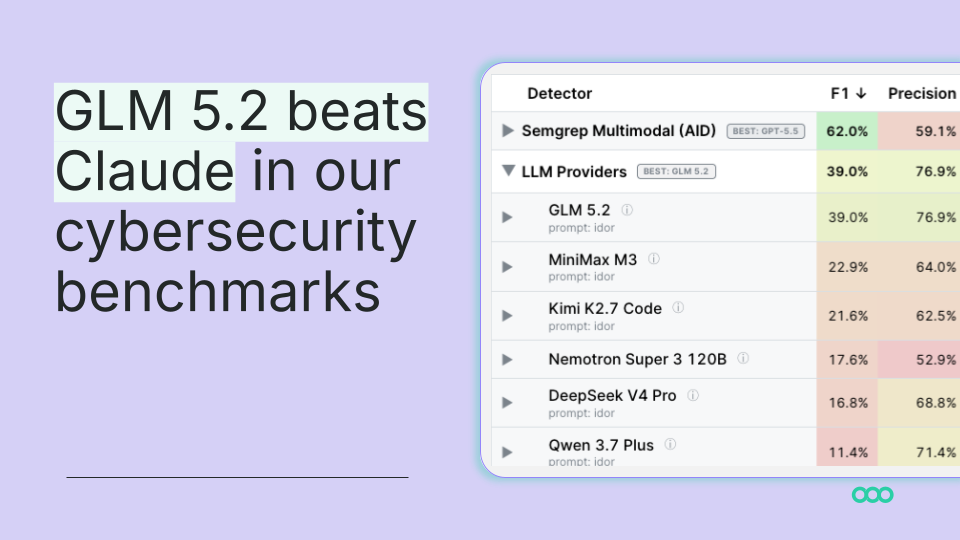
- GLM-5.3 performs "basically on par with Claude Opus 5.5" for software engineering per the author's hands-on testing, while GLM-5.3-Flash (comparable to Claude Opus 4.8) is small enough to run locally on a Mac Studio with 512GB of RAM.
- OpenAI's Trusted Access for Cyber and Anthropic's Cyber Verification Program offer less-policed model versions, but access is concentrated among US cybersecurity firms and military contractors, with eligibility decided by Sam Altman and Dario Amodei "in consultation with the Trump Administration."
- Z.ai's ZCode coding harness was recently caught silently uploading local source code repos to Alibaba Cloud without consent, prompting the author to warn against making accounts with Z.ai directly despite the quality of its open-weight models.
- Tinfoil offers private GLM-5.3 inference via secure enclaves at $1.80/$0.80/$5.75 per 1M input/cached/output tokens, while Maple AI (which runs on Tinfoil in the background) provides a $20/month Pro plan aimed at consumers.
- Mistral, the only major non-Chinese non-American frontier lab, released an open-weight model called Mistral Large 4 ("Le Chonk") and is positioned by the author as more reasonable to trust with data than US or Chinese rivals.
- The author describes American frontier lab leadership as "unhinged lunatics" who believe they're "creating the Machine God" and are willing to "burn down the world" to achieve AGI, drawing on Naomi Klein and Astra Taylor's "End Times Fascism."
- OpenCode Go offers a $10/month plan with $10+ of credits as a cheap non-private inference router, with zero-day data retention promised for GLM, Qwen, Kimi, and DeepSeek models.
Why it matters: For technical users wary of US frontier labs, open-weight models now match Claude and GPT on coding at lower cost, with private inference from Tinfoil (per-token from $0.80) or Maple AI ($20/month). The trade-off: losing the safety guardrails — which the author argues are largely cosmetic, since real US military contractors already bypass them.
Ask SkimNews