Self-Hosted AI Agent Ships Tested App From Single Prompt — SkimNews
Get the Tech newsletter
Daily tech — startups, AI labs, chips, the launches that shape the next decade. Free.
- The author built a self-hosted AI software factory on a 2021 10th-gen i7 with 32GB RAM, kept isolated from a production 2014 homelab running ~45 Docker containers, after Claude "one-shotted" a weights tracker but made them uneasy about root access.
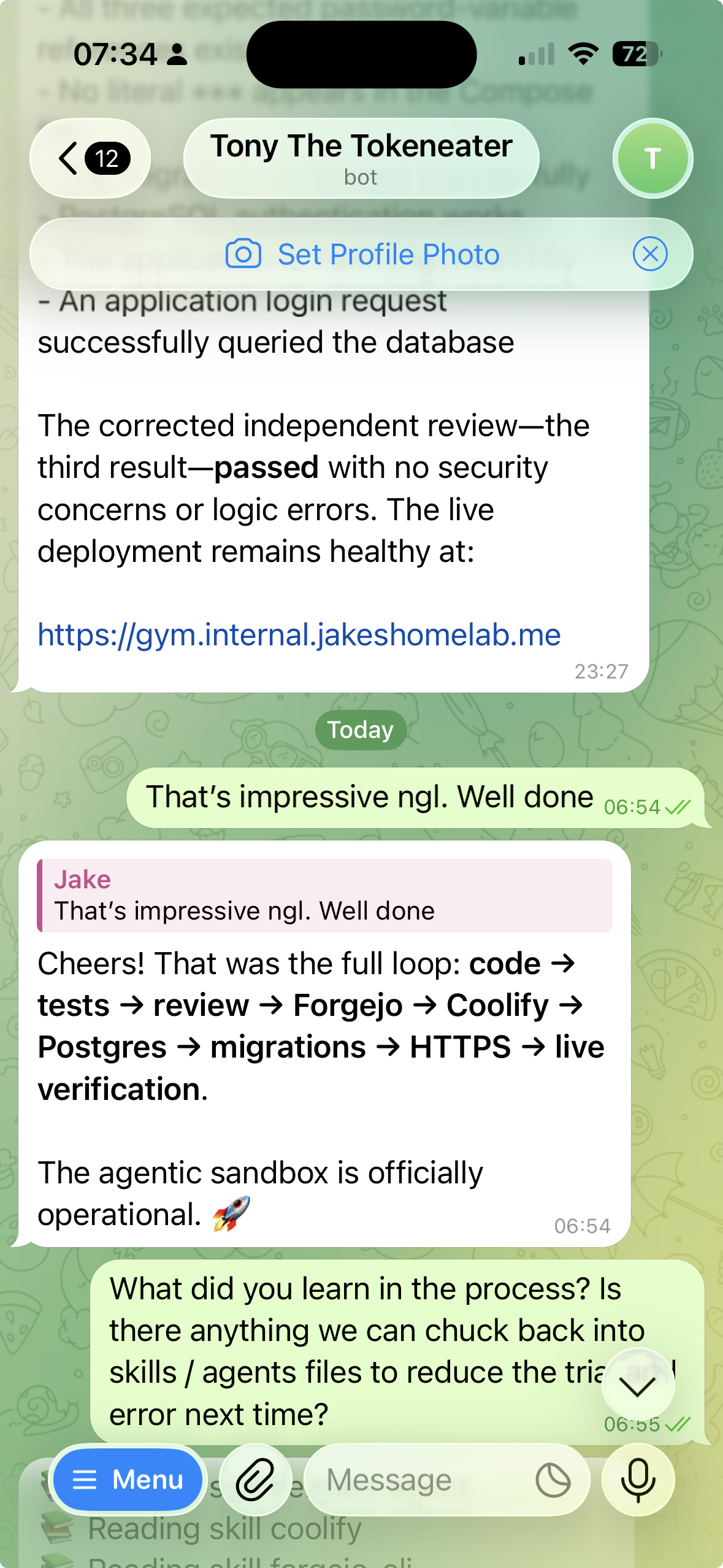
- The Hermes agent received a single prompt for a calorie-tracking SvelteKit app with Drizzle, Postgres and Tailwind, then autonomously created the repo, wrote code and tests, got CI green and deployed via Docker Compose — only one follow-up prompt was needed to fix a CSRF bug.
- The networking layer uses Tailscale with an older server as exit node, Pi-hole for internal DNS, and DNS-01 ACME challenges via the Porkbun API to issue SSL certs for vanity subdomains without exposing public A/AAAA records.
- Forgejo replaced GitHub as the code host and CI runner so the sandbox box never sees a GitHub token — a trade-off the author calls "yours to make."
- Hermes integrates with Telegram for phone-based chat, self-hosted Firecrawl for web scraping, and can author its own skills, including a Coolify integration it built after reading the docs.
- Coolify is the self-hosted PaaS glue — Docker-based, with one-click recipes for Postgres/Redis, S3 backups, GitHub webhooks, and Traefik handling on-the-fly SSL routing.
- The only ongoing cost specific to the experiment is a £20/month OpenAI Codex subscription, with inference left to OpenAI because the author lacks the local hardware.
Why it matters: For solo developers, a £20/month Codex sub on spare home hardware replaces what would normally be a full cloud DevOps bill. The more instructive story is the isolation: the agent runs on separate metal with no public ingress, so a runaway command costs hours, not the whole homelab — a reproducible blueprint for sandboxed agentic coding.
Ask SkimNews