China Cracks Down on Stock Influencers Amid AI Rally — SkimNews
Get the Finance newsletter
Daily finance — markets, central banks, M&A, the prints that move money. Free.
- CSRC penalized a fund firm identified as 'Fund D' for paying unqualified online influencers to market high-risk products to investors with incompatible risk tolerance, accusing it of neglecting compliance in pursuit of short-term growth
- Nearly 4.91 million new mainland stock accounts were opened in January — the biggest monthly jump since October 2024 — with money flooding into smaller tech names linked to AI, chips, and aerospace
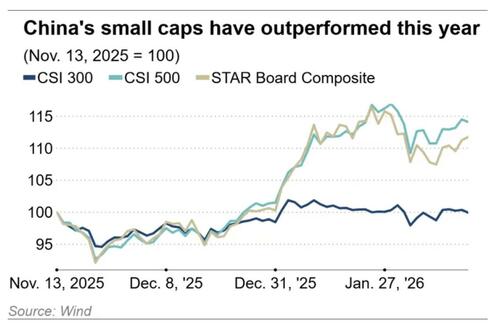
- Smaller-stock gauges have outpaced blue chips sharply year to date: the CSI 500 is up 11.2% and Shanghai's STAR board index up 10.5%, while the CSI 300 has gained just 0.7%
- Individual stocks have rocketed — Wuxi Autowell Technology is up over 120% YTD, Puya Semiconductor and Focuslight Technologies have more than doubled, and Supcon Technology has risen 65%
- CSRC previously fined influencer Jin Yongrong over 41 million yuan and barred him from securities markets for three years; Snowball Finance banned Jin and more than 20 other accounts
- Exchanges raised the margin trading deposit ratio from 80% to 100% to cool leverage, while UBS SDIC Fund Management halted subscriptions to a Shenzhen-listed silver futures fund whose units hit the 10% daily down limit for five consecutive sessions
- Individual investors account for over 80% of daily turnover, and regulators face fresh tests after trading resumes Feb. 24 post-Lunar New Year, with robotics demos at the Spring Festival Gala and DeepSeek model releases slated for the holiday
Why it matters: Beijing is simultaneously promoting equity markets to fund tech self-reliance and trying to prevent speculative excess — but with retail investors driving over 80% of daily turnover and 4.91 million new accounts opened in January, the margin tools and influencer crackdowns are stopgaps against a surge driven by limited alternatives (low bond yields, weak property) rather than fundamentals, raising the risk of boom-bust feedback when sentiment turns.
Ask SkimNews