‘It’s my duty to tell the truth’: UN chief on the climate crisis, capitalism and reasons to be hopeful — SkimNews

Get the Energy newsletter
Daily energy & climate — solar, EVs, oil, the policy fights and tech bets shaping the transition. Free.
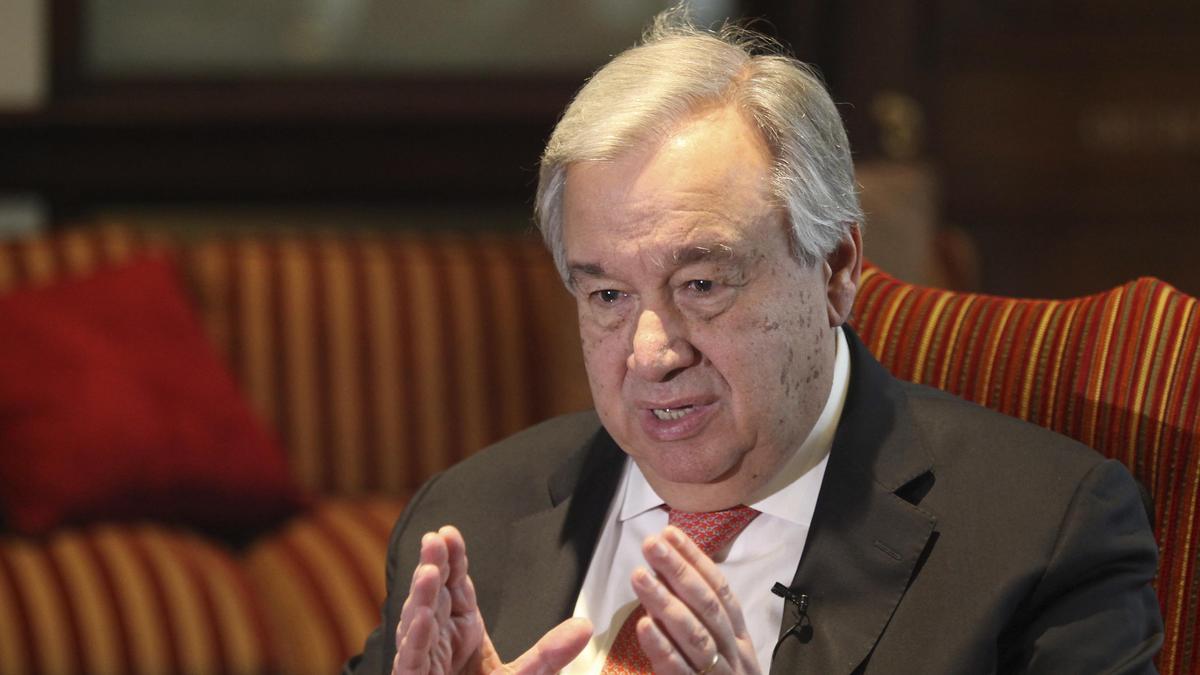
- António Guterres calls climate change an "existential threat," saying political leaders are consumed by short-term objectives while climate consequences are long-term, and blaming a "systematic campaign" financed by fossil-fuel sector profits for diverting public attention.
- Guterres cites the slowing Gulf Stream (AMOC) as evidence that the world is approaching tipping points that could dramatically accelerate sea-level rise and become "a world problem" and "an extremely dramatic problem for the security of all countries."
- Guterres points to the Gulf crisis as proof that depending on fossil-fuel imports is "a severe risk for any country," arguing climate breakdown is now a national-security threat, though he notes many security establishments still equate energy security with fossil fuels.
- Guterres concedes the UN secretary-general has "not much power and there is no money" — but says he has "a voice," and frames it as his "duty to use that voice without any compromise, to tell the truth" about the climate.
- Guterres names his 10-year regret: failing to build enough alliances with grassroots organizations, subnational and local governments, and young people outside traditional political decision-makers, and says democratic systems need modernization to keep pace with new forms of communication.
- Guterres defends market economies as "the best way to allocate resources" — since planned economies "didn't prove to be effective" — but insists they require regulatory frameworks from democratically elected institutions, warning that regulatory bodies are too often "controlled by private interests."
- Guterres says there are reasons to be hopeful: renewable energy is expanding "at enormous speeds," and emerging economies that are net fossil-fuel importers and the biggest emitters now have a vested interest in accelerating the transition.
Why it matters: By tying the energy transition to fossil-fuel import dependency — sharpened by the Gulf crisis — Guterres reframes climate action as a national-security imperative for democracies, giving them a strategic rationale to accelerate renewables and insulate regulators from private-sector capture rather than treating it as a purely environmental or moral question.
Ask SkimNews