Google Pulls Earth AI Feature in 24 Hours — SkimNews

Get the Tech newsletter
Daily tech — startups, AI labs, chips, the launches that shape the next decade. Free.
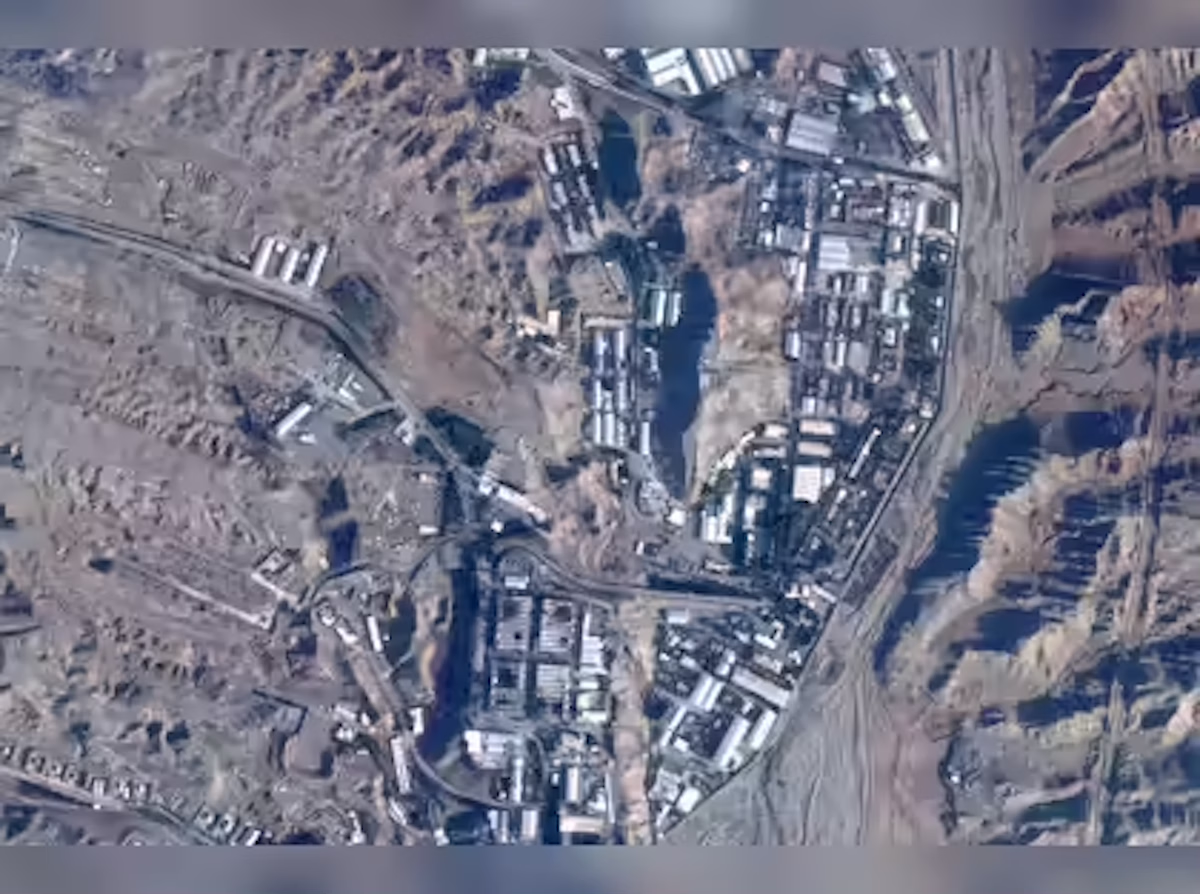
- Google launched an AI image-generation feature inside Google Earth on July 30 that let users type prompts at real coordinates to produce photorealistic scenes blended with actual satellite and aerial imagery.
- Within hours, users generated fake scenes including a nuclear plant in Iran, a bomb crater beside a Gaza hospital, and floods lapping the U.S. Capitol; Google pulled the feature within a day after outcry from investigative experts and media, saying it would return with "stronger guardrails."
- The U.S. government separately ordered satellite companies to restrict journalists' access to regional imagery citing wartime security, narrowing the supply of real information even as counterfeits spread.
- OpenAI shut down its Sora video app in March after abusive content proliferated, while Google's Veo 3—launched in May 2025—produced AI-generated videos of missile strikes on Tel Aviv that circulated within days of the first strikes with the Veo watermark still visible.
- Fabricated footage of a blast at Iran's Evin prison hit social media within minutes of the strike and was shared by outlets including Sky News and the BBC; Citizen Lab later assessed the video belonged to an AI-enabled influence operation likely run by the Israeli government.
- The EU AI Act's transparency obligations began August 2, 2026, and California's AI transparency law took effect in August for generative-AI companies but won't reach platforms until at least 2027; testing across 13 AI providers found seven had no public detection tool and all but one that did could be fooled.
- Google's Pixel 10 became the first smartphone to embed C2PA provenance standard directly into its camera at the point of capture, and Apple's newly unveiled iPhone 18 Pro enables users to produce cryptographically signed reference images and flag AI-edited content.
Why it matters: Google pulled the feature in a day, but authentic satellite images from active conflict zones now carry doubt they don't deserve, the article argues. With seven of 13 tested AI providers lacking public detection tools and EU and California transparency rules delayed or voluntary, fact-checkers documenting war zones will keep running behind the lie—a gap the article says hardware-level provenance standards (Pixel 10, iPhone 18 Pro) are finally being built to close.
Ask SkimNews