Manufactured Home Anchors Fail Below Hurricane Winds — SkimNews
Get the Energy newsletter
Daily energy & climate — solar, EVs, oil, the policy fights and tech bets shaping the transition. Free.
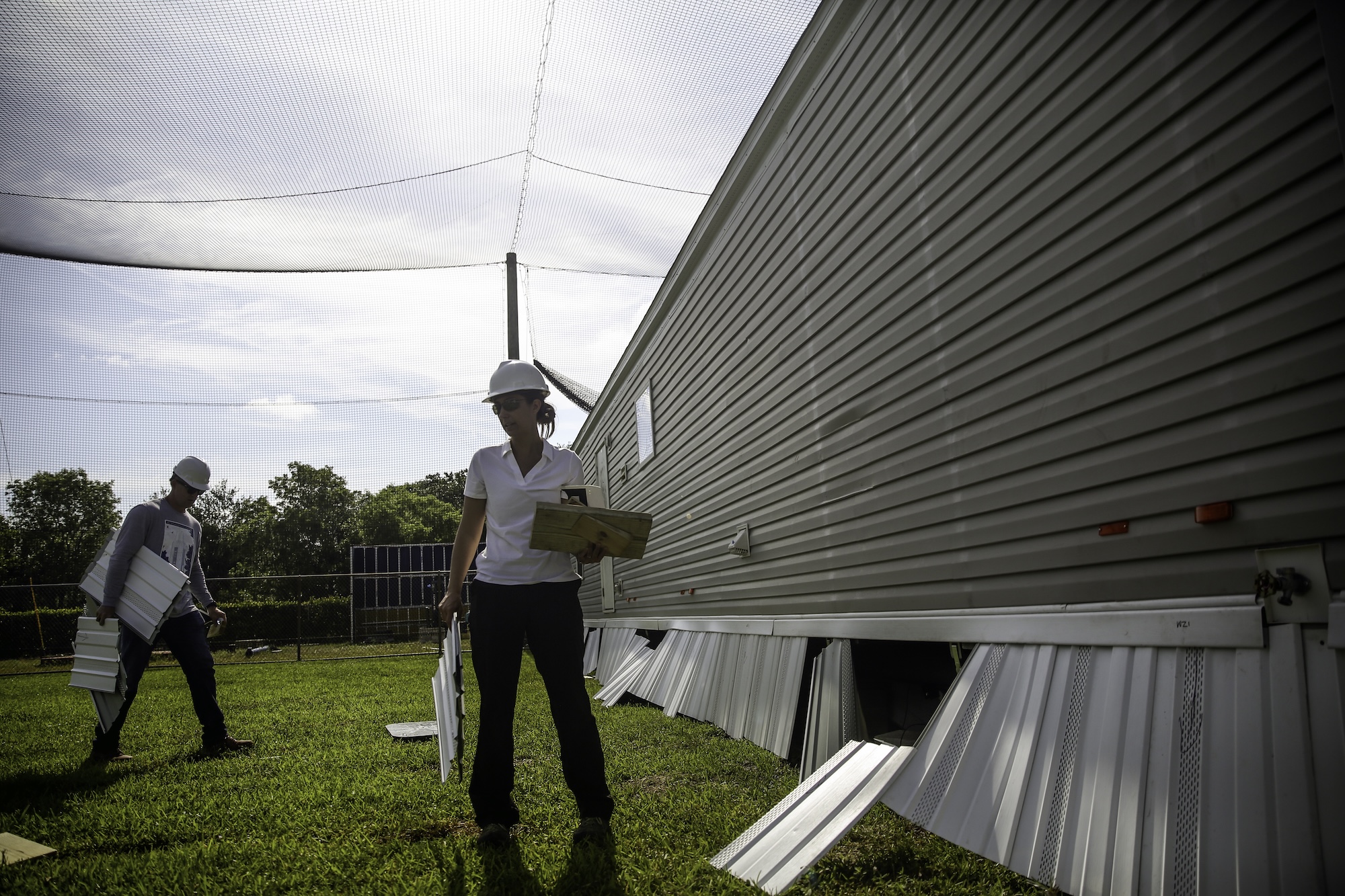
- Elaina Sutley, a University of Kansas structural engineer, brought three manufactured homes to Florida International University's Wall of Wind, where 12 massive fans generated winds up to 157 mph to test different installation configurations to destruction.
- The preliminary findings show that Wind Zone 1 standards — which require resistance to only 70 mph winds — are inadequate, and that adopting Wind Zone 3 retention systems, including vertical ties connecting the frame directly to ground anchors, could lower failure risk at relatively low cost.
- More than 20 million Americans live in 6.7 million manufactured homes, with roughly 5 million in climate-disaster-prone areas; a decade-long review found more than half of all new manufactured home installations went to Gulf states.
- HUD's federal code governs all manufactured homes nationwide — unlike local building codes for site-built houses — meaning Sutley's findings could potentially trigger nationwide changes through a single regulatory pathway.
- Clayton Homes collaborated on testing rigid metal struts as a cheaper alternative to tie-down straps, which industry veteran Regina Blanchard says are now sometimes merely riveted in and prone to breakage under uplift torque.
- Sutley's research motivation traces to surviving a Tuscaloosa tornado outbreak with winds above 190 mph (hundreds killed, $4.2 billion in property damage) — a moment she says revealed that 'we don't design buildings to withstand tornadoes.'
Why it matters: Because HUD's single federal code governs all 6.7 million manufactured homes nationwide, a relatively simple retrofit — adding vertical tie-down straps — tested at FIU's Wall of Wind could ripple to every installation in the country if HUD adopts the findings. The 20 million Americans living in this disproportionately exposed housing stock would gain protection from the same hurricane-force winds that FEMA estimates drive $29 billion in average annual losses.
Ask SkimNews