Modi, Xi Pledge Border Resolution at BRICS Summit — SkimNews
Get the Geopolitics newsletter
Daily geopolitics — wars, elections, sanctions, the diplomatic moves that move markets. Free.
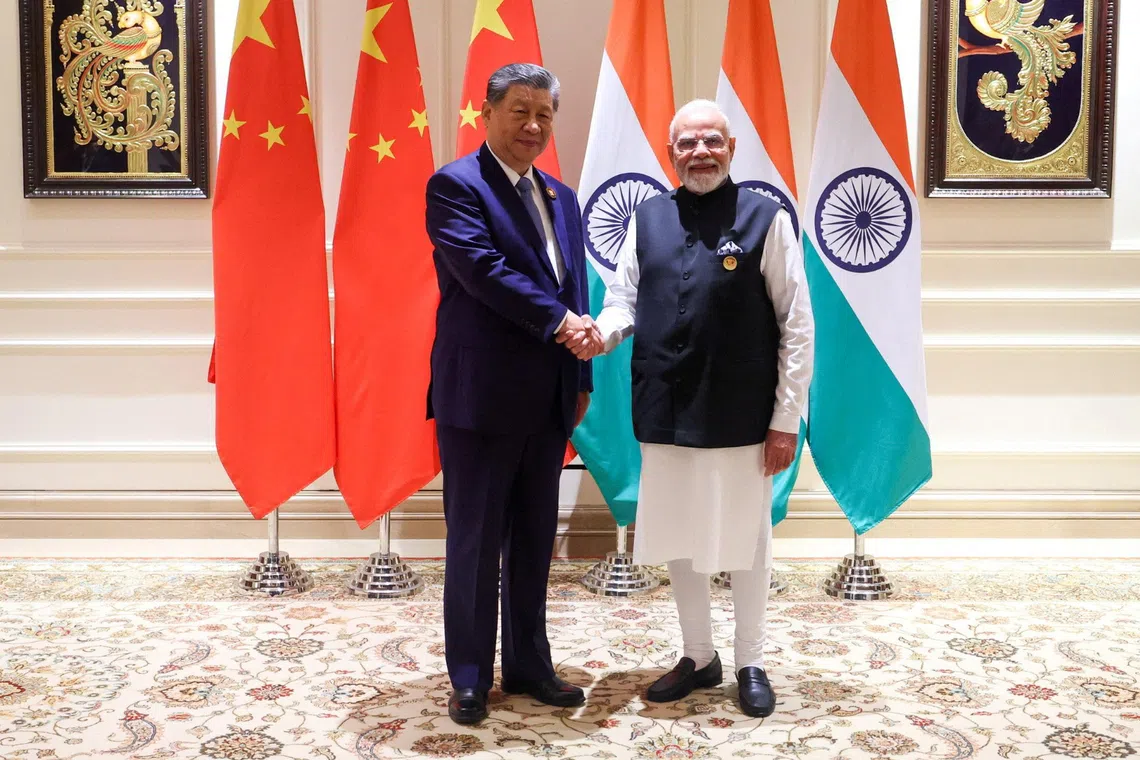
- Modi and Xi Jinping met on Sept. 12 in New Delhi at the 11-nation BRICS summit, with India's foreign ministry saying both leaders committed to a "fair, reasonable, and mutually acceptable resolution of the boundary question" and Modi underlining the need to observe existing border agreements.
- The meeting was Xi Jinping's first visit to India since 2019 and the first since a deadly military clash along the disputed border; the underlying territorial dispute remains unresolved, with both sides retaining heavy military deployments along the roughly 3,500km high-altitude frontier along Tibet.
- China is now India's largest trading partner, with bilateral goods trade reaching US$151 billion in the 2025-26 financial year, but the relationship is heavily skewed: India imported $131 billion of Chinese goods while exporting just $19 billion, leaving a record US$112 billion trade deficit.
- Both leaders "underlined the need to address each other's concerns, including structural trade imbalance and supply chain issues, and facilitation of meaningful and predictable market access," per the Indian Foreign Ministry statement, with Xi calling for an "open and inclusive" economic globalisation.
- Dozens of Tibetan exiles protested in New Delhi on Sept. 11 ahead of Xi's visit, waving placards against the Chinese leader; the Dalai Lama, who has lived in India since fleeing a Chinese crackdown in 1959, is among the most prominent exiled Tibetan figures.
- Ties between the two nuclear-armed rivals have "gradually improved through restored flights, visas and high-level contacts," according to the article, marking a cautious thaw — though Xi's own message framed it: "Differences should not become disputes."
Why it matters: The Modi-Xi meeting marks the most concrete step yet in a cautious thaw between two nuclear-armed rivals who share a 3,500km disputed border, but the $112 billion trade deficit reveals why structural progress is hard: India imports nearly seven times more from China than it exports back. For India, the gap means continued dependence on Chinese goods and supply chains; for Beijing, the imbalance is leverage it has little reason to give up voluntarily.
Ask SkimNews