South Korea's Southern Pivot Faces Follow-Through Test — SkimNews

Get the Geopolitics newsletter
Daily geopolitics — wars, elections, sanctions, the diplomatic moves that move markets. Free.
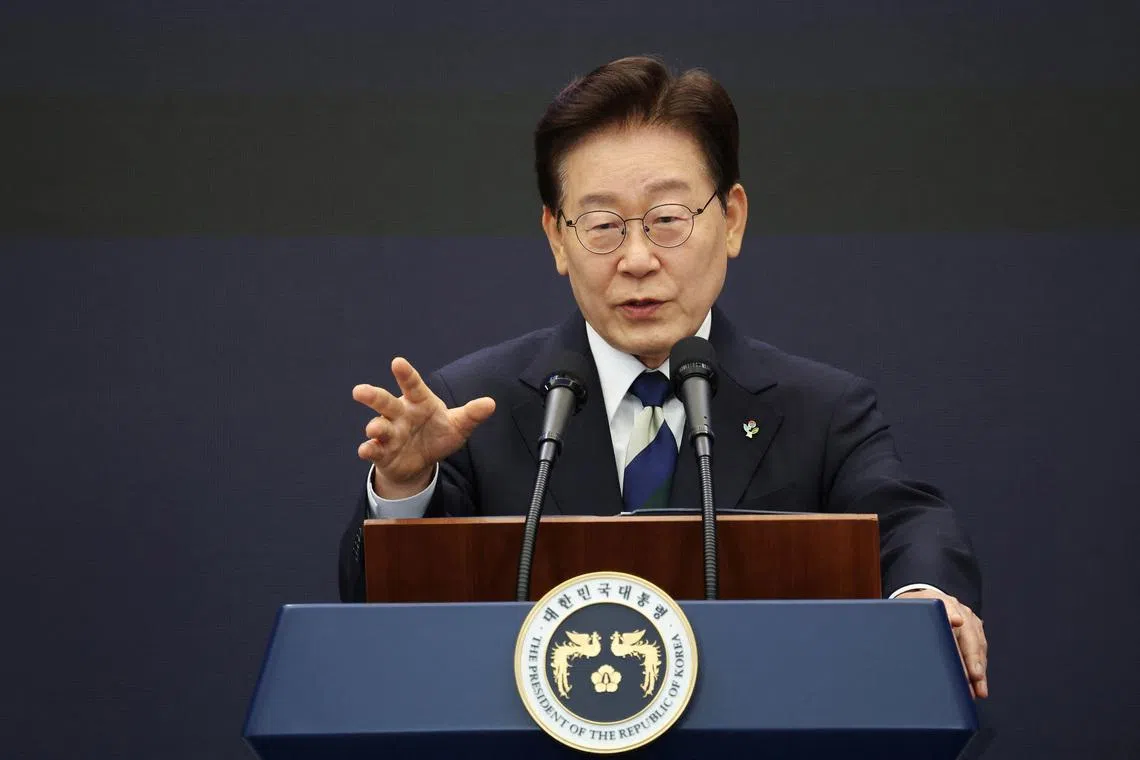
- Lee Jae Myung took office in June 2025, hosted the APEC summit in Gyeongju, and in 2026 launched state visits to Singapore, the Philippines, Indonesia, India and Vietnam, upgrading each relationship to a higher strategic tier than before.
- Indonesia received a "Special Comprehensive Strategic Partnership" — a designation Seoul has never accorded to any other country — institutionalizing 50-plus years of ties dating to 1973 that included the first Korean overseas investment, first arms export and first joint fighter-jet development.
- Vietnam hosts more than 10,000 Korean firms and is South Korea's third-largest trading partner and top recipient of cumulative outbound investment; Lee declared in Hanoi that "Vietnam's Future Is Korea's Future."
- The five partners occupy deliberately complementary roles: Indonesia as the world's second-largest nickel and cobalt producer and LNG supplier, India as a 1.4 billion-person market and Global South leader, the Philippines as a shipbuilding and critical-minerals node anchored by the Bataan nuclear plant revival, and Singapore as the ASEAN logistics-finance-digital gateway.
- South Korea's previous southern pivots — the New Southern Policy and subsequent Indo-Pacific Strategy — fell short for two structural reasons the article identifies: South Korea's single five-year presidential term, which kills signature initiatives at each handover, and the gravitational pull of the North Korean issue, which chronically drains diplomatic bandwidth from Southeast Asia and India.
- The partner governments have aligned long-horizon national visions — Indonesia's Golden Indonesia 2045, India's Viksit Bharat 2047, Vietnam's 2045, the Philippines' AmBisyon Natin 2040, Singapore's Forward Singapore and Smart Nation 2.0 — that match South Korea's industrial strengths in semiconductors, shipbuilding, nuclear power, defense and digital infrastructure.
Why it matters: Five 2040–2047 development roadmaps from South Korea's new Asian partners line up with Seoul's industrial strengths in semiconductors, shipbuilding, nuclear and defense — but the country's single five-year presidential term and chronic North Korea attention-suck have doomed previous southern pivots, and the author argues will likely do so again unless structural follow-through mechanisms replace the memorandum-signing model.
Ask SkimNews