Senate Blocks Cuba War Powers Resolution 51-47 — SkimNews
Get the Geopolitics newsletter
Daily geopolitics — wars, elections, sanctions, the diplomatic moves that move markets. Free.
- The Senate voted 51-47 to block debate on the war powers resolution, with only Sens. Rand Paul (R-Ky.) and Susan Collins (R-Maine) crossing party lines to oppose the block and Sen. John Fetterman (D-Pa.) the lone Democrat to side with Republicans.
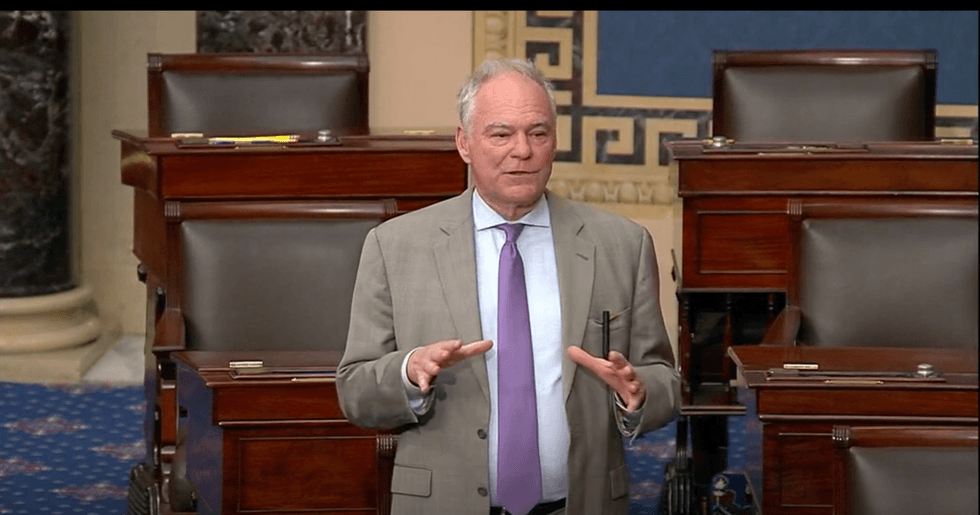
- Sen. Rick Scott (R-Fla) raised a point of order arguing the legislation wasn't privileged because "U.S. troops [are] not engaged in hostilities," while Sen. Tim Kaine (D-Va.) countered that "the U.S. is using force to block energy from going to Cuba."
- The resolution, introduced by Sens. Kaine, Ruben Gallego (D-Ariz.), and Adam Schiff (D-Calif.), would have declared the U.S. blockade or quarantine of Cuba a military "hostility" subject to congressional authorization.
- President Trump has publicly said "Cuba is going to be next" and "we may stop by Cuba after we're finished with" the war with Iran, while Secretary of State Marco Rubio warned after Maduro's January capture that "if I lived in Havana and I was in the government, I'd be concerned."
- Cuba is facing a worsening humanitarian crisis from the U.S.-imposed energy blockade, with prolonged blackouts, food and medicine shortages, and the collapse of basic services, per Rep. Pramila Jayapal's (D-Wash.) account of a recent trip.
- Sen. Kaine told Dropsite the administration's policy is "purely a regime change effort" with "no security threat to the United States," while Quincy Institute's Lee Schlenker noted that high-level negotiations are simultaneously "shaping up" for a potential U.S.-Cuba deal.
- Congress has never successfully blocked a president from military action through war powers legislation, and a companion House measure from Rep. Nydia Velázquez (D-N.Y.) now awaits action there.
Why it matters: The 51-47 vote underscores how narrow and futile the war-powers pushback has become: only three senators crossed party lines in either direction, and Congress has never successfully used such a resolution to block a sitting president. With the Pentagon actively preparing military options for Cuba while negotiations quietly advance, the legislative fight now shifts to the House, where its chances of stopping unilateral action remain historically dim.
Ask SkimNews


