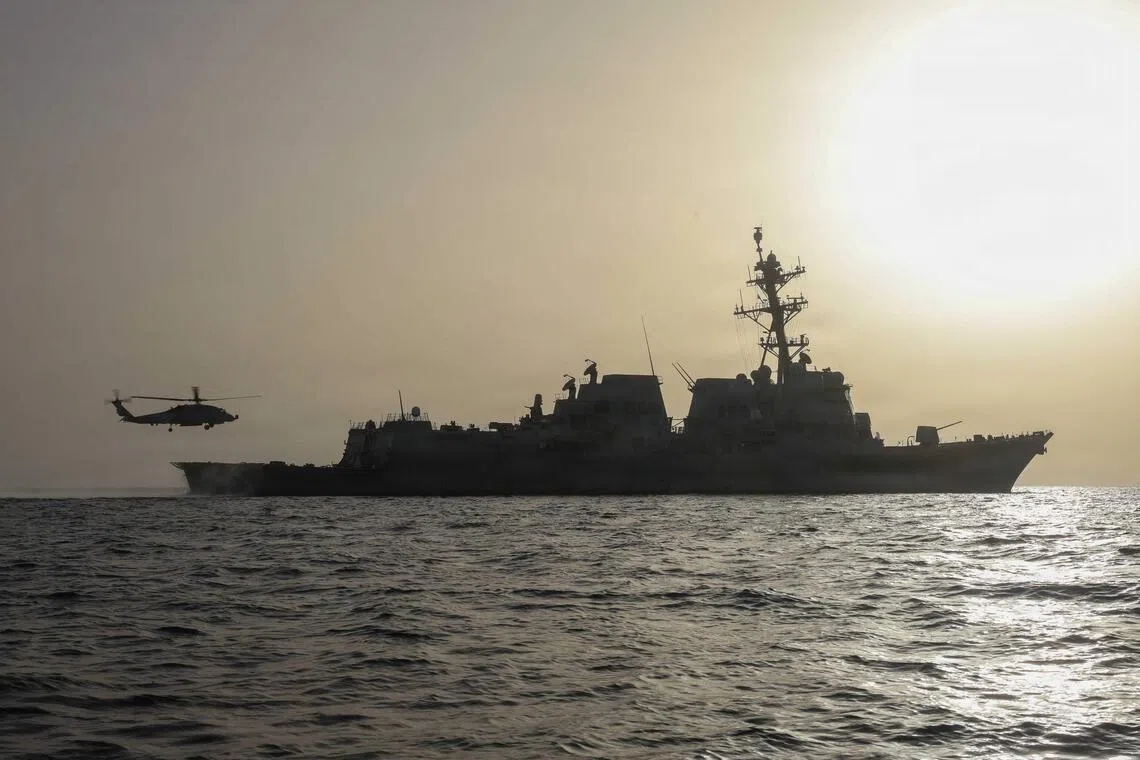
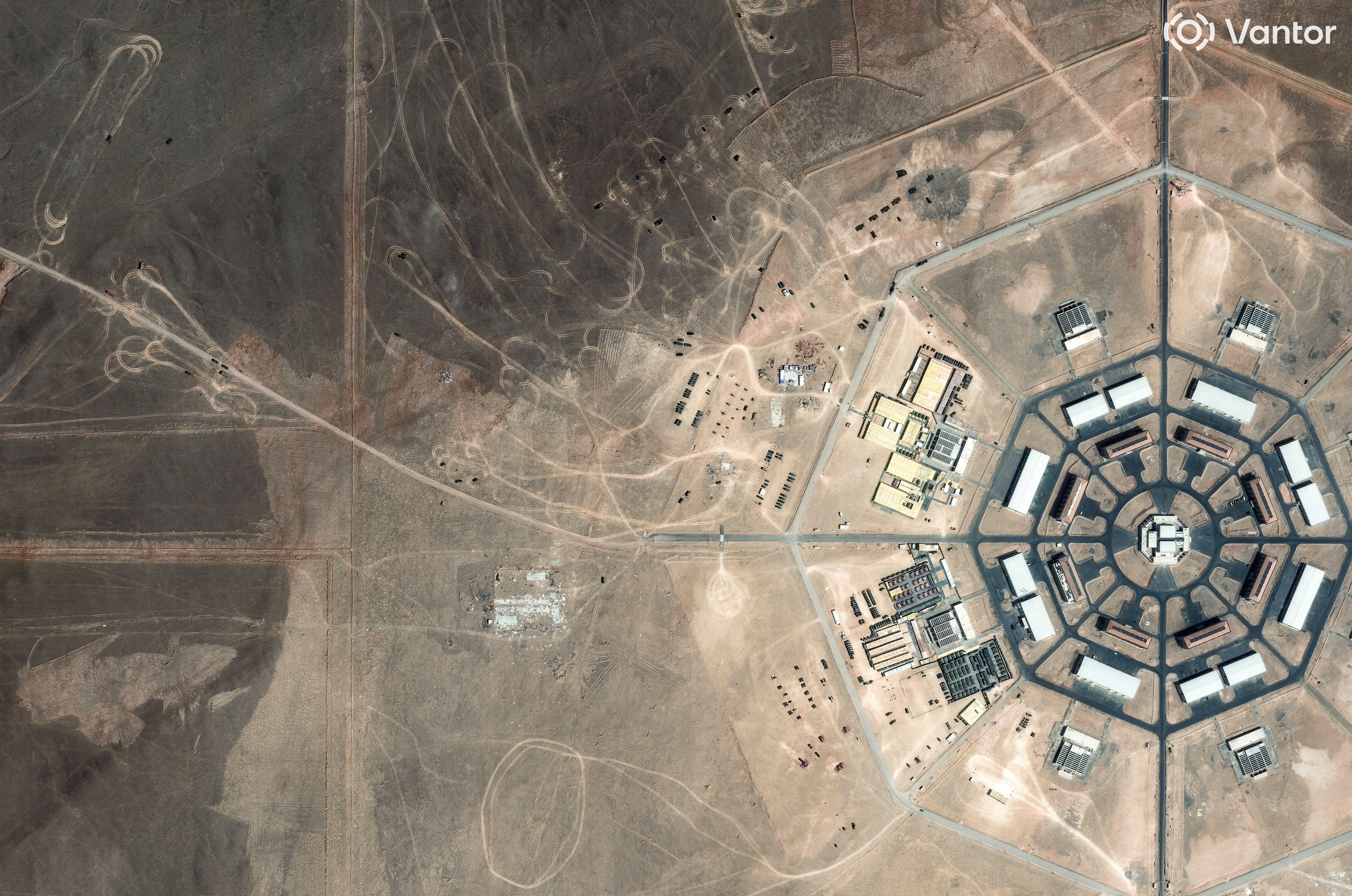
China builds full-scale destroyer mock-up in Taklamakan Desert

Get the Geopolitics newsletter
Daily geopolitics — wars, elections, sanctions, the diplomatic moves that move markets. Free.
- China's PLA built a 155-meter full-scale replica of a US Navy Arleigh Burke-class destroyer at the Ruoqiang Test Range in Xinjiang's Taklamakan Desert — 2,700 km from the nearest ocean — with construction starting around October 2025 and finishing within six months.
- The mock-up includes a full mast, simulated radar equipment and sensors designed to reproduce an active warship's radar profile, plus rail-mounted structures that simulate moving naval targets, marking a major advance over China's previous flat carrier outlines.
- The facility lets the PLA test anti-ship ballistic missiles, hypersonic weapons and AI-assisted guidance systems against realistic targets and simulated electronic countermeasures, aligned with China's anti-access/area-denial strategy aimed at deterring or defeating US carrier strike groups intervening in a Taiwan conflict.
- China's shift to 3D destroyer replicas suggests it is studying how to sequentially breach a carrier strike group's defenses by eliminating escorts first, since each Arleigh Burke carries roughly 100 vertical-launch cells, a major radar/fire-control node and antisubmarine capability.
- Gao Tianyun and co-authors argued in the May 2026 issue of the peer-reviewed journal Tactical Missile Technology that defeating a carrier group requires opening a narrow breach in distributed defenses — using submarine-launched hypersonic missiles at forward Aegis nodes, decoys drawing fire to the flanks, and a "leader-follower" missile swarm that re-tasks surviving weapons after each strike.
- The "Inside-Out Defense" concept developed by Thomas Mahnken, Travis Sharp, Billy Fabian and Peter Kouretsos calls for survivable units inside the First Island Chain — mobile missile batteries, drones, stealth fighters, submarines — passing targeting data to carrier strike groups, amphibious ready groups and bombers positioned near the chain's outer edge.
- A US-China naval clash would hinge less on destroying individual warships than on fusing sensors, maintaining targeting networks and sustaining missile salvos under combat disruption, making the PLA likely to target force integrators like forward bases, tankers, satellites and command networks rather than carriers directly.
Why it matters: The 155-meter mock-up is designed to let the PLA rehearse sequential carrier strike group breaches that would strip a US formation of roughly 100 vertical-launch cells and a major fire-control node per escort lost. Its design — simulated radar plus moving-target rails — signals the decisive targets in a Taiwan fight are sensor networks, logistics and command nodes, not carriers alone.