S&P 500, Bond Markets Flash Dot-Com Era Warnings — SkimNews

Get the Finance newsletter
Daily finance — markets, central banks, M&A, the prints that move money. Free.
- S&P 500 recorded a cyclically adjusted price-to-earnings (CAPE) ratio of 40.1 in January 2026, the highest level since the dot-com crash in September 2000 and among the most expensive readings in its history.
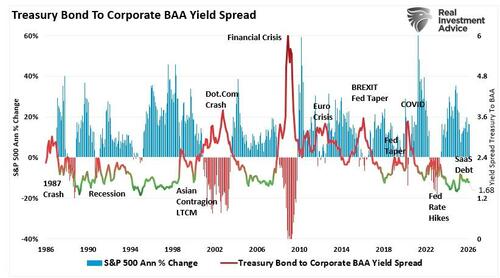
- Investment-grade corporate bonds had a credit spread of just 71 basis points over U.S. Treasuries in late January, the tightest gap since 1998 and a sign of extreme investor confidence in corporate stability.
- U.S. Treasury bonds are yielding nearly the same as top-tier corporate debt, leaving little room for upside and significant downside risk if economic conditions worsen.
- Robert Shiller's CAPE ratio analysis shows that prior instances of S&P 500 valuations above 40 were followed by average losses of 3% over one year, 19% over two years, and 30% over three years.
- The current market environment is described as high-risk and low-reward, with limited potential for further gains and vulnerability to shocks such as rising tariffs or economic slowdowns.
Why it matters: Investors face historically skewed risk-reward conditions: with credit spreads near 30-year lows and stock valuations at dot-com bubble levels, even a modest economic reversal could trigger sharp declines in both bond and stock markets, eroding trillions in asset value and impacting retirement funds, pensions, and corporate financing costs.
Ask SkimNews