Singapore, Japan Sign Energy Cooperation Framework — SkimNews
Get the Geopolitics newsletter
Daily geopolitics — wars, elections, sanctions, the diplomatic moves that move markets. Free.
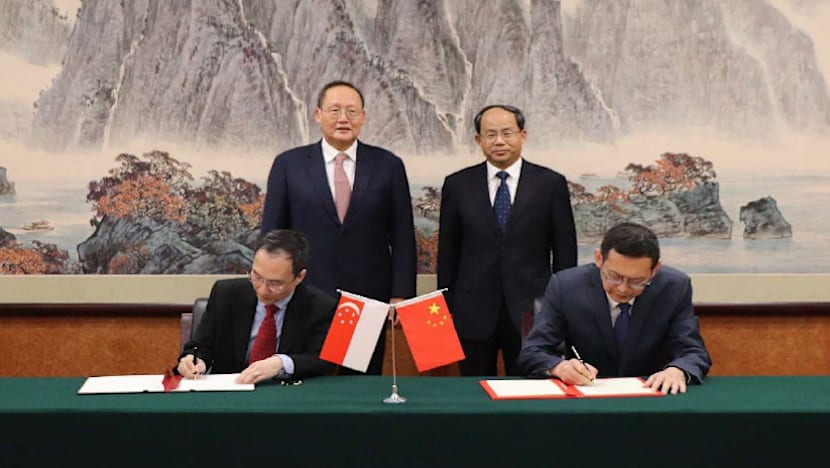
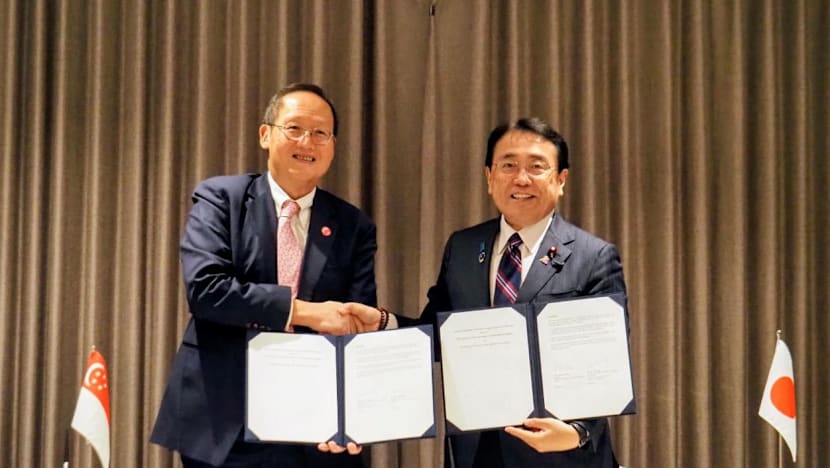
- Singapore and Japan signed the Energy, Sustainability and Climate Change Cooperation Framework in Tokyo on Sunday (Mar 15), with Singapore's Minister-in-charge of Energy and Science and Technology Tan See Leng and Japan's Minister of Economy, Trade and Industry Ryosei Akazawa as signatories.
- The framework targets collaboration across cross-border electricity imports, low-carbon hydrogen and ammonia, carbon capture, utilisation and storage, civil nuclear energy, LNG, advanced grid system enablers, and offshore wind.
- MTI said the collaboration may take the form of policy exchanges, business facilitation, facilitation of financial cooperation, and the harmonisation and mutual recognition of standards, regulations, and certification.
- Singapore companies including offshore and marine firm Seatrium and energy and urban solutions provider Sembcorp Industries are already involved in energy projects in Japan.
- In 2024, Japan and Singapore were each other's fourth-largest source of foreign direct investments, and Singapore hosts over 5,300 Japanese companies that use it as an Asia-Pacific headquarters, per Dr Tan's opening remarks.
- The framework is intended to help both countries advance their net-zero goals and reduce emissions in hard-to-abate industries and the power sector, according to MTI.
Why it matters: For import-constrained Singapore, cross-border electricity and civil nuclear cooperation under this framework directly address its chronic energy security gap, while giving Japanese firms a foothold in Southeast Asia's energy transition. The pact formalizes a relationship where bilateral FDI already placed each country as the other's 4th-largest source in 2024 and where Seatrium and Sembcorp are already executing projects on the ground in Japan.
Ask SkimNews