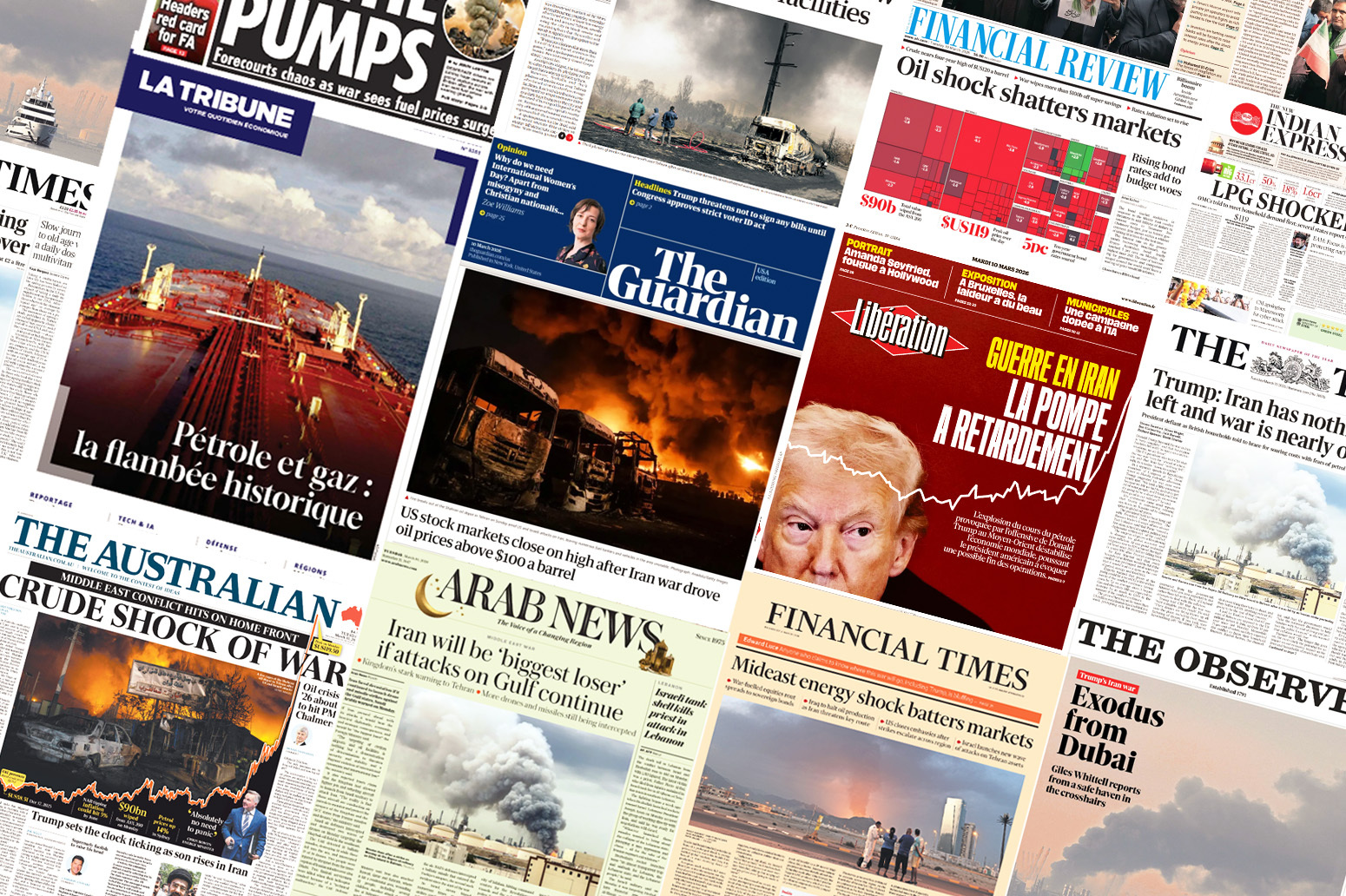
Gulf Oil Shutdowns Push Crude Past $90; US Offers Reinsurance

Get the Finance newsletter
Daily finance — markets, central banks, M&A, the prints that move money. Free.
- Qatar, Iraq, and Kuwait have begun shutting oil and gas production after the Iran war effectively closed the Strait of Hormuz, with UAE and Saudi Arabia potentially next as domestic storage fills and export outlets vanish.
- U.S. crude surged above $90 per barrel as of Friday, up nearly 60% year-to-date and nearing its highest level since Russia invaded Ukraine in 2022, with U.S. regular gasoline up more than 60 cents from January lows.
- The U.S. International Development Finance Corporation announced March 6 it will provide subsidized maritime reinsurance—cargo, hull, machinery, and war risk coverage—for Persian Gulf oil shipments, coordinating with Treasury and CENTCOM, while the Navy prepares potential tanker escorts.
- Sid Misra, petroleum engineering professor at Texas A&M, warned that oil wells are not light switches—shutting them can cause irreversible geological damage, permanently trapping subsurface oil and raising the long-term floor on energy prices.
- Iran struck a tanker near Iraq's Khor al Zubair port on March 5 and hit Bahrain's only oil refinery with a missile, while President Trump demanded "unconditional surrender"—pushing prices further on March 6.
- Saudi Arabia began routing more crude through the Red Sea, but those volumes are modest since 89% of its energy exports still flow through the Strait of Hormuz; Iran, Kuwait, and Qatar ship 100% through the chokepoint.
- Kathleen Brooks of XTB noted that energy prices will likely carry a risk premium even after military de-escalation, since damaged Gulf infrastructure could take weeks or months to repair.
Why it matters: U.S. crude is up nearly 60% year-to-date, and the U.S. government is now directly underwriting maritime war-risk insurance—a step that reframes this from a regional conflict into a state-backed intervention in global energy supply chains. Asian and European economies, more dependent on Qatari gas and OPEC crude, face the steepest cost spikes, and the risk that Iran's Revolutionary Guard mines the strait could extend the disruption for months.