Equinor Cancels Groningen Blue Hydrogen Project — SkimNews
Get the Energy newsletter
Daily energy & climate — solar, EVs, oil, the policy fights and tech bets shaping the transition. Free.
- Equinor halted its Groningen blue hydrogen project because it could not secure long‑term off‑take contracts, despite EU Innovation Fund backing and a defined technical pathway.
- The plant was designed to produce 210‑220 k t H₂ / yr, covering roughly 18‑27 % of Dutch hydrogen demand, 2‑3 % of EU demand, and about 0.2 % of global demand.
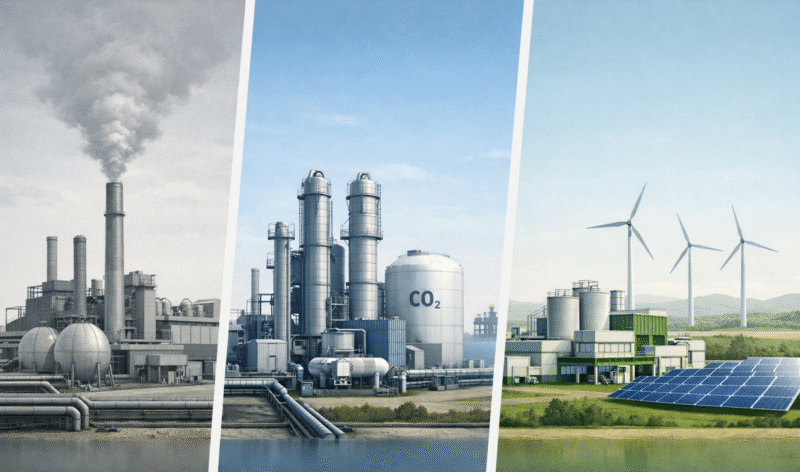
- Northern Lights – a CO₂ transport and storage venture jointly run by Equinor, Shell and TotalEnergies – relied on industrial customers such as blue‑hydrogen projects for long‑term storage contracts, and the loss of the Groningen project reduces its near‑term demand.
- Blue ammonia using captured‑hydrogen would emit 0.6‑1.8 t CO₂e / t ammonia, a partial decarbonisation versus grey ammonia’s 2.7‑3.2 t CO₂e / t, but still far from zero.
- Green ammonia produced in Morocco and shipped to Rotterdam could cost $800‑$1,000 / t and emit only 0.03‑0.11 t CO₂e / t, making it low‑emission but more expensive than blue ammonia ($650 / t).
- EU ETS carbon prices at €73 / t today, rising to projected €200‑€300 / t, would add €0.30‑€1.20 / kg hydrogen cost for blue hydrogen, potentially eroding its price advantage versus imported green ammonia.
Why it matters: Industrial buyers and the Northern Lights CO₂ storage venture lose a potential anchor customer, while the market shift strengthens the case for imported green ammonia as carbon prices rise, reshaping investment decisions, pricing dynamics, and the strategic roadmap for European hydrogen decarbonisation.
Ask SkimNews