UAE Closes Airspace as Iran-Israel War Goes Regional — SkimNews
Get the Geopolitics newsletter
Daily geopolitics — wars, elections, sanctions, the diplomatic moves that move markets. Free.
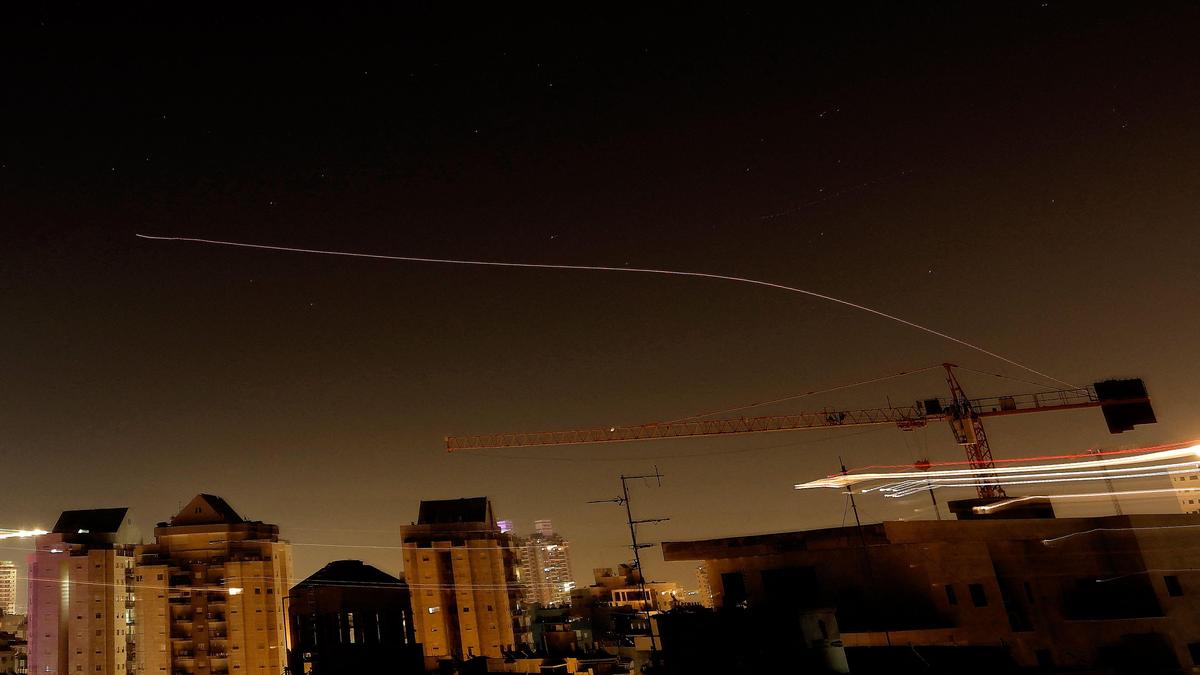
- UAE closed its airspace early Tuesday (March 17, 2026) as its military intercepted incoming Iranian missiles and drones; the General Civil Aviation Authority lifted the closure after determining "the situation stabilized," highlighting Emirati authorities' struggle to keep Emirates and Etihad flying.
- Israel's military announced a "wide-scale wave of strikes" on Tehran early Tuesday while reporting two incoming Iranian missile salvos, and escalated bombardments on Hezbollah in Beirut, where Israel has issued evacuation orders for multiple neighborhoods and pushed troops into southern Lebanon.
- Iranian Foreign Minister Abbas Araghchi declared the Strait of Hormuz "open" — but only to countries that are not the US, Israel or their allies — and rejected as "delusional" claims that Tehran is seeking a negotiated end to the war, even as Iranian attacks on commercial shipping in the strait reduced traffic to a trickle.
- Brent crude held above $100 a barrel after President Trump said he demanded roughly half a dozen countries send warships to keep the strait open, a chokepoint normally carrying a fifth of the world's oil, but received no immediate commitments from those nations.
- Israel's military spokesman Lt. Col. Nadav Shoshani said Israel has carried out some 7,600 strikes on Iran, knocking out 85% of Iranian air defenses and 70% of its missile launchers, with Iran's Red Crescent reporting more than 1,300 killed inside Iran.
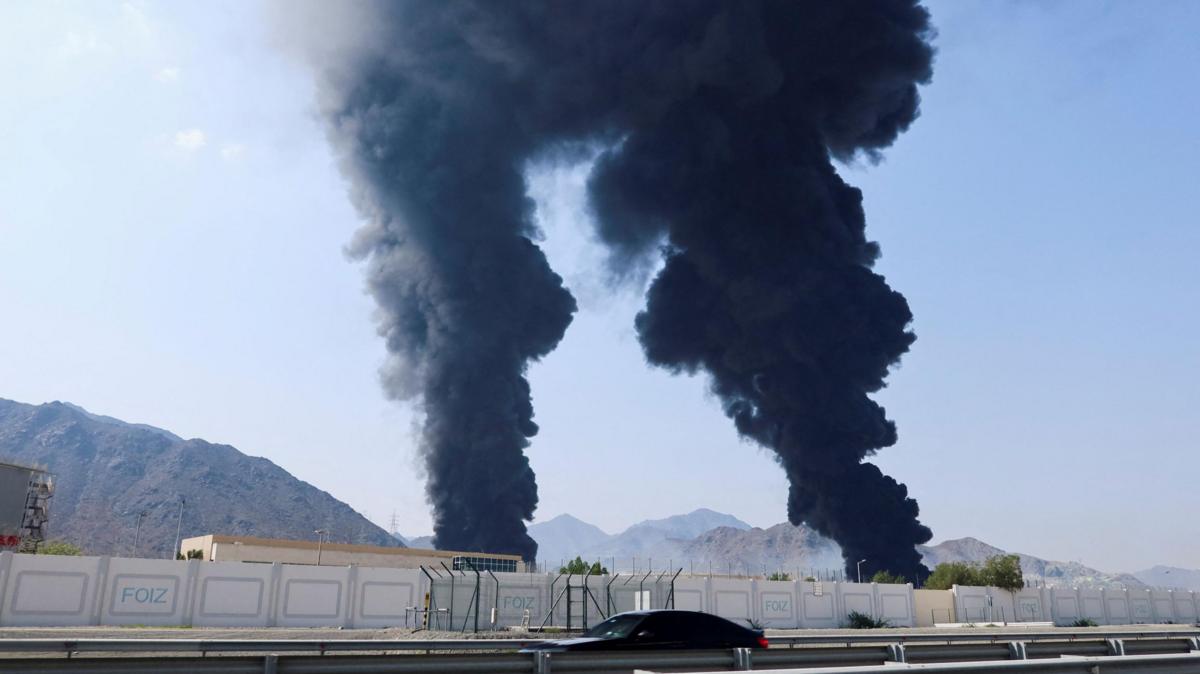
- Monday's strikes underscored the war's civilian reach: an Iranian drone set a fuel tank ablaze at Dubai International Airport — the world's busiest for international travel — while shrapnel from an intercepted missile hit Jerusalem's Old City near the Church of the Holy Sepulcher, the Western Wall, and the Al Aqsa Mosque compound.
- Lebanon's government says Israeli strikes have killed roughly 850 people and displaced more than 1 million — about 20% of the population — since Hezbollah began firing rockets into northern Israel after the US-Israeli attacks on Iran began Feb. 28; 12 Israelis and 13 US military members have also been killed.
Why it matters: With Iranian fire now reaching Gulf energy infrastructure and Dubai's mega-hub, the war's economic blast radius has left US diplomacy with no off-ramp: Trump publicly shopped for a multinational naval escort to the Strait of Hormuz and got no takers, while Brent above $100 and a near-shuttered chokepoint carrying a fifth of world oil keep pressure on Washington with no leverage in sight.
Ask SkimNews