Adobe Acrobat Chrome Flaw Exposed WhatsApp Web Data
The 30-Second Skim7 points
- What happenedGuardio Labs disclosed a now-patched vulnerability in the Adobe Acrobat Chrome extension—used by over 314 million people—that could let a malicious webpage silently exfiltrate a victim's WhatsApp Web chat data without installing malware or stealing credentials.
- Key facts & numbersGuardio Labs disclosed a vulnerability codenamed HermeticReader (CVE-2026-48294, CVSS 7.4) in the Adobe Acrobat Chrome extension, which has over 314 million users, enabling silent hijack of WhatsApp data via a single webpage visit The UXSS-class cross-origin data disclosure flaw affects all extension versions up to and including 26.5.2.2 and has now been patched Exploitation requires only that a victim open an attacker-crafted page—no malware installation, credential phishing, or session cookie theft is needed
- What happens nextThe horror: you just had to visit a webpage. WhatsApp Web's missing CSP directive turned Adobe Acrobat's extension into an exfiltration engine for 314M users.
- Guardio Labs disclosed a vulnerability codenamed HermeticReader (CVE-2026-48294, CVSS 7.4) in the Adobe Acrobat Chrome extension, which has over 314 million users, enabling silent hijack of WhatsApp data via a single webpage visit
- The UXSS-class cross-origin data disclosure flaw affects all extension versions up to and including 26.5.2.2 and has now been patched
- Exploitation requires only that a victim open an attacker-crafted page—no malware installation, credential phishing, or session cookie theft is needed
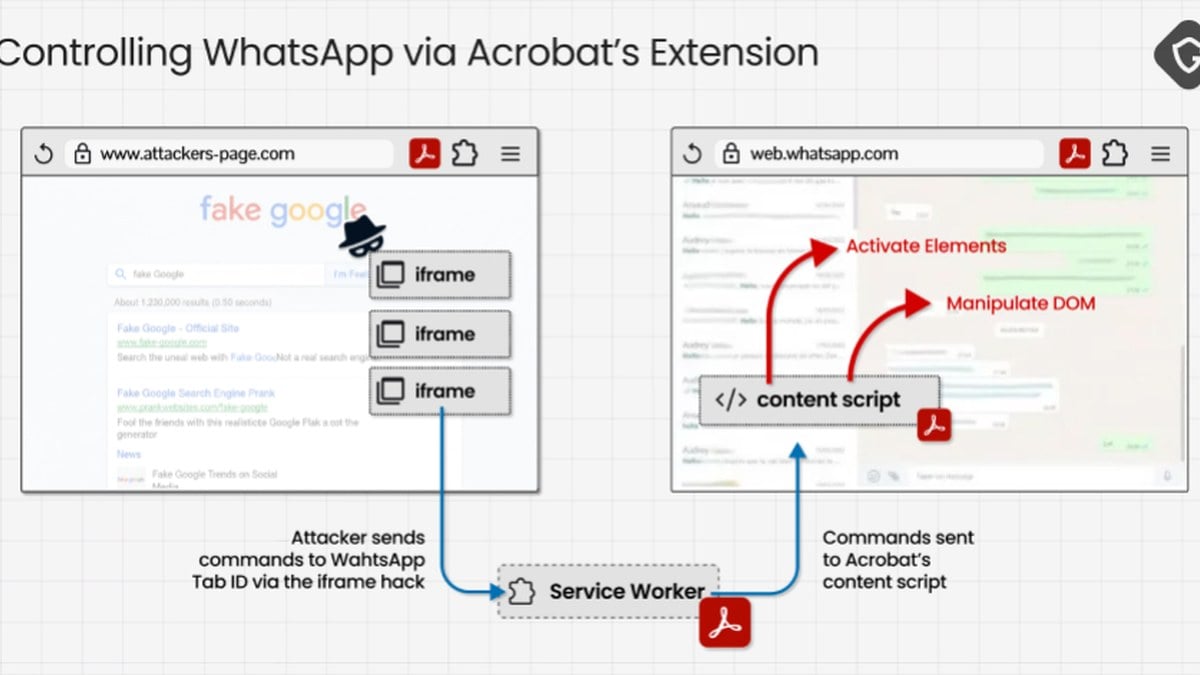
- The attack chain activates the extension's dormant Hermes engine (feature flag "floodgate-add"), opens WhatsApp Web in a background tab, and abuses WhatsApp Web's missing CSP form-action directive to POST the rendered DOM to a controlled endpoint
Why It Matters
With 314 million Adobe Acrobat Chrome extension users potentially exposed, a single malicious page could empty a victim's WhatsApp Web chats without any malware or credential theft—and the underlying issue (missing CSP form-action directives plus HTML edge cases) is likely present in other web apps, meaning this class of 'plumbing' flaw may repeat elsewhere.
Sources Cited
Related Coverage
Ask SkimNews