AI Compresses Attacker Loops as SOC Handoffs Lose Context
The 30-Second Skim
- What happened: AI has compressed the cost and time of failed cyberattack retries, while Security Operations Centers still lose critical context at every handoff between threat intelligence, hunting, detection, investigation, and remediation functions.
- Key facts & numbers: AI has compressed attacker loops: a failed privilege-escalation attempt that once cost hours of debugging, permission checks, and script troubleshooting now gets explained, fixed, and retried within minutes, stripping time and skill from the unglamorous middle of an intrusion. Google's Threat Intelligence Group traced the public arc — early 2025 state actors using generative AI for translation, scripting, and troubleshooting; late 2025 malware calling models mid-execution and a maturing underground market for illicit AI tools; and a May 2026 report on a 2FA bypass in an open-source admin tool that GTIG assessed with high confidence was AI-supported from discovery through exploit development. Anthropic disclosed shutting down an extortion operation that leaned on AI across nearly every stage — reconnaissance, credential harvesting, and setting ransom demands — alongside GTIG's parallel disruption work, with the article noting that assessed AI assistance is not the same claim as confirmed deployment in the wild.
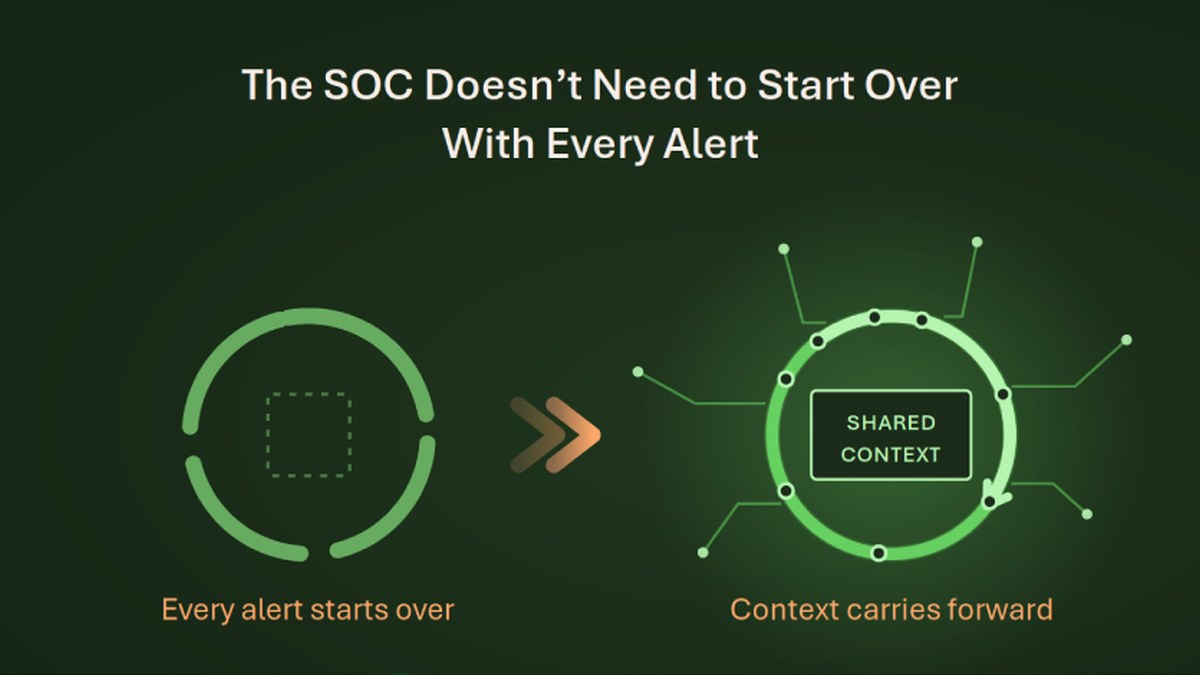
- What happens next: The unicorn analyst isn't a hiring problem — it's a missing-system-state problem. And AI didn't invent new attacks; it just made the cheap retries free.
- AI has compressed attacker loops: a failed privilege-escalation attempt that once cost hours of debugging, permission checks, and script troubleshooting now gets explained, fixed, and retried within minutes, stripping time and skill from the unglamorous middle of an intrusion.
- Google's Threat Intelligence Group traced the public arc — early 2025 state actors using generative AI for translation, scripting, and troubleshooting; late 2025 malware calling models mid-execution and a maturing underground market for illicit AI tools; and a May 2026 report on a 2FA bypass in an open-source admin tool that GTIG assessed with high confidence was AI-supported from discovery through exploit development.
- Anthropic disclosed shutting down an extortion operation that leaned on AI across nearly every stage — reconnaissance, credential harvesting, and setting ransom demands — alongside GTIG's parallel disruption work, with the article noting that assessed AI assistance is not the same claim as confirmed deployment in the wild.
- Provider guardrails function as friction, not security boundaries: attackers can reframe requests until they slide through, move to open-weight models, split one malicious task into a dozen innocent-looking prompts, or wrap tooling around the model to route around the policy layer entirely.
Why It Matters
For defenders, the immediate cost is decision latency that mean time to acknowledge and mean time to remediate do not capture — the hours spent reconstructing an alert across identity, endpoint, cloud, and business teams. Organizations treating provider safety classifiers as security boundaries are substituting reassurance for defense, since attackers reframe, switch to open-weight models, or wrap tooling to route around policy entirely.
Sources Cited
- The Hacker News — The SOC Doesn't Need to Start Over with Every Alert
Related Coverage
Ask SkimNews