Apple launches AI health study with OpenEvidence
The 30-Second Skim
- What happened: Apple has launched a new research study to evaluate how users interact with AI-generated health information, aiming to improve the design and reliability of future AI health tools through real-world feedback.
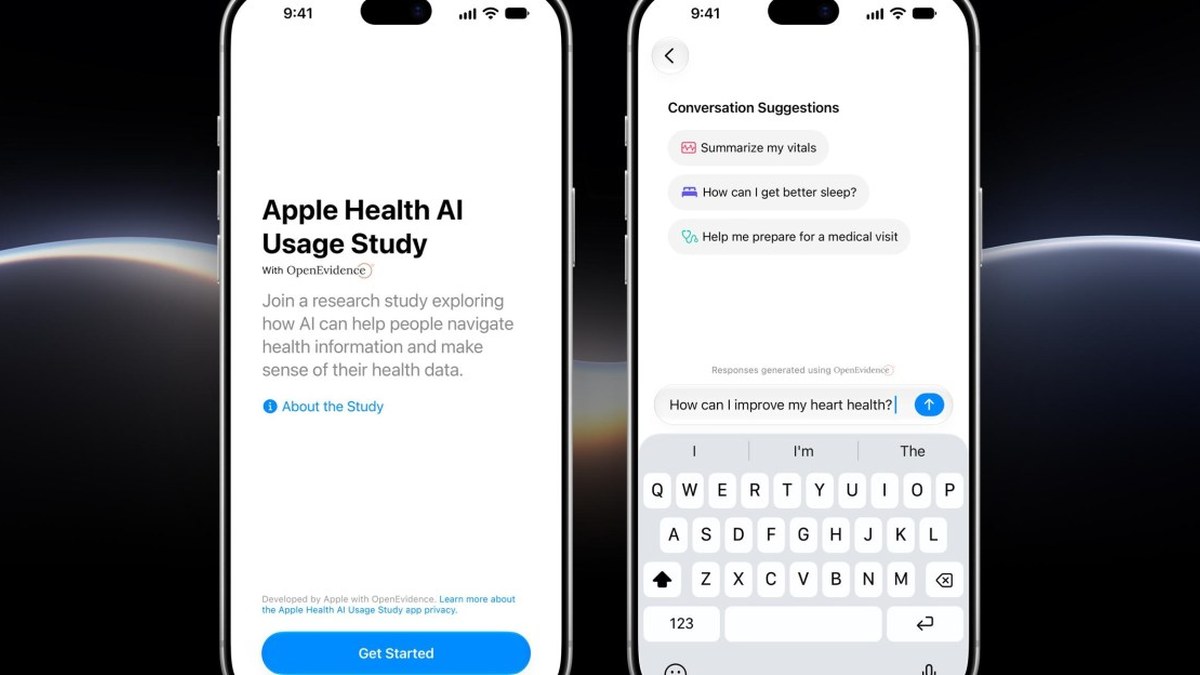
- Key facts & numbers: Apple announced the Apple Health AI Usage Study to assess how people engage with conversational AI health tools and evaluate the usefulness of their responses. Apple is conducting the study in collaboration with OpenEvidence, a clinical AI platform that bases its answers on peer-reviewed medical sources like The New England Journal of Medicine. Participants in the U.S. aged 21+ can join via a new iOS app, with Apple aiming to enroll up to 200,000 people to ask health questions and rate AI responses for accuracy, detail, and relevance.
- What happens next: Other outlets echo the headline focus, but the source reveals Apple isn’t using Apple Intelligence—this study is a stealth test of third-party clinical AI in real user contexts, not a demo of its own tech.
- Apple announced the Apple Health AI Usage Study to assess how people engage with conversational AI health tools and evaluate the usefulness of their responses.
- Apple is conducting the study in collaboration with OpenEvidence, a clinical AI platform that bases its answers on peer-reviewed medical sources like The New England Journal of Medicine.
- Participants in the U.S. aged 21+ can join via a new iOS app, with Apple aiming to enroll up to 200,000 people to ask health questions and rate AI responses for accuracy, detail, and relevance.
- The study app runs on iPhone 15 Pro devices with iOS 26 or later, uses text-based prompts, and allows optional dictation—but does not integrate Siri or Apple Intelligence.
Why It Matters
By collecting real-world user feedback on AI-generated health responses at scale, Apple gains direct insight into how people interpret and trust medical AI—information that could shape the functionality, safety, and regulatory approach of future consumer health tools, while reinforcing its position in the health tech space without relying on its own AI infrastructure yet.
Sources Cited
Related Coverage
Ask SkimNews