Can Tech Companies Like Google Really Put Data Centers in Space?
The 30-Second Skim
- What happened: Google is scheduled to launch a satellite on Oct. 1 carrying a single AI-capable server with four TPUs — an early test of a vision shared by Musk, Bezos, Altman, and Huang for solar-powered data centers in orbit.
- Key facts & numbers: Google is scheduled to launch a satellite on Oct. 1 that can run AI technologies in space, with help from SpaceX and satellite company Planet Labs, in what the company calls an early test of a much larger vision. The satellite carries the equivalent of a single data center server equipped with four tensor processing units (TPUs), the specialized chips Google uses to build and deliver its chatbots and other AI products. Elon Musk said "A.I. in space" will be the cheapest way to power the technology "not more than five years from now," framing orbital data centers as a near-term cost play.
- What happens next: NYT headline says 'data center' — article admits it's literally one server. Musk/Bezos/Altman/Huang hype vs. what's launching: not the same thing.
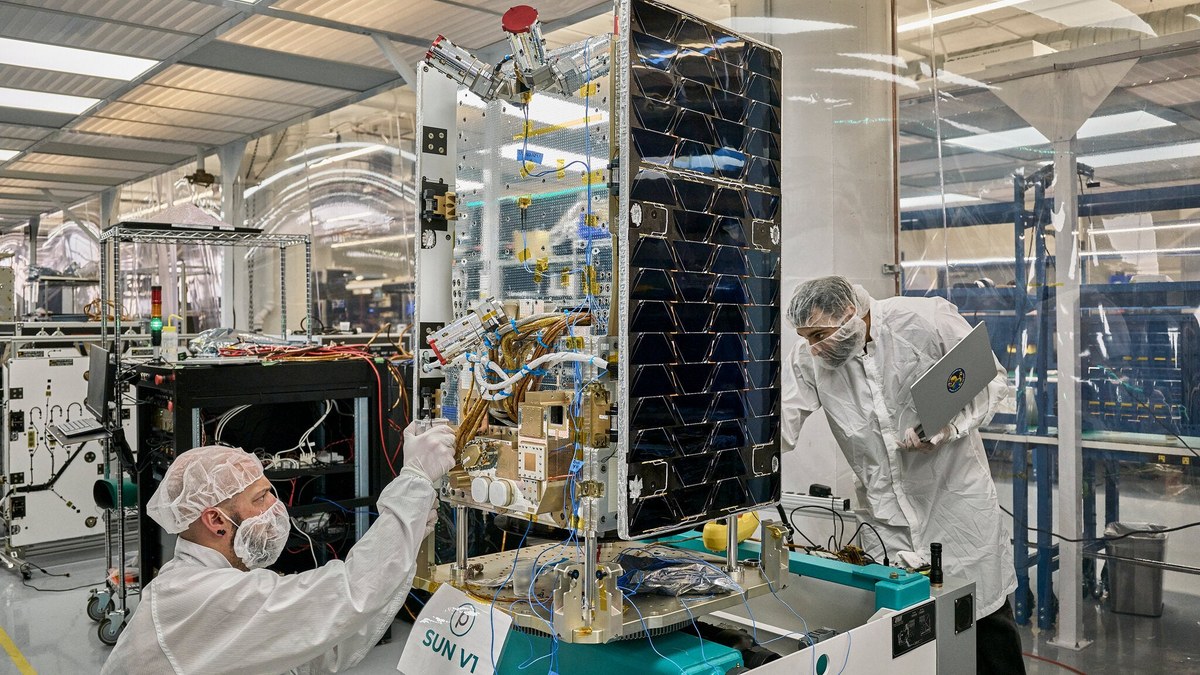
- Google is scheduled to launch a satellite on Oct. 1 that can run AI technologies in space, with help from SpaceX and satellite company Planet Labs, in what the company calls an early test of a much larger vision.
- The satellite carries the equivalent of a single data center server equipped with four tensor processing units (TPUs), the specialized chips Google uses to build and deliver its chatbots and other AI products.
- Elon Musk said "A.I. in space" will be the cheapest way to power the technology "not more than five years from now," framing orbital data centers as a near-term cost play.
- Jeff Bezos (Blue Origin), Sam Altman (OpenAI), and Jensen Huang (Nvidia) have also publicly backed the idea of putting data centers in space and fueling them with solar rays.
Why It Matters
Google's Oct. 1 payload is one server with four TPUs — a fraction of the thousands of machines in any terrestrial Google data center — yet Musk, Bezos, Altman, and Huang are already publicly betting on orbital AI infrastructure within five years. The gap between the hype and the hardware actually reaching orbit is the story: even Google's own framing calls this an early test, not a deployment, while rivals watch closely.
Sources Cited
Related Coverage
Ask SkimNews