Google’s Suncatcher Data Center Is Online
The 30-Second Skim
- What happened: Google’s Suncatcher has moved from orbital-data-center concept to a functioning prototype, giving the company a live test of specialized AI chips under the power, thermal and radiation constraints of space.
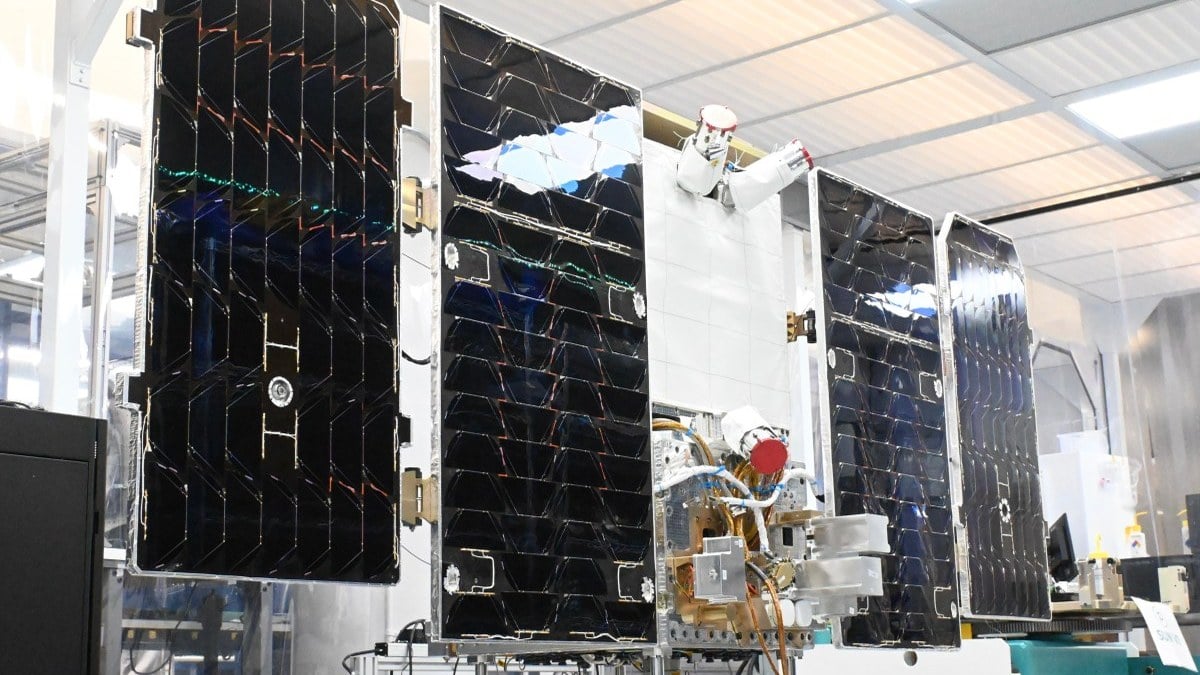
- Key facts & numbers: Suncatcher launched earlier this month with more than 100 other spacecraft on a SpaceX Falcon 9 and is now online, communicating with the ground after a commissioning process that tested its subsystems for about three weeks. Suncatcher generates up to 1 kW of electricity and carries four Google TPUs, but the chips’ power demands permit only one TPU to operate at a time for about 20 minutes. Gemma 4 was preloaded onto the satellite and produced a three-line space haiku when engineers sent its first prompt; Google also asked it to report orbital conditions, and a spokesperson said the spacecraft was operating nominally.
- What happens next: Both listed headlines chase the haiku; the buried constraint is harsher: only one of four TPUs can run, for about 20 minutes.
- Suncatcher launched earlier this month with more than 100 other spacecraft on a SpaceX Falcon 9 and is now online, communicating with the ground after a commissioning process that tested its subsystems for about three weeks.
- Suncatcher generates up to 1 kW of electricity and carries four Google TPUs, but the chips’ power demands permit only one TPU to operate at a time for about 20 minutes.
- Gemma 4 was preloaded onto the satellite and produced a three-line space haiku when engineers sent its first prompt; Google also asked it to report orbital conditions, and a spokesperson said the spacecraft was operating nominally.
- Google is testing the onboard TPUs under thermal stress and space radiation, focusing on radiation-induced “bit flips” that can corrupt data without triggering typical monitoring tools.
Why It Matters
Google has moved orbital AI from concept to operating test, exposing a stark power constraint: four TPUs are installed, but only one can run at a time for about 20 minutes. A two-satellite follow-up is slated for 2027 if the chips prove capable, while Google and SpaceX both remain dependent on rapidly reusable Starship to scale their orbital-data-center plans.
Sources Cited
Related Coverage
Ask SkimNews