Claude Code Quietly Adds Session URLs to Every Commit
The 30-Second Skim
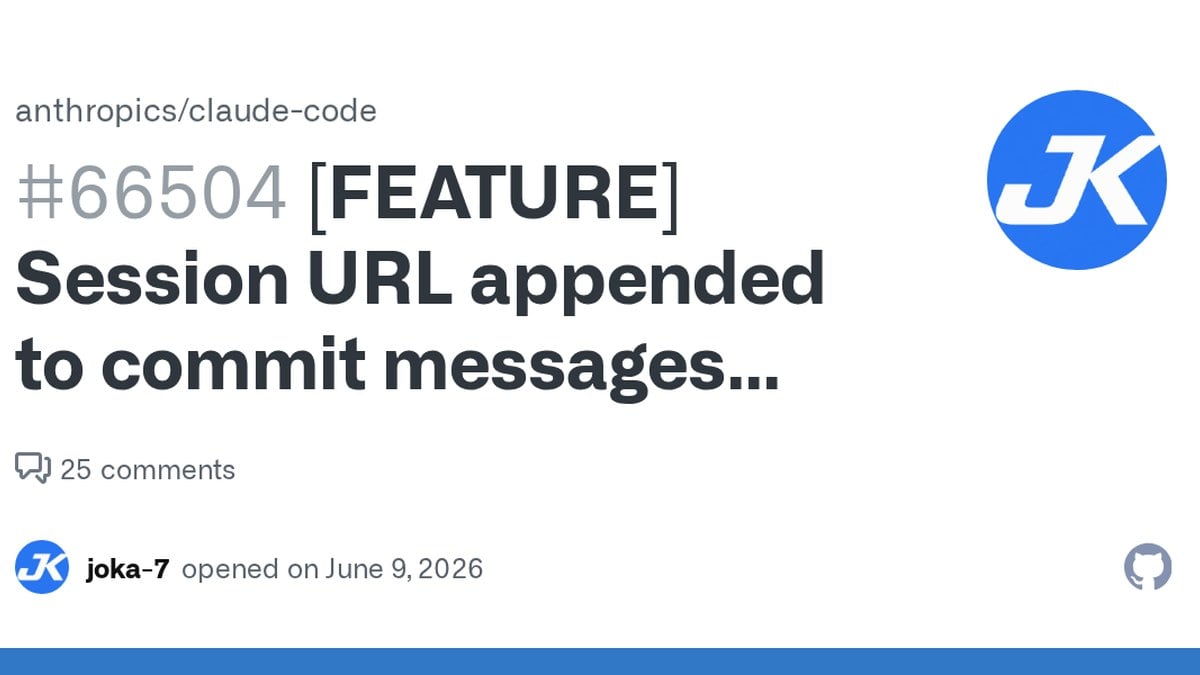
- What happened: A developer filed a feature request asking Anthropic's Claude Code to stop automatically appending session URLs to commit messages and PR descriptions without user consent, noting the behavior clutters shared git history and looks unprofessional to collaborators.
- Key facts & numbers: Claude Code automatically appends a session URL (https://claude.ai/code/session_...) to every commit message and PR description by default, with no opt-in prompt, warning, or mention during onboarding. Open-source contributors and teammates see the appended URL on every commit and PR, with the requester calling it unprofessional clutter in shared git history. The request proposes making the inclusion opt-in via a one-time onboarding prompt ("Would you like to include a link back to this Claude session in commit messages?"), or alternatively keeping it opt-out but making the setting discoverable during the first commit.
- What happens next: Your git history is now quietly advertising for Claude — and you never opted in. The opt-out exists. It's just buried.
- Claude Code automatically appends a session URL (https://claude.ai/code/session_...) to every commit message and PR description by default, with no opt-in prompt, warning, or mention during onboarding.
- Open-source contributors and teammates see the appended URL on every commit and PR, with the requester calling it unprofessional clutter in shared git history.
- The request proposes making the inclusion opt-in via a one-time onboarding prompt ("Would you like to include a link back to this Claude session in commit messages?"), or alternatively keeping it opt-out but making the setting discoverable during the first commit.
- The
attribution.commitsetting in.claude/settings.jsoncan suppress the URL but is described as "completely undiscovered" by users.
Why It Matters
Developers who use Claude Code unknowingly leak session URLs into shared git history visible to teammates and open-source contributors. With no opt-in prompt, suppression via .claude/settings.json is "completely undiscovered," and git hooks don't reliably fire in cloud environments — leaving most users exposed unless they dig through undocumented settings.
Sources Cited
Related Coverage
Ask SkimNews