Claude Code's 'Don't Ask Again' Exposes 1K+ GitHub Secrets
The 30-Second Skim
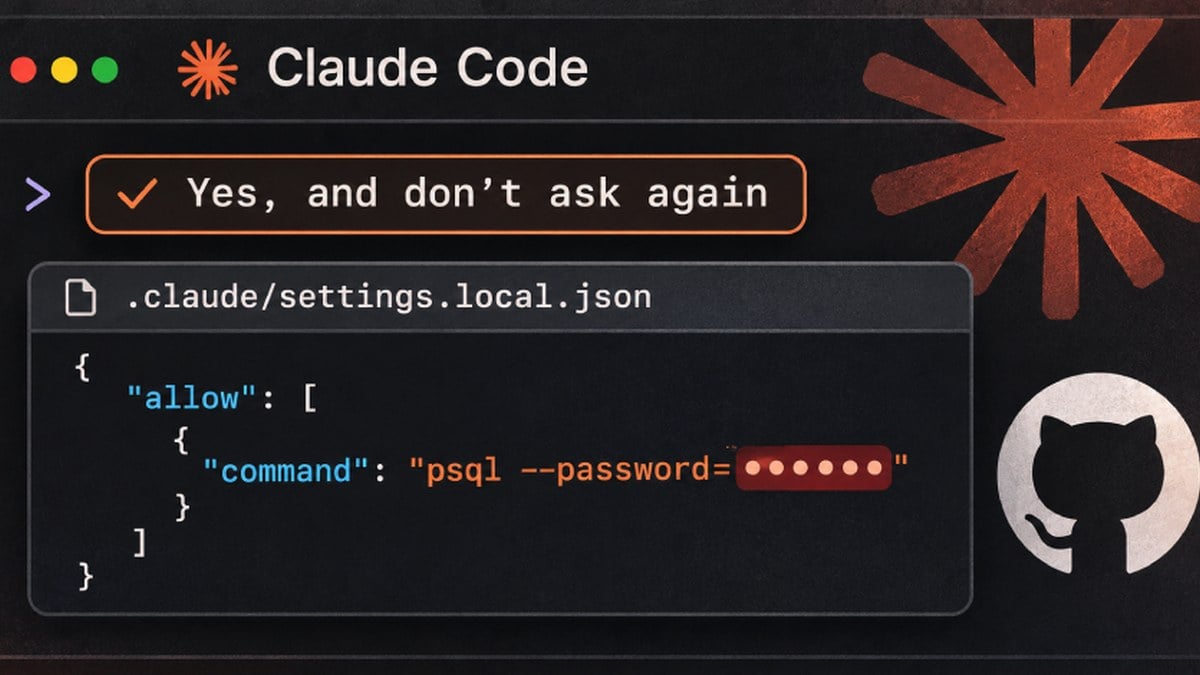
- What happened: When developers used Claude Code’s 'Yes, and don't ask again' option, the tool saved their approved commands—including embedded passwords and API keys—directly into configuration files. These files were later found publicly accessible on GitHub, exposing sensitive data to anyone.
- Key facts & numbers: The Hacker News and CyberSecurityNews report 1,122 public GitHub repositories contain exposed secrets from Claude Code’s 'don't ask again' feature. Developers manually entered credentials into commands, which were preserved upon approval, with GBHackers News citing 2,539 exposed secrets across 1,994 files.
- What happens next: Security teams are urged to scan GitHub for affected repositories and revoke exposed API keys, while Anthropic may issue updated guidance on secure command handling in upcoming Claude Code releases.
Why It Matters
This incident reveals a critical gap between developer convenience and security hygiene, where a trusted AI coding tool amplifies human error at scale. With over a thousand public repositories compromised, the leak risks widespread unauthorized access to systems, data breaches, and supply chain vulnerabilities across tech firms relying on GitHub-hosted code.
The event underscores the need for AI tools to implement real-time credential scanning and redaction before saving sensitive inputs. It may prompt stricter regulatory scrutiny on AI-assisted development platforms, pushing companies like Anthropic to redesign consent workflows and enforce zero-retention policies for high-risk inputs.
How Outlets Are Framing It
- [The Hacker News / Technical Exposure Focus]: Emphasizes the technical mechanism—how the 'don't ask again' function preserves raw commands—and confirms 1,122 public GitHub files as the verified exposure count.
- [CyberSecurityNews / Risk Amplification Lens]: Frames the issue as a systemic risk, highlighting how AI tooling can unintentionally escalate credential leaks through seemingly harmless user permissions.
- [GBHackers News / Scale & Volume Angle]: Stresses the expanded impact with higher figures—2,539 secrets across 1,994 files—suggesting broader exposure than initial reports.
Background & Timeline
- Nov 2026: The Hacker News publishes findings on Claude Code’s 'don't ask again' feature, identifying 1,122 public GitHub files with exposed credentials.
- Prior to Nov 2026: Developers widely adopted Claude Code’s convenience features without awareness that approved commands retained plaintext secrets in configuration files.
Sources Cited
- The Hacker News — Claude Code's “Don't Ask Again” File Exposes Passwords and Keys in 1,122 Public Copies on GitHub
- Startup Fortune — Claude Code's Don't Ask Again option left passwords in public GitHub files
- CyberSecurityNews — Claude Code's "Yes, and Don't Ask Again" Option Can Leak Passwords and API Keys to GitHub
- Cyber Press — Claude Code’s “Yes, and Don’t Ask Again” Feature Exposes Passwords and API Keys on GitHub
- GBHackers News — Claude Code’s “Don’t Ask Again” Feature Exposes 2,539 Secrets Across 1,994 GitHub R...
Related Coverage
Ask SkimNews