New DDRop Attack Breaks Intel TDX and AMD SEV-SNP Confidential Computing
The 30-Second Skim
- What happened: Researchers have disclosed DDRop, a hardware attack using a ~$159 interposer to silently drop memory writes and break Intel TDX, Intel Scalable SGX, and AMD SEV-SNP confidential-computing protections, with no simple patch in sight.
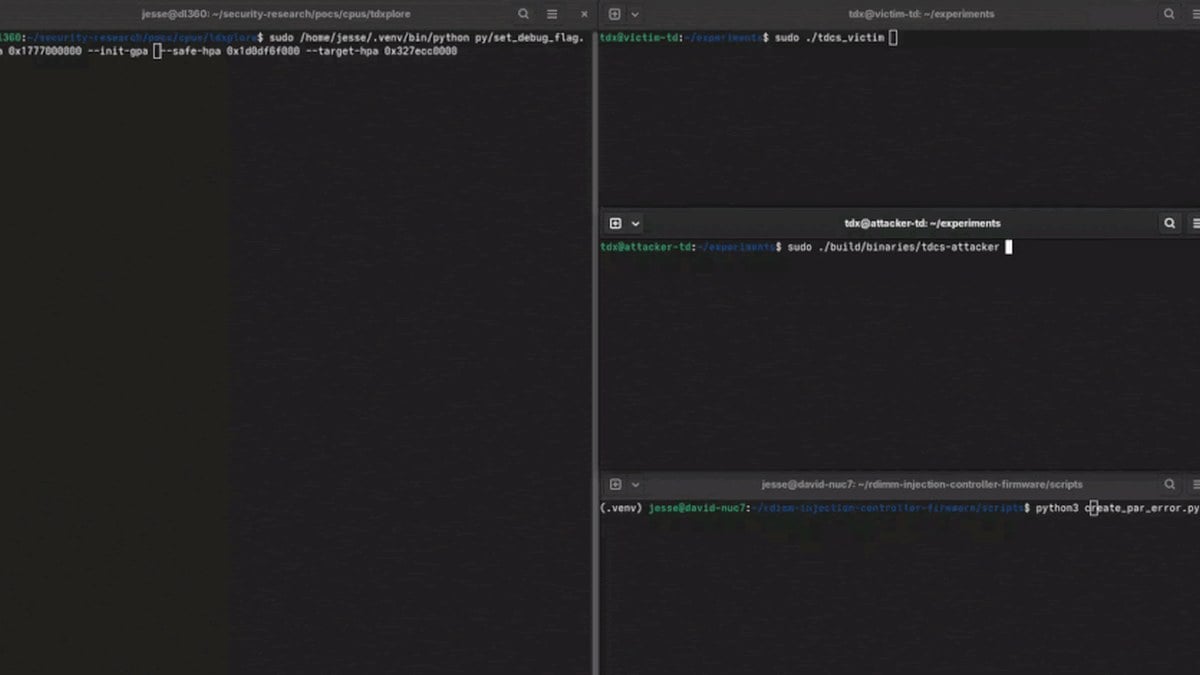
- Key facts & numbers: DDRop drops writes via a $159 interposer board fitted between a processor and DDR5 memory module, exploiting the missing 'freshness' guarantee in scalable memory encryption so processors read old encrypted data as current. Intel TDX falls to full VM takeover: dropping page-table setup writes let attackers map their own VM onto any physical address, read victim memory, toggle debug mode, and forge attestation — Intel's optional cryptographic-integrity mode blocks the first two but not attestation forgery. AMD SEV-SNP sees a narrower result: dropping writes during page relocation lets researchers copy one victim page's contents into another, while debug-mode and attestation attacks are Intel-specific.
- What happens next: Intel and AMD both said 'not our problem' — physical access is outside their threat model. Confidential computing was paper-provable, not bulletproof.
- DDRop drops writes via a $159 interposer board fitted between a processor and DDR5 memory module, exploiting the missing 'freshness' guarantee in scalable memory encryption so processors read old encrypted data as current.
- Intel TDX falls to full VM takeover: dropping page-table setup writes let attackers map their own VM onto any physical address, read victim memory, toggle debug mode, and forge attestation — Intel's optional cryptographic-integrity mode blocks the first two but not attestation forgery.
- AMD SEV-SNP sees a narrower result: dropping writes during page relocation lets researchers copy one victim page's contents into another, while debug-mode and attestation attacks are Intel-specific.
- AMD and Intel both told researchers the attacks fall outside their threat models because they require physical access; Intel declined to assign CVEs and said the research area is 'out of scope, but not out of mind.'
Why It Matters
Cloud providers like AWS, Microsoft Azure, and Google Cloud rely on Intel TDX and AMD SEV-SNP to sell confidential-computing services that promise customer data stays private even from the provider — DDRop shows that promise can be undermined for roughly $159 and one brief physical visit, and both vendors have declined to issue patches or CVEs.
Sources Cited
- The Hacker News — New DDRop Attack Breaks Intel TDX and AMD SEV-SNP Confidential Computing
Related Coverage
Ask SkimNews