Fake Adobe and Zoom Updates Deploy ScreenConnect RAT
The 30-Second Skim
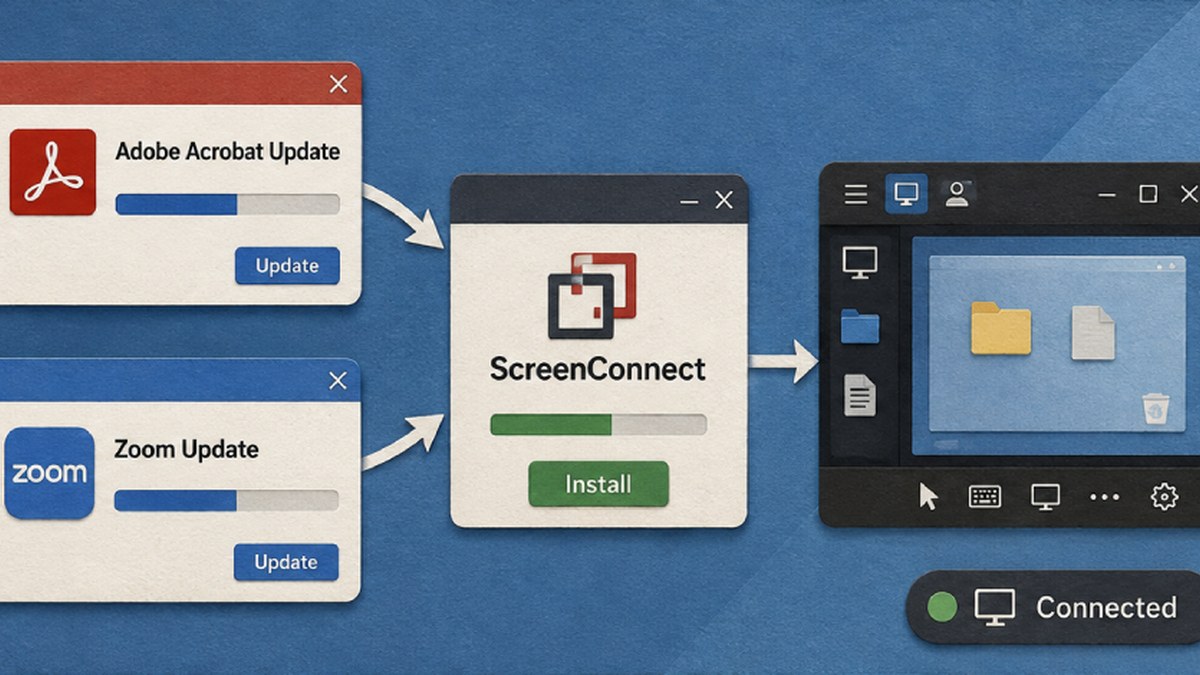
- What happened: Securonix researchers disclosed an ongoing multi-wave campaign called SMOKE#SCREEN that uses fake Adobe and Zoom software update lures to stealthily deploy ConnectWise ScreenConnect, granting attackers persistent remote access through legitimate RMM tooling.
- Key facts & numbers: Securonix Threat Research disclosed a multi-wave campaign codenamed SMOKE#SCREEN that uses fake Adobe and Zoom update lures, business document reviews, and system maintenance themes to deploy ConnectWise ScreenConnect, with payloads staged through a WsgiDAV server at 207.174.0[.]143:8080. The initial access vector is spear-phishing emails carrying obfuscated VBScript droppers that perform anti-analysis checks, aborting if processes like Wireshark, Process Monitor, VirtualBox, VMware Tools, XenServer, or Fiddler are detected before fetching a C# payload from 207.189.11[.]170. A third attack sample runs a batch script to disable Windows AMSI, escalate privileges via UAC, turn off SmartScreen protections through Registry modifications, and strip the Zone.Identifier alternate data stream before executing the MSI installer.
- What happens next: Same playbook, two theaters: fake Adobe/Zoom updates for the enterprise, fake Roblox cheats for the kids. Both weaponize legitimate software to bypass security stacks.
- Securonix Threat Research disclosed a multi-wave campaign codenamed SMOKE#SCREEN that uses fake Adobe and Zoom update lures, business document reviews, and system maintenance themes to deploy ConnectWise ScreenConnect, with payloads staged through a WsgiDAV server at 207.174.0[.]143:8080.
- The initial access vector is spear-phishing emails carrying obfuscated VBScript droppers that perform anti-analysis checks, aborting if processes like Wireshark, Process Monitor, VirtualBox, VMware Tools, XenServer, or Fiddler are detected before fetching a C# payload from 207.189.11[.]170.
- A third attack sample runs a batch script to disable Windows AMSI, escalate privileges via UAC, turn off SmartScreen protections through Registry modifications, and strip the Zone.Identifier alternate data stream before executing the MSI installer.
- The campaign's tradecraft rotated across trusted hosting services including Dropbox shared links and Cloudflare Quick Tunnels, and evolved from cautious XOR-encrypted VBScript droppers to aggressive nine-step Defender destruction sequences and then back to stealth with anti-EDR timing and self-contained encrypted bundles.
Why It Matters
SMOKE#SCREEN exploits the abuse of legitimate RMM tools like ScreenConnect—which are common in enterprise environments—letting attackers blend in with authorized IT tooling without deploying a custom RAT. With the campaign's tradecraft visibly evolving through an attacker-defender arms race (from XOR-encrypted VBScript to Defender destruction sequences to anti-EDR stealth), IT and SOC teams must now audit and monitor trusted RMM activity as a core detection priority, not assume allow-listed tools are inherently safe.
Sources Cited
Related Coverage
Ask SkimNews