One Extension Hijacks AI in Five Chromium Products
The 30-Second Skim
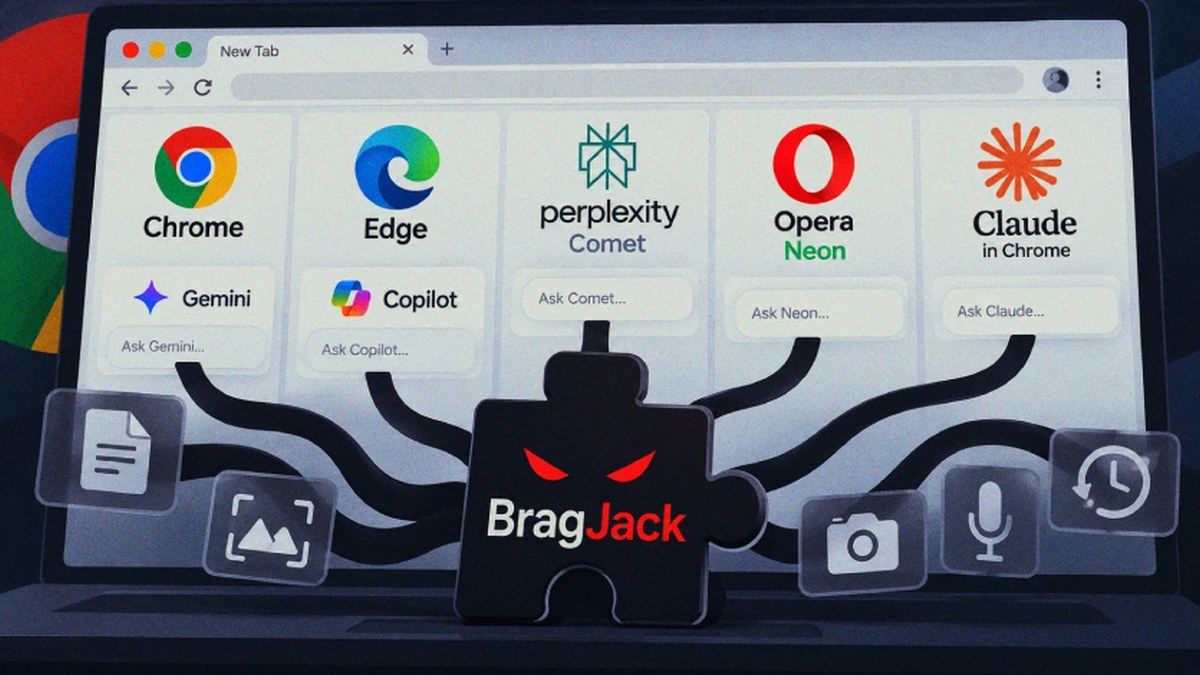
- What happened: Forever Security researchers showed that one ordinary browser extension could hijack AI assistants across five Chromium-based products — Chrome, Comet, Edge, Opera Neon, and Claude in Chrome — by seizing the trusted page each AI listens to.
- Key facts & numbers: Forever Security demonstrated that one ordinary browser extension could hijack AI assistants in five Chromium-based products: Gemini Live in Chrome, Perplexity Comet, Microsoft Edge, Opera Neon, and the Claude in Chrome extension. Gal Weizman first detailed the Chrome flaw publicly in March as 'GlicJack'; Google fixed it in Chrome version 143.0.7499.192 in early January 2026, and it is tracked as CVE-2026-0628 with a CISA rating of 8.8. Comet was the worst case — its AI-driven browser gave the hijacked agent broad powers, letting it read any file, list visited sites, take screenshots, and act as the user; researchers exploited a leftover test address, testing.perplexity.com, that was not locked down the same way as the main page.
- What happens next: Three of five vendors paid bounties but never committed to a fix date — for those users, the patch you wait for may not exist.
- Forever Security demonstrated that one ordinary browser extension could hijack AI assistants in five Chromium-based products: Gemini Live in Chrome, Perplexity Comet, Microsoft Edge, Opera Neon, and the Claude in Chrome extension.
- Gal Weizman first detailed the Chrome flaw publicly in March as 'GlicJack'; Google fixed it in Chrome version 143.0.7499.192 in early January 2026, and it is tracked as CVE-2026-0628 with a CISA rating of 8.8.
- Comet was the worst case — its AI-driven browser gave the hijacked agent broad powers, letting it read any file, list visited sites, take screenshots, and act as the user; researchers exploited a leftover test address, testing.perplexity.com, that was not locked down the same way as the main page.
- Microsoft Edge was the hardest to break — researchers combined a Microsoft marketing page allowed to send prompts with a race condition that switched the agent between 'think' and 'act' modes; Microsoft fixed it in Edge version 150.0.4078.48 on July 2 (CVE-2026-55945, rated 4.2).
Why It Matters
The finding exposes a shared architectural weakness: placing an AI agent with file and camera access inside the browser creates a high-privilege target reachable from any installed extension using two common permissions. Only Chrome (CVE-2026-0628, fixed January 2026) and Edge (CVE-2026-55945, fixed July 2) shipped patches; Comet, Opera Neon, and Claude in Chrome received bounties without committed fix dates.
Sources Cited
Related Coverage
- BioShocking Hack Steals Credentials from 6 AI BrowsersThe Hacker News
- BioShock Attack Tricks AI Browsers Into Leaking CredentialsGoogle News Technology
- ShadowPrompt: Zero-Click XSS Flaw Hit Claude ExtensionThe Hacker News
- Agentjacking Attack Tricks AI Coding Agents Into Running Malicious CodeThe Hacker News
Ask SkimNews