OpenAI-Cisco Shirudo Shields Linux Before Patching
The 30-Second Skim
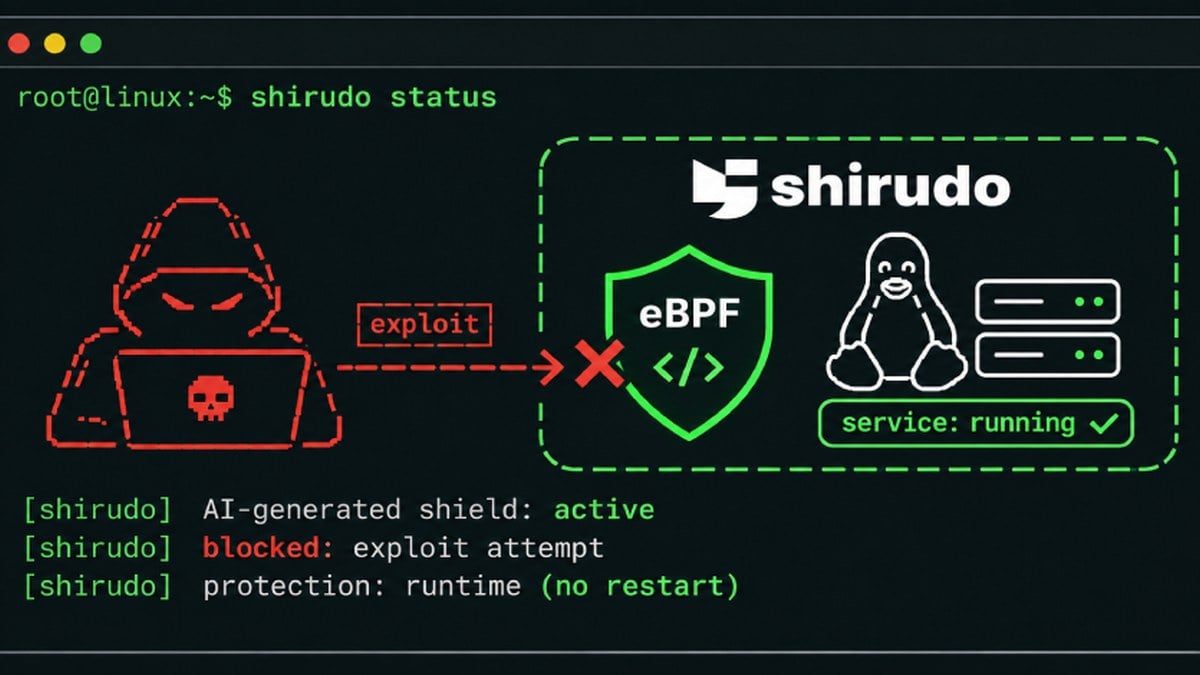
- What happened: OpenAI and Cisco jointly launched Shirudo, an open-source Linux runtime for AI-assisted defense. Its agents write dynamic eBPF controls that shield systems from exploits without downtime, while SecurityWeek's headline emphasizes protection for unpatched Linux systems.
- Key facts & numbers: Shirudo means “shield” in Japanese. It is open source, is a Linux runtime, and uses AI agents to write dynamic eBPF controls; the stated goals are exploit protection without downtime and more time for defenders.
- What happens next: No specific next date, deployment deadline, or performance benchmark is stated in the coverage. The excerpt also gives no supported-distribution list or test results for defenders assessing the open-source runtime.
Why It Matters
For defenders, the practical value stated in the excerpt is continuity: exploit defenses operate without downtime rather than requiring a disruptive response. Dynamic eBPF controls give teams more time when a Linux system remains unpatched, matching SecurityWeek's focus on the patch gap.
The open-source release makes Shirudo available to the Linux community, giving OpenAI and Cisco a shared mechanism for distributing AI-assisted defense. The supplied evidence remains architectural: it includes no benchmark, deployment guide, supported-distribution list, or measured security result for defenders.
How Outlets Are Framing It
- Coverage consensus: The supplied report and SecurityWeek both frame Shirudo as a joint OpenAI-Cisco open-source project for Linux exploit defense. They converge on using runtime protection to cover systems that have not yet been patched.
- SecurityWeek: Its headline foregrounds the operational gap by naming “unpatched Linux systems.” That puts exposure while remediation is unavailable at the center, rather than making the agentic control-writing mechanism the lead.
- Runtime-control lens: The source text adds an angle the headline framing can obscure: AI agents write dynamic eBPF controls, and the stated benefit is defense without downtime. Continuity and programmable runtime protection are therefore central.
Background & Timeline
- Pre-launch history: Not supplied in the excerpt; no dated precedent or prior Shirudo deployment is described, so the timeline starts with the OpenAI-Cisco unveiling.
- Launch moment: OpenAI and Cisco introduced Shirudo as an open-source Linux runtime where AI agents write dynamic eBPF controls to shield systems without downtime.
Sources Cited
- The Hacker News — OpenAI and Cisco Unveil AI-Assisted Linux Security Tool to Block Exploits Before Patching
- SecurityWeek — OpenAI, Cisco Unveil Open Source Tool to Shield Unpatched Linux Systems
- Crypto Briefing — Cisco and OpenAI launch Shirudo to safeguard agentic AI
- Small Business Trends — Cisco and OpenAI Unveil Shirudo: A Self-Defending Security Solution
Related Coverage
Ask SkimNews