SpaceX Starship V3 Aces Reentry on Flight 13 Test
The 30-Second Skim
- What happened: SpaceX's Starship V3 completed its 13th test flight on July 24, deploying 20 advanced Starlink satellites before executing the vehicle's best reentry to date, with the spacecraft remaining afloat after splashdown in the Indian Ocean.
- Key facts & numbers: Starship V3 launched on July 24 from Cameron County, Texas on "Flight 13," deploying 20 advanced Starlink satellites 124 miles (200 kilometers) up after the 407-foot rocket lifted all 33 booster engines at liftoff. The first-stage booster was unable to relight enough engines for its controlled return and slammed into the Gulf of Mexico, while the upper-stage spacecraft continued eastward more than 10,000 miles to splash down softly in the Indian Ocean. SpaceX called it the vehicle's best reentry yet; engineer Kate Tice dubbed the flight "lucky flight 13," and Elon Musk confirmed on X that all heat shield data was collected, including from six Starlink-mounted cameras and tiles deliberately painted white to simulate missing sections.
- What happens next: The headline hails the splashdown, but the booster still pancaked into the Gulf — reuse is half done, not done. Also wild: six Starlinks were straight-up paparazzi-ing the heat shield.
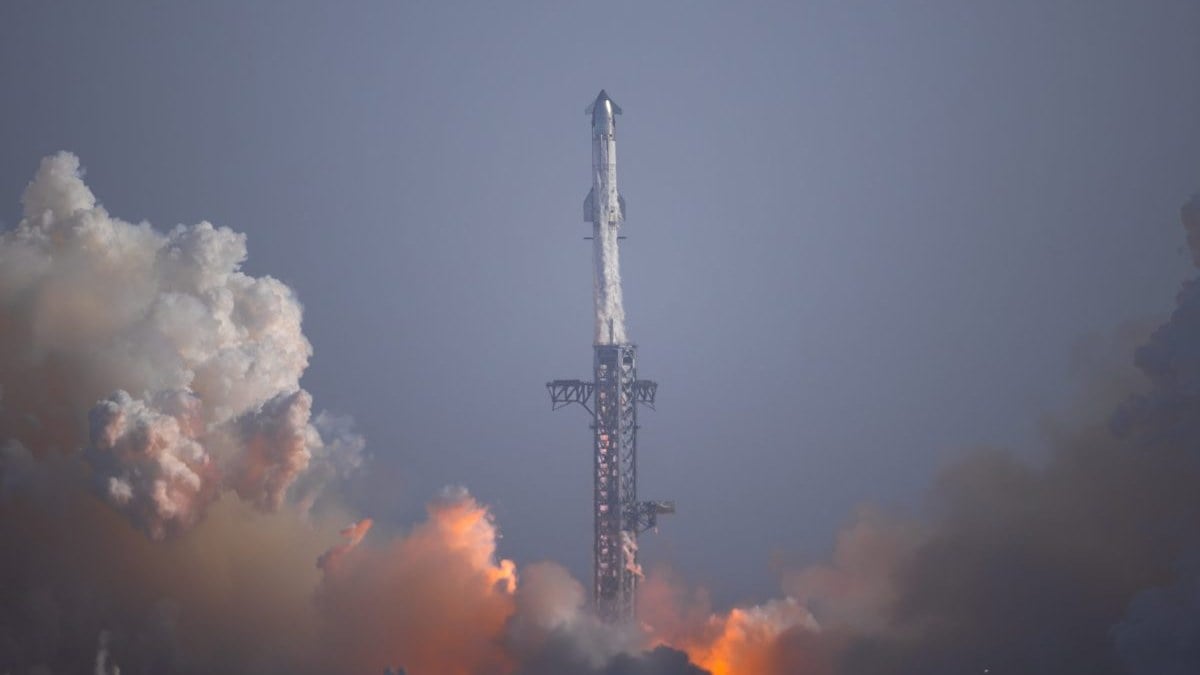
- Starship V3 launched on July 24 from Cameron County, Texas on "Flight 13," deploying 20 advanced Starlink satellites 124 miles (200 kilometers) up after the 407-foot rocket lifted all 33 booster engines at liftoff.
- The first-stage booster was unable to relight enough engines for its controlled return and slammed into the Gulf of Mexico, while the upper-stage spacecraft continued eastward more than 10,000 miles to splash down softly in the Indian Ocean.
- SpaceX called it the vehicle's best reentry yet; engineer Kate Tice dubbed the flight "lucky flight 13," and Elon Musk confirmed on X that all heat shield data was collected, including from six Starlink-mounted cameras and tiles deliberately painted white to simulate missing sections.
- SpaceX had replaced six of the booster's 33 engines after a July 16 launch abort, with Thursday's second attempt scrubbed by thick clouds from Tropical Storm Bertha.
Why It Matters
A clean upper-stage reentry—flawless enough to float intact—removes a major hurdle before SpaceX attempts to catch the Starship spacecraft with mechanical arms at Starbase, the next milestone toward full reuse. For NASA, that timeline matters because Artemis III crew docking rehearsals with Starship are slated for next year.
Sources Cited
Related Coverage
- SpaceX's 13th Starship Test Flight Ends in Soft SplashdownBBC Environment
- Starship Flight 13 Succeeds Despite Booster Engine FailuresGoogle News Business
- SpaceX launches its biggest rocket yet in test flight from TexasThe Guardian Science
- SpaceX to Catch Starship With Launch Tower on Next FlightGoogle News Business
Ask SkimNews