Sunrun Turns Solar Homes Into Distributed AI Data Centers
The 30-Second Skim
- What happened: Sunrun launched a pilot to install AI compute nodes in solar-powered homes, paying homeowners to host servers that process AI inference workloads as the company extends beyond residential energy into distributed AI infrastructure.
- Key facts & numbers: Sunrun launched a pilot program installing AI compute nodes in homes with its solar panels and battery storage, paying homeowners to host the hardware while selling the computing capacity to enterprise customers. The company is leveraging its existing network of more than 1.1 million customers to process AI inference workloads, which the source notes can be spread across smaller locations and benefit from being closer to end users to reduce latency. Sunrun has already completed a proof of concept demonstrating both customer demand and revenue generation, and is now expanding testing under different operating conditions and electricity rate structures.
- What happens next: The 'get paid to host a server' hook is the lure. The real play: Sunrun quietly repositioning as AI infrastructure using 1.1M solar homes as distributed compute.
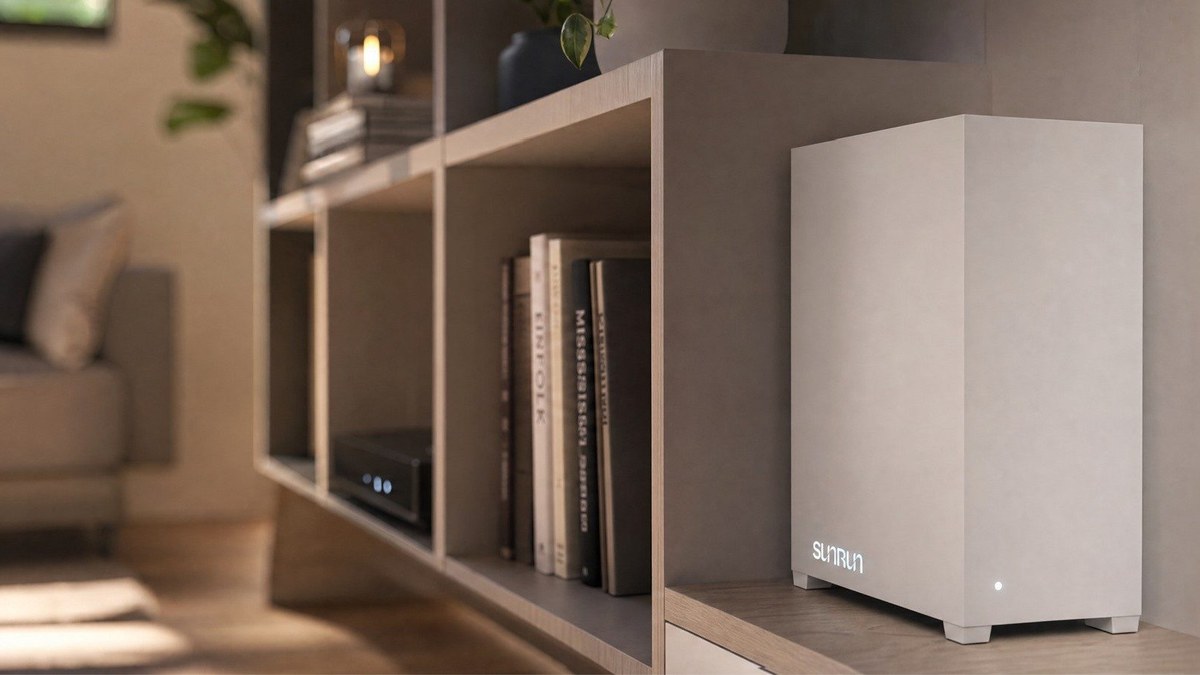
- Sunrun launched a pilot program installing AI compute nodes in homes with its solar panels and battery storage, paying homeowners to host the hardware while selling the computing capacity to enterprise customers.
- The company is leveraging its existing network of more than 1.1 million customers to process AI inference workloads, which the source notes can be spread across smaller locations and benefit from being closer to end users to reduce latency.
- Sunrun has already completed a proof of concept demonstrating both customer demand and revenue generation, and is now expanding testing under different operating conditions and electricity rate structures.
- The compute nodes sit behind customers' electric meters and are paired with home batteries, allowing them to continue operating during some power outages while reducing pressure on congested parts of the electric grid.
Why It Matters
Sunrun's 1.1 million solar homes become a potential distributed inference network that could deploy faster than traditional AI data centers, which are bottlenecked by permitting, construction, and utility interconnection delays. Homeowners gain a new revenue stream alongside savings from solar and virtual power plant programs, while Sunrun repositions from a residential solar company into an AI infrastructure provider — tapping the same electricity-demand surge that has hyperscalers racing for capacity.
Sources Cited
Related Coverage
Ask SkimNews