Intezer: Pair Claude With an AI SOC, Not Use It Alone
The 30-Second Skim
- What happened: Intezer argues that AI platforms like Claude, Codex, and Cursor are built to help analysts rather than investigate every security alert at scale, and should be paired with an autonomous AI SOC layer that handles continuous triage.
- Key facts & numbers: AI platforms like Claude, Codex, and Cursor are already helping security teams write detections, investigate alerts, summarize incidents, and automate repetitive work, with the SOC conversation shifting from "whether" AI belongs to "where" each AI fits. Intezer outlines a three-layer architecture: existing security tools at the bottom, an autonomous AI SOC investigating every alert in the middle, and AI platforms like Claude at the top where analysts collaborate on higher-value work. AI platforms like Claude face a "tokenomics" problem when used for round-the-clock alert triage — an organization would pay for tens of thousands of AI conversations daily, most of which would conclude the alert is benign.
- What happens next: Buried stat worth flagging: nearly 1% of confirmed incidents came from "low-severity" alerts. That's the quiet argument for why skipping the boring ones actually costs you.
- AI platforms like Claude, Codex, and Cursor are already helping security teams write detections, investigate alerts, summarize incidents, and automate repetitive work, with the SOC conversation shifting from "whether" AI belongs to "where" each AI fits.
- Intezer outlines a three-layer architecture: existing security tools at the bottom, an autonomous AI SOC investigating every alert in the middle, and AI platforms like Claude at the top where analysts collaborate on higher-value work.
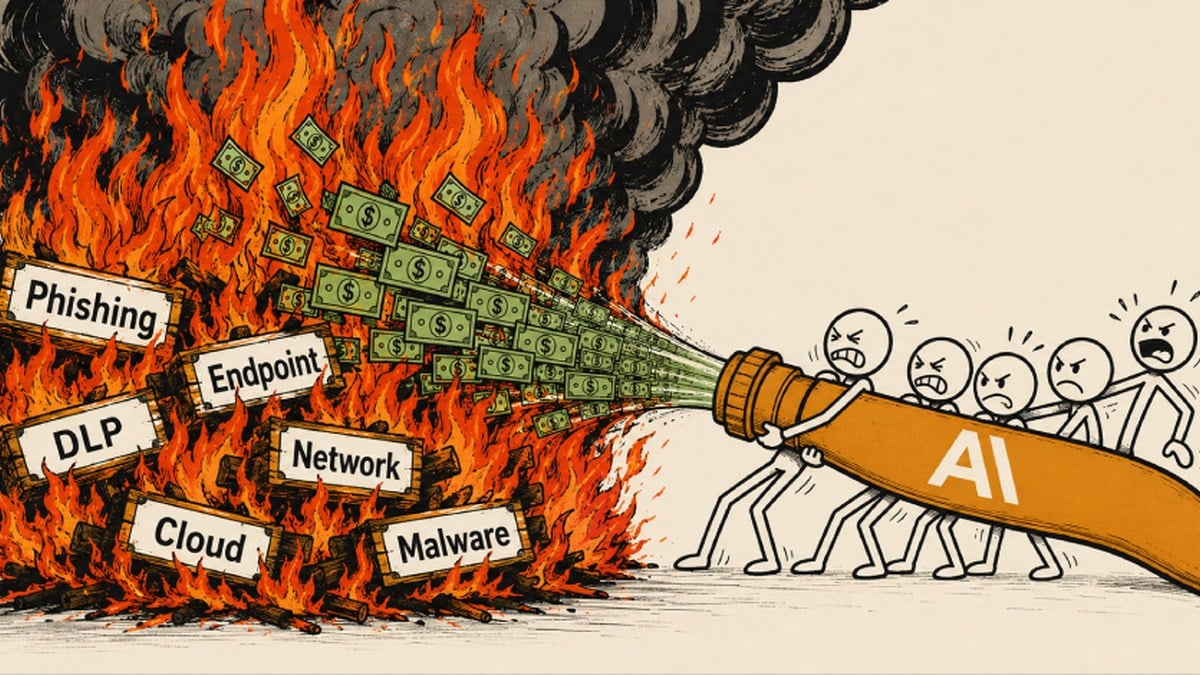
- AI platforms like Claude face a "tokenomics" problem when used for round-the-clock alert triage — an organization would pay for tens of thousands of AI conversations daily, most of which would conclude the alert is benign.
- MDR-reliant organizations hit a structural barrier: managed detection and response providers typically own the investigation workflow, case management, and enriched telemetry, leaving AI platforms like Claude without the raw data needed to reason over alerts independently.
Why It Matters
Security leaders evaluating AI spending face a concrete cost trap: routing every alert through a large language model means tens of thousands of daily AI conversations, most of which resolve as benign. The proposed alternative — an autonomous AI SOC handling triage while platforms like Claude help analysts — reframes the buying decision from tool selection to layered architecture, and the 25-million-alert finding makes the case that skipping low-severity alerts carries measurable incident risk.
Sources Cited
- The Hacker News — FOMO in the SOC: Where AI Platforms like Claude Actually Fit
Related Coverage
Ask SkimNews