Uber beats Waymo to launch London robotaxis
The 30-Second Skim
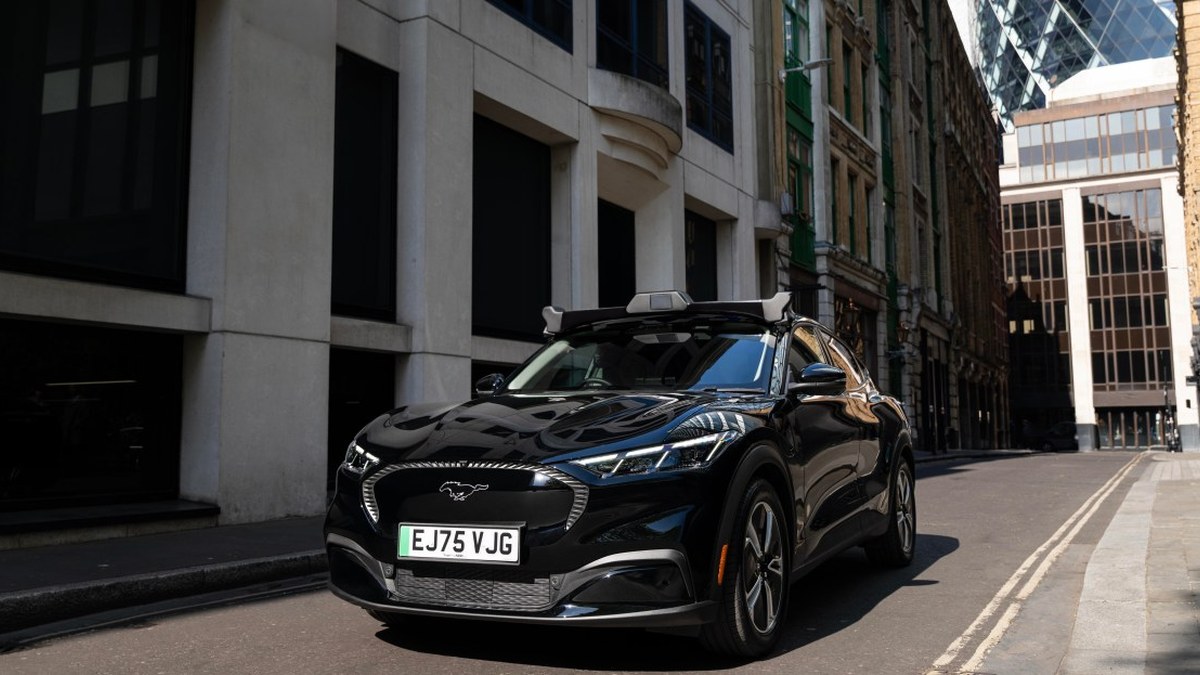
- What happened: Uber launched London's first commercial robotaxi service, beating Waymo by deploying UK startup Wayve's camera-only, no-lidar AV2.0 system in Ford Mustang Mach-Es staffed with safety drivers.
- Key facts & numbers: Uber launched London's first commercial robotaxi service using autonomous tech from UK startup Wayve, beating Waymo to the punch with safety drivers behind the wheel for the initial rollout. Wayve's AV2.0 system relies on cameras and radar but no lidar and no HD maps, allowing operation beyond geofenced areas — a hardware-light approach that contrasts with the sensor-heavy stacks used by Waymo and most US robotaxi operators. The Ford Mustang Mach-E fleet is maintained by Uber and UK fleet operator Otto Car, with Nissan Leafs slated to join later; London riders can opt into being paired with a robotaxi via UberX, Uber Comfort, or Uber Electric.
- What happens next: The 'Uber beats Waymo' headline buries the bigger tell: Wayve just proved you can skip the $10K lidar roof and still roll out a commercial service — that could undercut everyone.
- Uber launched London's first commercial robotaxi service using autonomous tech from UK startup Wayve, beating Waymo to the punch with safety drivers behind the wheel for the initial rollout.
- Wayve's AV2.0 system relies on cameras and radar but no lidar and no HD maps, allowing operation beyond geofenced areas — a hardware-light approach that contrasts with the sensor-heavy stacks used by Waymo and most US robotaxi operators.
- The Ford Mustang Mach-E fleet is maintained by Uber and UK fleet operator Otto Car, with Nissan Leafs slated to join later; London riders can opt into being paired with a robotaxi via UberX, Uber Comfort, or Uber Electric.
- Wayve, founded in 2017 by Cambridge machine-learning PhD students, raised $1.2 billion earlier this year from Uber, Nvidia, Stellantis, Nissan, and Mercedes-Benz, and is also collaborating with Stellantis on hands-free driving tech.
Why It Matters
Uber's choice of Wayve's camera-and-radar-only, no-lidar system sets a lower-cost hardware standard for robotaxi fleets outside the US and China, while its hybrid human-plus-AV model is the structural opposite of Waymo's driver-only vision — meaning whichever company's playbook Londoners adopt will likely define Europe's robotaxi template.
Sources Cited
Related Coverage
Ask SkimNews