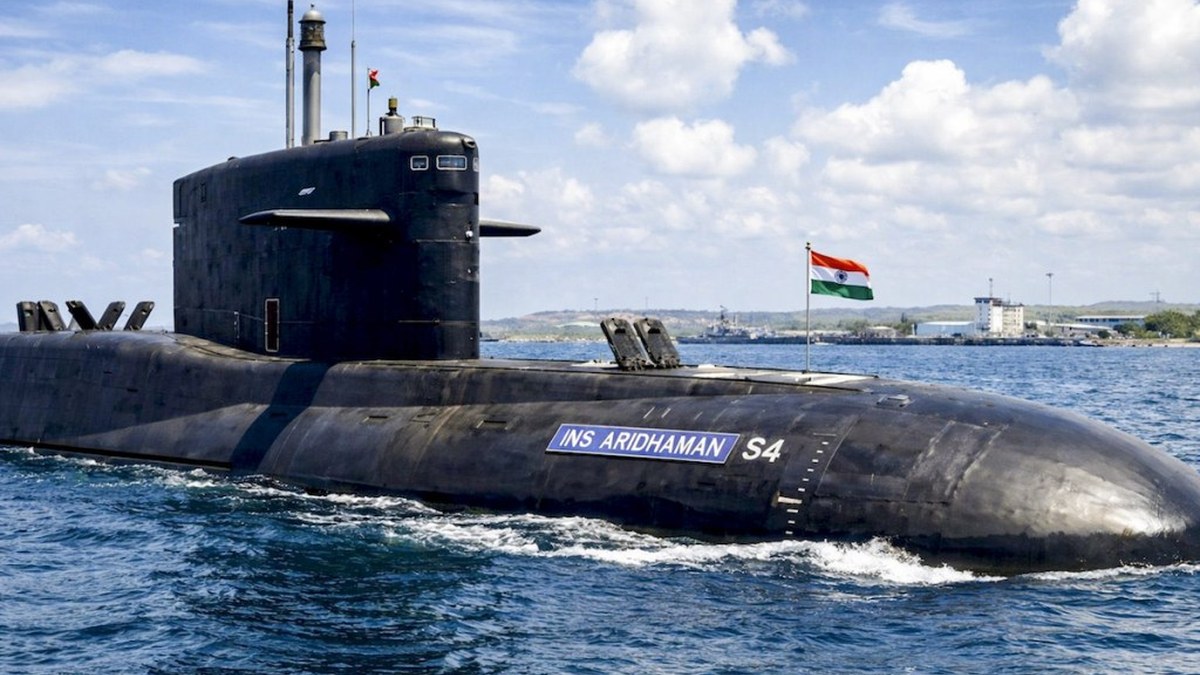
India Commissions Third Nuclear Submarine INS Aridhaman
The 30-Second Skim
- What happened: India commissioned INS Aridhaman, its third nuclear-powered ballistic missile submarine, completing a progression from demonstration to an institutionalized sea-based nuclear deterrent. The vessel is larger than the original Arihant-class and can carry longer-range K-4 submarine-launched ballistic missiles.
- Key facts & numbers: India commissioned INS Aridhaman, its third nuclear-powered ballistic missile submarine, joining INS Arihant (2016) and INS Arighat (2024) to form a multi-boat SSBN force rather than a single-platform posture. INS Aridhaman is larger than the original Arihant-class design and is built to carry longer-range submarine-launched ballistic missiles, including the K-4, enabling deterrence patrols in better-protected waters farther from adversaries. India's SSBN fleet underwrites the country's "No First Use" doctrine by providing a second-strike leg that the source describes as far harder to detect, track, and destroy than land-based missiles or aircraft-delivered weapons.
- What happens next: A submarine you'll never see is the whole point. India's third SSBN isn't about projecting power — it's about making sure no one can call its nuclear bluff.
- India commissioned INS Aridhaman, its third nuclear-powered ballistic missile submarine, joining INS Arihant (2016) and INS Arighat (2024) to form a multi-boat SSBN force rather than a single-platform posture.
- INS Aridhaman is larger than the original Arihant-class design and is built to carry longer-range submarine-launched ballistic missiles, including the K-4, enabling deterrence patrols in better-protected waters farther from adversaries.
- India's SSBN fleet underwrites the country's "No First Use" doctrine by providing a second-strike leg that the source describes as far harder to detect, track, and destroy than land-based missiles or aircraft-delivered weapons.
- The Indian Navy has shifted from a conventional sea-control force into a central custodian of India's most survivable nuclear capability, a change the piece links to a decade of maritime emphasis under Prime Minister Narendra Modi.
Why It Matters
A three-boat SSBN fleet gives India a more resilient sea-based nuclear leg, shrinking the chance an adversary could eliminate its retaliatory capability in a first strike. For China, whose Indian Ocean presence the source flags as growing, a harder-to-track Indian deterrent complicates any preemptive disarmament calculation — even if India never matches China ship for ship.
Sources Cited
Related Coverage
Ask SkimNews