Pakistan hosts Egypt ministers on US‑Israeli war
The 30-Second Skim7 points
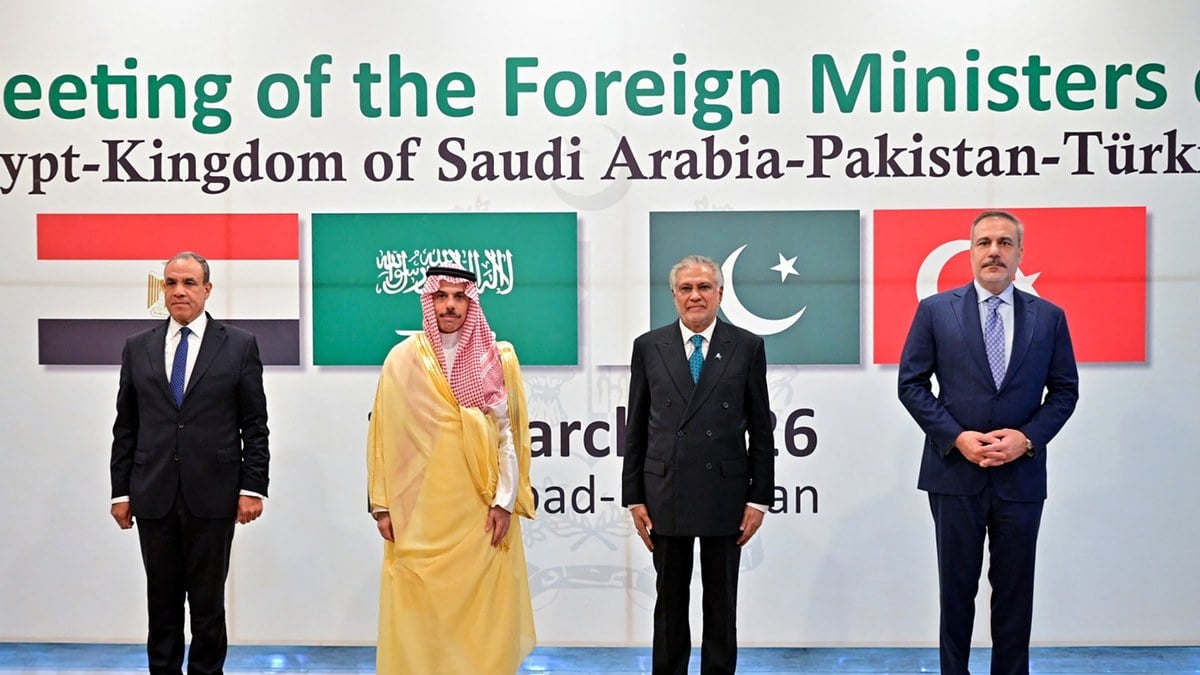
- What happenedPakistan convened foreign ministers from Turkey, Saudi Arabia and Egypt in Islamabad to discuss de‑escalation of the US‑Israeli war on Iran, while a parallel call secured limited Pakistani ship passage through the Strait of Hormuz.
- Key facts & numbersPakistan hosted foreign ministers from Turkey, Saudi Arabia and Egypt in Islamabad for two days of talks aimed at de‑escalating the US‑Israeli war on Iran, with Deputy Prime Minister Ishaq Dar leading the meeting. Ishaq Dar held a phone call with Iran’s foreign minister Abbas Araghchi, during which Tehran agreed to allow 20 Pakistani‑flagged vessels to transit the Strait of Hormuz at two per day as a confidence‑building measure. Donald Trump announced a 10‑day extension of his deadline for Iran to reopen the Strait of Hormuz and offered a 15‑point cease‑fire plan that Iran rejected, instead demanding an end to US‑Israeli aggression and reparations.
- What happens nextPakistan’s diplomatic tightrope gets a boost—Iran’s ship deal, but the real power player, Tehran, never set foot in Islamabad.
- Pakistan hosted foreign ministers from Turkey, Saudi Arabia and Egypt in Islamabad for two days of talks aimed at de‑escalating the US‑Israeli war on Iran, with Deputy Prime Minister Ishaq Dar leading the meeting.
- Ishaq Dar held a phone call with Iran’s foreign minister Abbas Araghchi, during which Tehran agreed to allow 20 Pakistani‑flagged vessels to transit the Strait of Hormuz at two per day as a confidence‑building measure.
- Donald Trump announced a 10‑day extension of his deadline for Iran to reopen the Strait of Hormuz and offered a 15‑point cease‑fire plan that Iran rejected, instead demanding an end to US‑Israeli aggression and reparations.
- Analysts described Pakistan’s role as a “very delicate balancing act,” acting as a messenger between the US and Iran while lacking leverage to impose solutions, and warned that success could boost Islamabad’s diplomatic standing while failure would hurt the country.
Why It Matters
If the talks succeed, the limited reopening of the Strait of Hormuz eases a bottleneck that handles about 20 % of global oil and gas, relieving pressure on Pakistan’s energy imports and Gulf revenues; a failure would deepen Pakistan’s economic strain and diplomatic isolation.
Sources Cited
- The Express TribunePakistan in delicate balancing act
Related Coverage
Ask SkimNews
The day’s news in one short email, every morning.
Free. One email a day. Unsubscribe in one click.