US Can't Match $20K Drones With Million-Dollar Missiles
The 30-Second Skim
- What happened: A 40-day 2026 Iran-US-Israel conflict exposed how cheap, mass-produced drones and missiles overwhelmed the West's expensive, exquisite platforms, with analysts framing the shift as a 'Third China Shock' rewriting the economics of defense.
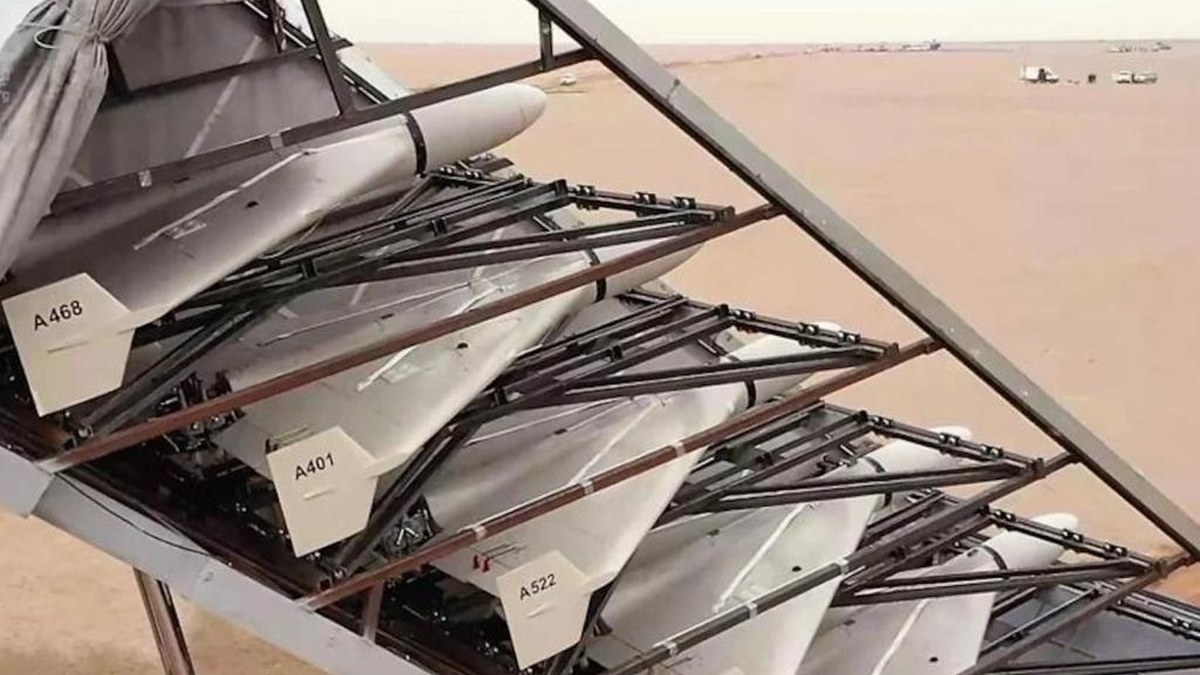
- Key facts & numbers: The 'Third China Shock' thesis frames a 40-day 2026 Iran-US-Israel conflict as proof that adversaries using cheap, mass-produced drones and ballistic missiles can overwhelm the West's high-cost, exquisite platforms — with the article conceding the immediate protagonist was Iran, not China Wage asymmetries are stark: US industrial wages exceed $30/hour ($5,000+/month), versus Chinese ($830-1,225), Russian ($900-1,100) and Iranian ($200-600) monthly pay — a '12-to-1' gap the article calls the chasm behind the cost crisis The exchange ratio is ruinous: an Iranian Shahed-136 drone costing roughly $20,000 is countered by a Patriot interceptor costing several million dollars, which the article says no amount of qualitative superiority can indefinitely absorb
- What happens next: Headline says 'China Shock' but the war described is US-vs-Iran — China is doctrine-exporter, not combatant. Real lede: $20K drone vs multi-million-dollar Patriot.
- The 'Third China Shock' thesis frames a 40-day 2026 Iran-US-Israel conflict as proof that adversaries using cheap, mass-produced drones and ballistic missiles can overwhelm the West's high-cost, exquisite platforms — with the article conceding the immediate protagonist was Iran, not China
- Wage asymmetries are stark: US industrial wages exceed $30/hour ($5,000+/month), versus Chinese ($830-1,225), Russian ($900-1,100) and Iranian ($200-600) monthly pay — a '12-to-1' gap the article calls the chasm behind the cost crisis
- The exchange ratio is ruinous: an Iranian Shahed-136 drone costing roughly $20,000 is countered by a Patriot interceptor costing several million dollars, which the article says no amount of qualitative superiority can indefinitely absorb
- US defense firms (Lockheed Martin, RTX, Boeing) must serve shareholders and quarterly earnings, while Chinese, Russian and Iranian defense bases operate as state utilities focused on output rather than profit margin
Why It Matters
The article argues that the $20,000-Shahed-versus-multi-million-dollar-Patriot exchange ratio is not an anomaly but a structural reality rooted in a 12-to-1 wage gap — one that makes America's $800+ billion defense budget increasingly unable to sustain attrition warfare with adversaries whose labor costs run a fraction of Western rates. If the thesis holds, Washington faces a binary: accept a diminished capacity for prolonged conflict, or restructure procurement around scalable, long-cycle production rather than bespoke, profit-laden platforms.
Sources Cited
- Asia Times — Third China Shock exposing US’s broken defense economics
- Center for American Progress — Trump Global Weakness Watch: How Trump Is Undermining American Power
- The Jerusalem Post — How US gave Iran, China, Russia reality check in Venezuela
- Atlantic Council — Germany’s policy on China: From win-win to strategic competition
- The New York Times — India’s Modi Left Soul-Searching After Failed Courtships of Xi and Trump
Related Coverage
Ask SkimNews