Trump caught in 'asymmetric resolve' trap in Iran war
The 30-Second Skim7 points
- What happenedA Wake Forest professor argues that Trump has fallen into an 'asymmetric resolve' trap in the Iran war — a stronger great power with limited stakes fighting a weaker foe whose regime survival is on the line, a pattern that has defeated the US, Soviets, and French in past conflicts.
- Key facts & numbersCharles Walldorf, a Wake Forest politics professor, argues Trump has fallen into an 'asymmetric resolve' trap, in which a stronger power with less will to fight faces a weaker adversary whose regime survival is at stake — making victory 'tough, even close to impossible.' As of mid-March, the war has produced upward of 5,000 Iranian military casualties and more than 1,500 Iranian civilian deaths, compared to 13 dead US service members, yet Tehran has not backed down. A Marist poll from March 6 found 55% of Americans viewed Iran as a minor threat or no threat at all, and the war is more unpopular than nearly any US war since WWII, with roughly 60% of Americans in opposition.
- What happens nextWalldorf's framework is basically: when a weaker nation's existence is on the line, it out-fights a stronger nation that can walk away. Vietnam, Afghanistan, Soviet Afghan, French Algeria — same ending.
- Charles Walldorf, a Wake Forest politics professor, argues Trump has fallen into an 'asymmetric resolve' trap, in which a stronger power with less will to fight faces a weaker adversary whose regime survival is at stake — making victory 'tough, even close to impossible.'
- As of mid-March, the war has produced upward of 5,000 Iranian military casualties and more than 1,500 Iranian civilian deaths, compared to 13 dead US service members, yet Tehran has not backed down.
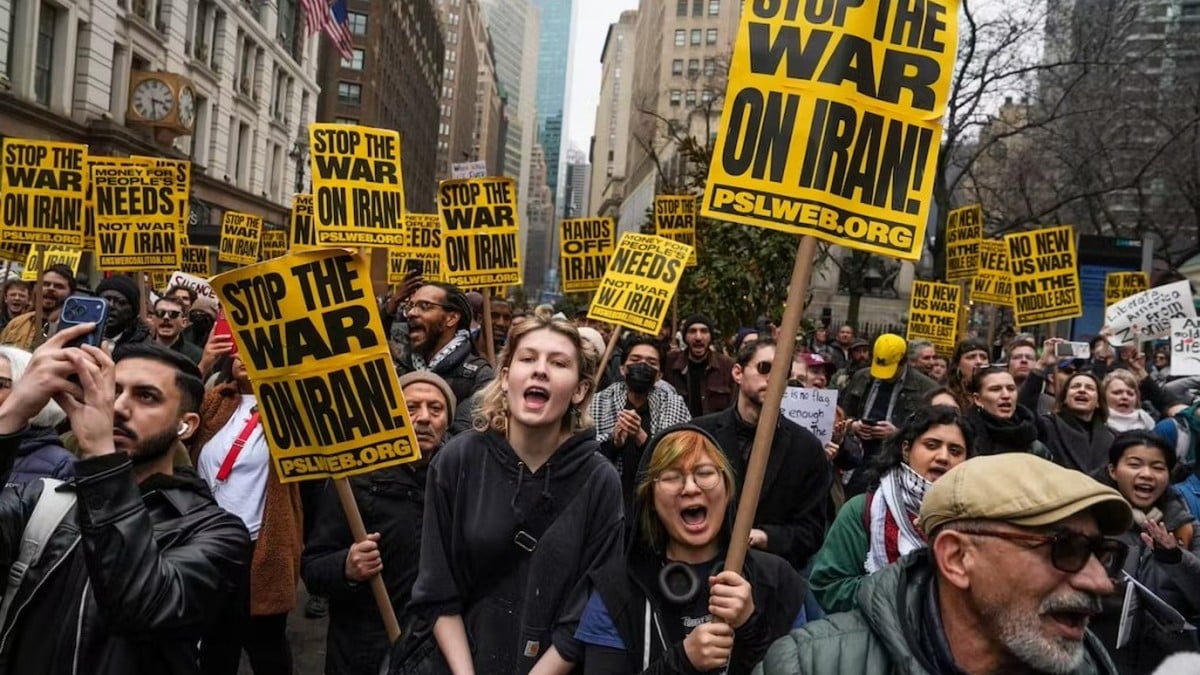
- A Marist poll from March 6 found 55% of Americans viewed Iran as a minor threat or no threat at all, and the war is more unpopular than nearly any US war since WWII, with roughly 60% of Americans in opposition.
- Historical parallels Walldorf cites: Vietnam (1.1 million North Vietnamese dead vs. 58,000 US troops; US withdrawal), Afghanistan (84,000 Taliban vs. 2,400 US troops; Taliban returned to power), and the Soviet Union's 1980s Afghan defeat.
Why It Matters
With roughly 60% of Americans opposing the war and Iran sustaining 5,000+ military casualties without breaking, Trump faces the same fork past presidents hit in Vietnam and Afghanistan: escalate into a quagmire or cut a deal and withdraw. His history of face-saving exits (Taliban 2020, Yemen 2024) points toward withdrawal, but more US troops and B-52 bombers are already heading to the Gulf, and the 'hubris of power' has historically won.
Sources Cited
- Griffin Daily NewsTrump to address nation as Iran war batters approval
Related Coverage
Ask SkimNews