Logevall: Trump Repeating LBJ's Vietnam Escalation Trap
The 30-Second Skim7 points
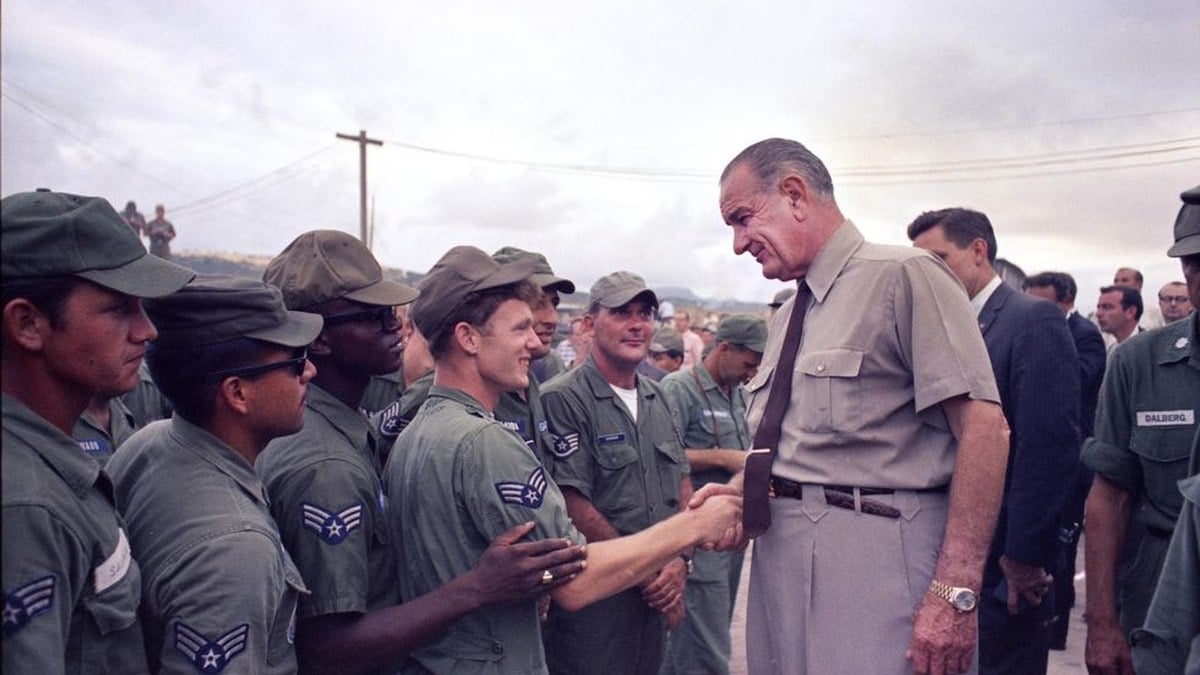
- What happenedHarvard historian Fredrik Logevall warns that President Trump's escalating confrontation with Iran — now featuring a Navy blockade of the Strait of Hormuz and consideration of resumed air strikes — mirrors the escalation trap that trapped President Lyndon B. Johnson in Vietnam, a war Johnson privately doubted was 'worth fighting for' as early as May 1964.
- Key facts & numbersPresident Trump threatened to destroy Iranian civilization on April 7, then offered a ceasefire that produced a single day of peace talks in Pakistan, but is now ordering a U.S. Navy blockade of the Strait of Hormuz and reportedly weighing the resumption of limited air strikes. Fredrik Logevall, a Harvard historian and Pulitzer Prize-winning author of "Embers of War," told Responsible Statecraft that Trump's Iran policy exhibits the same self-reinforcing escalation pattern that consumed LBJ in Vietnam, as each side misreads tactical successes and feels compelled to escalate further. President Johnson confided to National Security Adviser McGeorge Bundy in May 1964 — nearly a year before Marines landed at Da Nang — that he "don't think it's worth fighting for and I don't think we can get out," revealing deep private doubts about a war he was simultaneously expanding.
- What happens nextBuried in the Q&A: LBJ told Bundy in May 1964 he didn't think Vietnam was 'worth fighting for' — a year before the Marines landed at Da Nang.
- President Trump threatened to destroy Iranian civilization on April 7, then offered a ceasefire that produced a single day of peace talks in Pakistan, but is now ordering a U.S. Navy blockade of the Strait of Hormuz and reportedly weighing the resumption of limited air strikes.
- Fredrik Logevall, a Harvard historian and Pulitzer Prize-winning author of "Embers of War," told Responsible Statecraft that Trump's Iran policy exhibits the same self-reinforcing escalation pattern that consumed LBJ in Vietnam, as each side misreads tactical successes and feels compelled to escalate further.
- President Johnson confided to National Security Adviser McGeorge Bundy in May 1964 — nearly a year before Marines landed at Da Nang — that he "don't think it's worth fighting for and I don't think we can get out," revealing deep private doubts about a war he was simultaneously expanding.
- Vice President Hubert Humphrey submitted a mid-February 1965 memorandum pleading with Johnson not to escalate, warning that doing so would divide the American people and worsen Johnson's chances for re-election in 1968 — a prediction that proved prescient.
Why It Matters
Trump is weighing a Hormuz blockade and potential troop deployment without the public backing that eventually sustained Johnson in Vietnam, and Logevall's historical reading suggests even a modest initial force commitment creates a self-reinforcing escalatory spiral — each deployment requiring more troops to defend it. The Joint Chiefs' 1965 estimate of 500,000 troops over five years proved accurate, illustrating how incremental escalation in Vietnam outran every political objective Johnson set.
Sources Cited
- Responsible StatecraftLacing up LBJ's shoes, Trump is walking willingly into a trap
Related Coverage
Ask SkimNews
The day’s news in one short email, every morning.
Free. One email a day. Unsubscribe in one click.