Butterfly that barely ages could help unlock longevity secrets
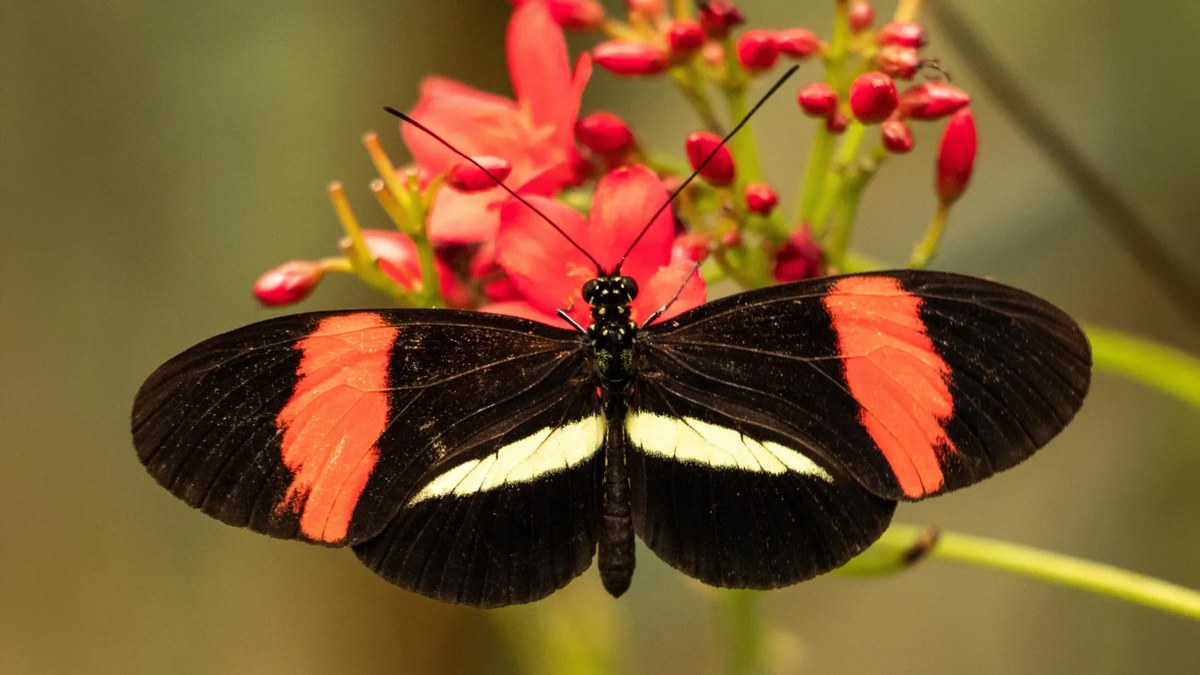
The 30-Second Skim
- What happened: A University of Bristol-led study in Nature Communications finds that tropical Heliconius butterflies can live up to 25 times longer than closely related species and show almost no physical decline with age, positioning them as a new model for longevity research.
- Key facts & numbers: Heliconius hewitsoni reached a maximum lifespan of 348 days, while its close relative Dione juno survived only 14 days — a 25-fold gap in maximum lifespan documented in the Bristol-led Nature Communications study. Heliconius hecale showed no measurable age-related decline in grip strength tests, while shorter-lived Dryas iulia experienced clear physical deterioration, according to experiments conducted with the Smithsonian Tropical Research Institute in Panama. Heliconius butterflies consistently exhibited longer average and maximum lifespans, lower baseline mortality, and slower aging rates than related non-pollen-feeding species across the Heliconiini tribe.
- What happens next: A butterfly that lives almost a year and doesn't lose grip strength with age — and pollen isn't even the whole answer. Nature's giving us a free experiment.
- Heliconius hewitsoni reached a maximum lifespan of 348 days, while its close relative Dione juno survived only 14 days — a 25-fold gap in maximum lifespan documented in the Bristol-led Nature Communications study.
- Heliconius hecale showed no measurable age-related decline in grip strength tests, while shorter-lived Dryas iulia experienced clear physical deterioration, according to experiments conducted with the Smithsonian Tropical Research Institute in Panama.
- Heliconius butterflies consistently exhibited longer average and maximum lifespans, lower baseline mortality, and slower aging rates than related non-pollen-feeding species across the Heliconiini tribe.
- Pollen feeding alone did not explain the longevity gap: H. hecale still lived substantially longer than D. iulia even when pollen was removed from its diet, pointing to deeper evolutionary adaptations.
Why It Matters
The finding gives biologists a closely related species pair — long-lived Heliconius versus short-lived relatives like Dryas iulia — where the genetic differences driving slower aging can be isolated, potentially informing research into healthy aging in longer-lived animals including humans. The fact that pollen removal did not erase the longevity advantage shifts the scientific focus from diet alone to underlying evolutionary mechanisms.
Sources Cited
- Science Daily — Butterfly that barely ages could help unlock longevity secrets
Related Coverage
- Jonathan Tortoise DNA Reveals Mitochondrial Longevity CluesThe Guardian Science
- Myotis Bat Genomes Reveal Cell-Death Longevity TrickScience Daily
- Study reveals 117-year-old's biology shows aging and youth coexistScience Daily
- British swallowtail split from European cousins much earlier than thought, study findsThe Guardian Environment
Ask SkimNews