NANOG Gene Identified as Master Switch for Human
The 30-Second Skim
- What happened: Scientists have identified NANOG as the master gene that initiates human embryonic development, using CRISPR base editing to show its role differs from mice — a finding that could improve IVF success rates and advance stem cell research.
- Key facts & numbers: Kathy Niakan's team at the University of Cambridge used CRISPR base editing to identify NANOG as the master gene initiating human embryonic development, with a role distinct from its function in mice. NANOG functions species-specifically: disabling it blocked yolk sac progenitors in mouse eggs but prevented any cells from forming the embryo in human eggs donated by IVF patients. NANOG discovery could improve IVF success — Niakan says current shape-based embryo selection fails about half the time even when embryos look viable under the microscope.
- What happens next: Half of 'perfect-looking' IVF embryos can't implant. NANOG might explain why — and Niakan's is the first base-editing study on healthy human embryos.
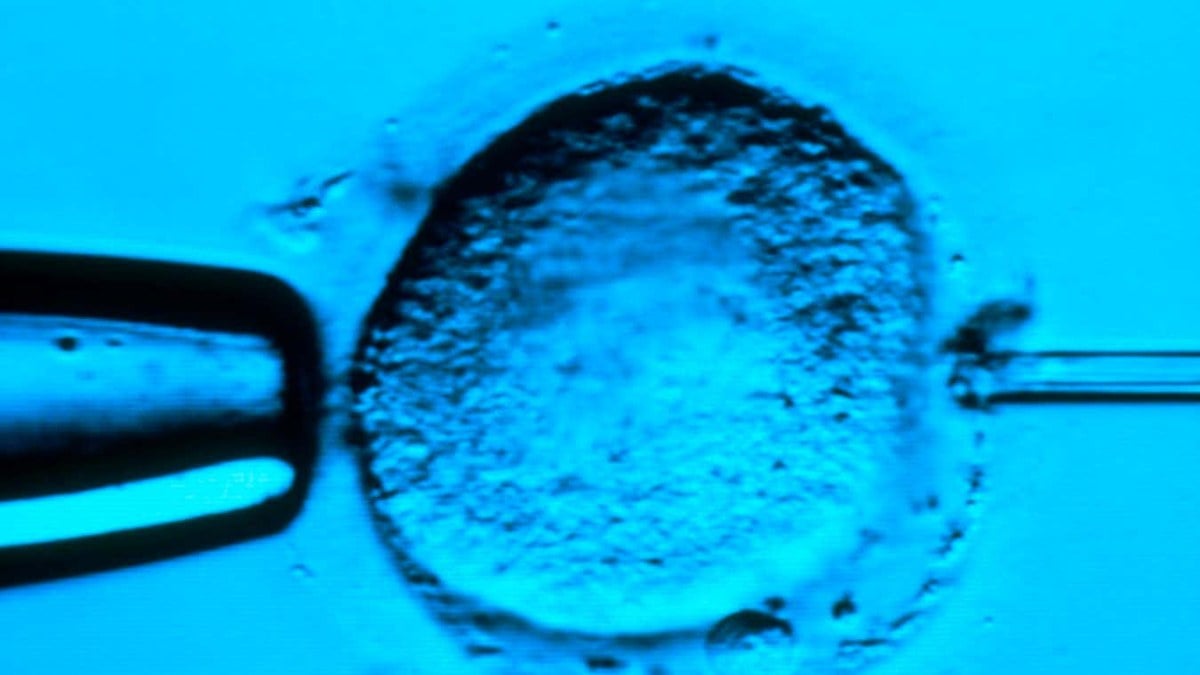
- Kathy Niakan's team at the University of Cambridge used CRISPR base editing to identify NANOG as the master gene initiating human embryonic development, with a role distinct from its function in mice.
- NANOG functions species-specifically: disabling it blocked yolk sac progenitors in mouse eggs but prevented any cells from forming the embryo in human eggs donated by IVF patients.
- NANOG discovery could improve IVF success — Niakan says current shape-based embryo selection fails about half the time even when embryos look viable under the microscope.
- The researchers injected gene-editing machinery into eggs alongside sperm to edit at an earlier stage, but roughly half the resulting eggs were still mosaics — a rate Robin Lovell-Badge at the Francis Crick Institute called "too high" for clinical use.
Why It Matters
The discovery addresses a fundamental gap: NANOG's role couldn't be extrapolated from mice because it works differently in people. For the roughly half of IVF embryos that look viable but fail to implant, identifying molecular markers like NANOG could improve success rates — though clinical gene editing remains far off, with mosaicism still ~50% even with improved techniques.
Sources Cited
- New Scientist — We’ve uncovered a master gene that switches on human development
Related Coverage
Ask SkimNews