Oxford team watches virus assembly in real time
The 30-Second Skim7 points
- What happenedOxford scientists have directly observed virus-like particles assembling one molecule at a time, revealing how simple trial-and-error rules enable precise self-assembly without a blueprint.
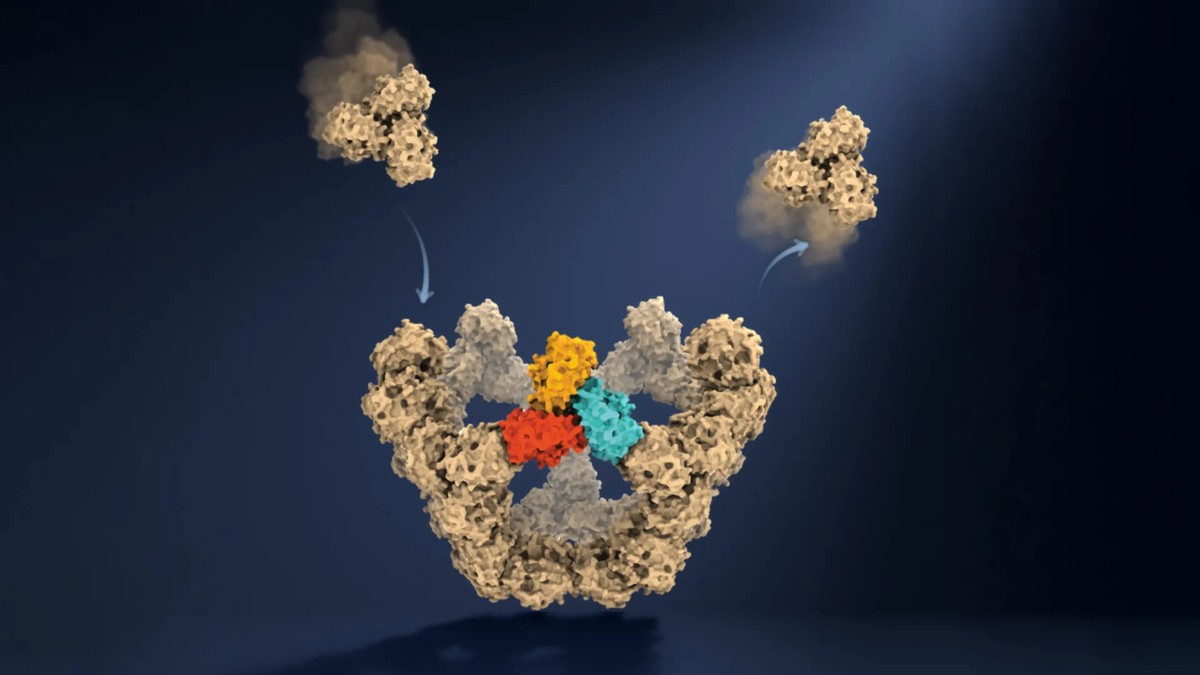
- Key facts & numbersUniversity of Oxford researchers used mass photometry to track the real-time assembly of virus-like particles, capturing molecular steps previously too fleeting to observe. Dr. Roi Asor explained that viral components rely on weak, reversible interactions to make and correct mistakes, allowing them to eventually lock into stable configurations. A pentagonal ring of five protein units forms the first stable structure during assembly, acting as a molecular checkpoint that accelerates further growth.
- What happens nextEveryone’s focused on the ‘no blueprint’ angle, but the real story is the pentagonal ring: that single stable structure changes everything about how fast viruses build themselves.
- University of Oxford researchers used mass photometry to track the real-time assembly of virus-like particles, capturing molecular steps previously too fleeting to observe.
- Dr. Roi Asor explained that viral components rely on weak, reversible interactions to make and correct mistakes, allowing them to eventually lock into stable configurations.
- A pentagonal ring of five protein units forms the first stable structure during assembly, acting as a molecular checkpoint that accelerates further growth.
- Professor Philipp Kukura emphasized that observing individual particles grow over time replaces theoretical models with direct evidence of self-assembly pathways.
Why It Matters
By identifying the precise molecular checkpoint that stabilizes early viral assembly, researchers now have a concrete target for disrupting pathogens or designing synthetic particles—making vaccine development and antiviral therapy more precise and potentially faster to deploy.
Sources Cited
Related Coverage
Ask SkimNews