UCLA: Metabolism and touch direct human brain stem cells
The 30-Second Skim
- What happened: UCLA researchers discovered that radial glia stem cells rely on both glucose metabolism and physical contact from the thalamus to decide which neurons to produce during early human brain development.
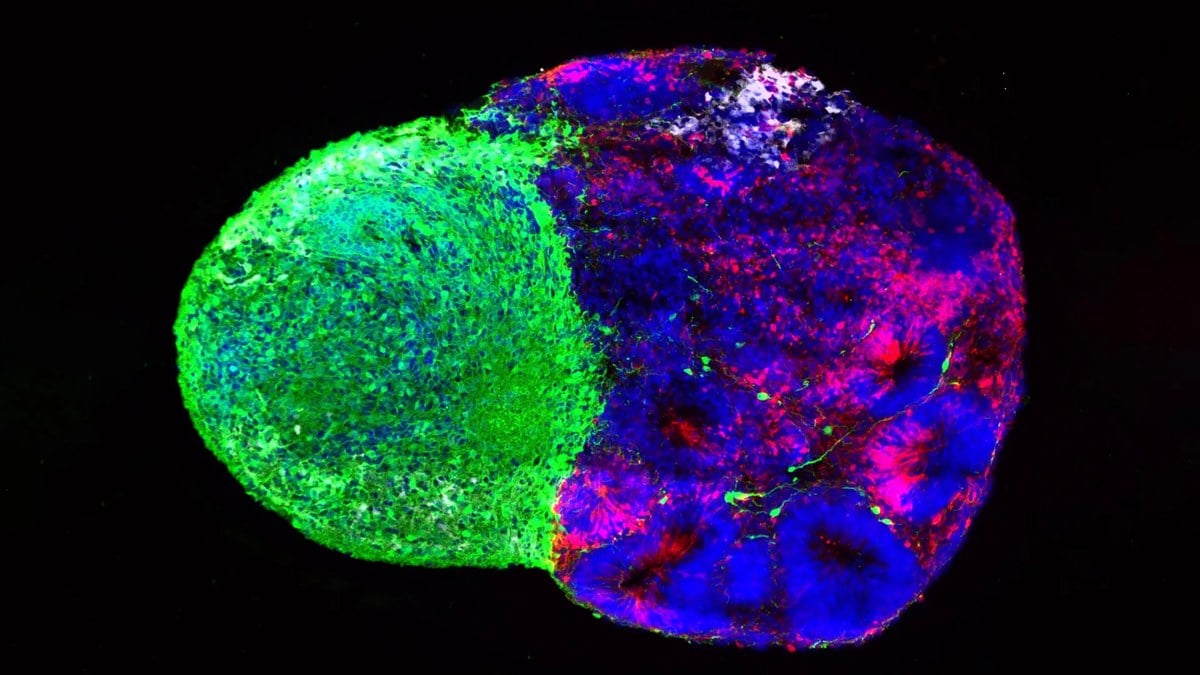
- Key facts & numbers: UCLA researchers published two studies in Cell and Science showing that radial glia stem cells respond to two distinct inputs — glucose metabolism via the pentose phosphate pathway and physical contact from thalamic projections — to determine cortical cell fate. In the Cell study, the team found that radial glia depend heavily on the pentose phosphate pathway; reducing glucose or disrupting that pathway caused the cells to produce more inhibitory neurons and later-stage cell types. The Science study used human brain "assembloids" to show thalamic projections physically touch radial glia during early development, driving the production of excitatory upper-layer neurons that are particularly expanded in the human cortex.
- What happens next: Two UCLA papers drop at once: glucose rerouting AND a literal thumbtack from the thalamus push radial glia to make specific neurons. Both signals are missing in mice.
- UCLA researchers published two studies in Cell and Science showing that radial glia stem cells respond to two distinct inputs — glucose metabolism via the pentose phosphate pathway and physical contact from thalamic projections — to determine cortical cell fate.
- In the Cell study, the team found that radial glia depend heavily on the pentose phosphate pathway; reducing glucose or disrupting that pathway caused the cells to produce more inhibitory neurons and later-stage cell types.
- The Science study used human brain "assembloids" to show thalamic projections physically touch radial glia during early development, driving the production of excitatory upper-layer neurons that are particularly expanded in the human cortex.
- Aparna Bhaduri said the physical thalamus-to-cortex contact "very likely does not exist in rodents," positioning it as a candidate mechanism behind uniquely human cortical expansion.
Why It Matters
Bhaduri's team says the physical thalamic contact 'very likely does not exist in rodents,' meaning decades of mouse-based brain-development work have missed a key input shaping human cortical expansion. The NRXN1 connection gives researchers a molecular handle on how early disruptions may contribute to autism-spectrum cortical imbalances.
Sources Cited
Related Coverage
Ask SkimNews