What we know about the link between Nepal’s flash floods and our climate crisis — SkimNews

Get the Energy newsletter
Daily energy & climate — solar, EVs, oil, the policy fights and tech bets shaping the transition. Free.
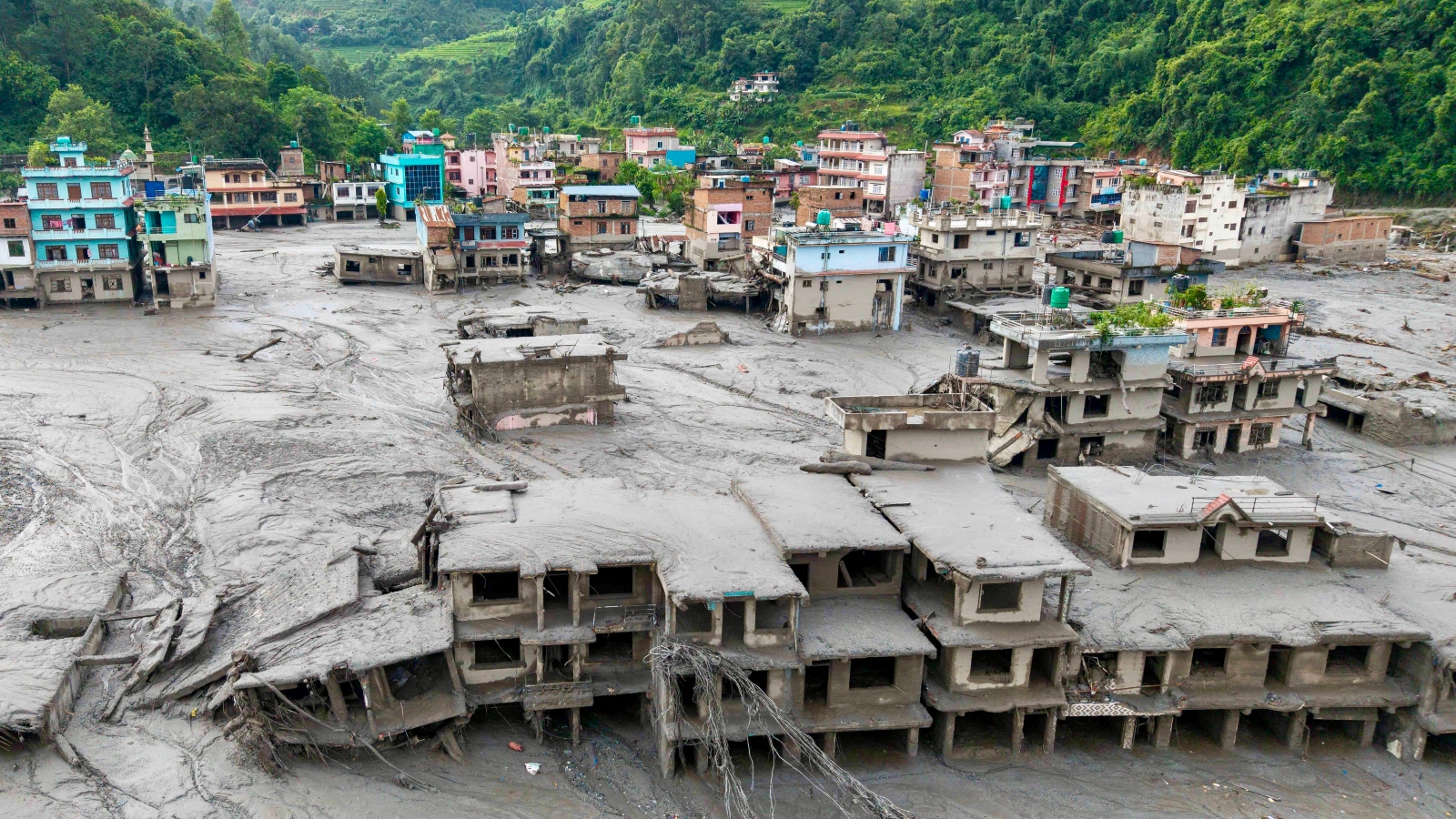
- Nepal's Langtang national park landslide sent rock and ice sliding 1,200 metres to the valley floor about 60km north of Kathmandu, with floodwater sweeping down the Lhende Khola valley at speeds approaching 150km/h and destroying homes, roads, bridges and power plants.
- The death toll approached 1,000 with more than 4,400 people missing on both sides of the Nepal-Tibet border, while water levels along the Trishuli river rose by as much as nine metres in half an hour.
- Satellite analysis showed bedrock beneath a glacier collapsed rather than a glacial outburst, with the landslide registering as a magnitude 5.2 seismic event — which one seismologist called "one of the largest in the last decade or two in the world."
- Nepal PM Balendra Shah called the catastrophe "not an ordinary" event on social media, saying Himalayan risks are increasing alongside climate change and urging the international community to address climate-driven disasters.
- The Himalayas are warming twice as fast as the global average, with UN data showing Nepal's mountains lost close to one-third of their ice in just over 30 years due to global heating.
- University of the Sunshine Coast's Adrian McCallum explained that rising temperatures cause more melt and water infiltration into rock and soil voids, "destabilis[ing] what once may have been a more solid rock mass."
- Nepal hosts more than 2,000 glacial lakes, 21 of which the UN classifies as potentially dangerous — though the article notes no GLOF caused last week's event, scientists warn melting permafrost is raising the baseline risk.
Why it matters: The disaster exposes how Himalayan nations face disproportionate climate risk — the region is warming twice the global average and has already lost a third of its glacial ice in 30 years. With 21 of Nepal's 2,000 glacial lakes flagged as potentially dangerous, future catastrophic floods are a stated possibility, and PM Shah is using the moment to demand coordinated international early-warning systems.
Ask SkimNews