UK Survey: Automated Nuclear Threats More Credible — SkimNews
Get the Tech newsletter
Daily tech — startups, AI labs, chips, the launches that shape the next decade. Free.
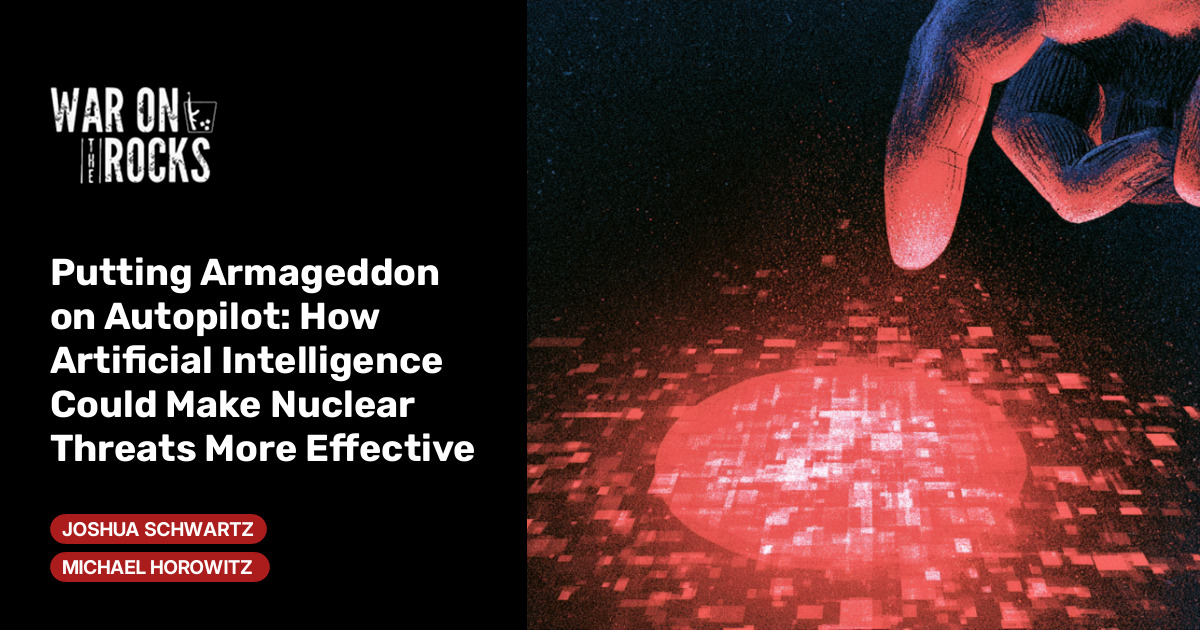
- War on the Rocks researchers surveyed over 100 current UK Members of Parliament and more than 1,000 British citizens with a hypothetical 2030 scenario in which Russia invaded Estonia and threatened nuclear attack against NATO if it intervened
- UK public respondents were over 13 percentage points more likely to believe Russia would launch nuclear weapons if its red line was violated when the threat was implemented through automation rather than human-controlled means
- UK Members of Parliament were 9 percentage points more likely to support backing down from protecting Estonia when Russia made an automated nuclear threat compared with a conventional human-controlled one
- Moscow deployed a semi-autonomous nuclear launch system called Dead Hand or Perimeter during the Cold War to guarantee retaliatory capability if Soviet leadership was killed in a US first strike
- Russia bears most responsibility for the expiration of New START and is developing nuclear-powered cruise missiles, nuclear-armed underwater drones, hypersonic glide vehicles, and a nuclear-armed anti-satellite weapon to circumvent missile defenses
- China is projected to grow from roughly 600 warheads today to approximately 1,500 by 2035, while North Korea continues expanding its nuclear arsenal and delivery systems
Why it matters: With nine nuclear-armed states, collapsed arms control, and Russia having already issued nuclear threats against Ukraine — where U.S. intelligence once estimated up to a 50% likelihood of Russian nuclear use — the survey finding that automation boosts threat credibility by 9 to 13 percentage points gives Western defense planners empirical reason to treat AI-enabled nuclear coercion as a near-term deterrence problem rather than a Hollywood abstraction.
Ask SkimNews