Iran Strikes US Gulf Bases; US Bombs Iranian Military Sites — SkimNews

Get the Geopolitics newsletter
Daily geopolitics — wars, elections, sanctions, the diplomatic moves that move markets. Free.
- Iran's Revolutionary Guard claimed it struck the U.S. base in Udairi, Kuwait — destroying three ammunition and storage sheds — and damaged a watchtower for the U.S. Navy's Fifth Fleet in Bahrain, as Bahrain and Jordan both reported intercepting additional Iranian aerial attacks on Friday.
- U.S.-led forces in the northern Iraqi city of Irbil shot down five explosive-laden drones near the airport, where American military advisers are based, with repeated blasts echoing across the Kurdish regional capital.
- The U.S. bombed a Revolutionary Guard naval base in northern Iran and struck targets on Qeshm Island (a hub for drone boats used in the Strait of Hormuz), in Isfahan province — home to a major airbase and one of Iran's nuclear sites — and in Khuzestan and Fars provinces, per the semiofficial outlets Fars and ISNA.
- Iranian Foreign Minister Abbas Araghchi vowed the Islamic Republic "will not bow" to U.S. bullying and pointed to ongoing discussions with China and Russia, even as U.S. embassies across the Middle East warned Americans their options for leaving the region could become more limited.
- Yemen's Iran-backed Houthis struck two Saudi-flagged oil tankers in the Red Sea on Thursday, making good on threats to close the Bab el-Mandeb Strait, through which roughly 12% of world trade — including one-quarter of global container traffic — passes.
- Brent crude held around $96 per barrel Friday, still sharply above its prewar ~$72 level, with U.S. gasoline averaging $4.11 per gallon and the Iranian Health Ministry reporting 3,434 people killed since the war began.
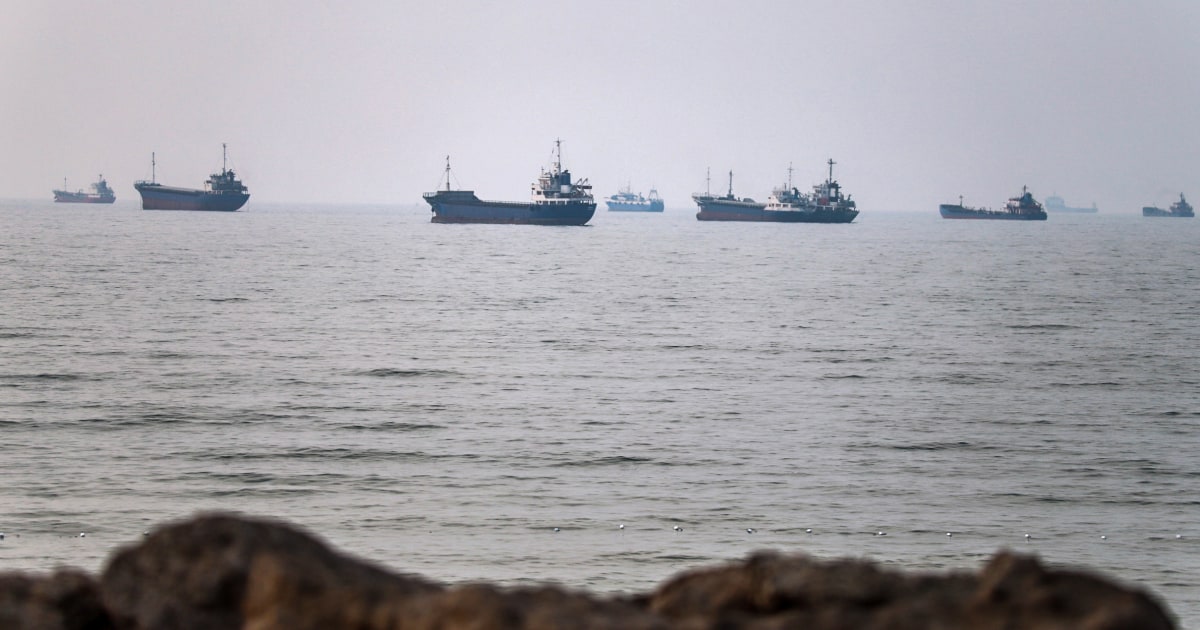
- The International Maritime Organization said at least 6,000 mariners are stranded on roughly 400 vessels around the Strait of Hormuz, prompting UN human rights chief Volker Türk to call for "urgent action" as some crews have been abandoned without food, water or medical care.
Why it matters: Iran's ability to effectively shut the Strait of Hormuz — which carried one-fifth of global oil and gas before the war — gives it negotiating leverage unmatched in recent conflicts, and with Houthi allies now threatening the Bab el-Mandeb chokepoint, roughly a quarter of global container traffic faces simultaneous disruption. The 6,000 stranded mariners and 3,434 reported Iranian deaths show the human cost extends far beyond the battlefield, while Brent at $96 and U.S. gas at $4.11/gallon make the economic pressure on American consumers already real, not theoretical.
Ask SkimNews