Forestry England Starts New Forest Wildfire Restoration — SkimNews

Get the Energy newsletter
Daily energy & climate — solar, EVs, oil, the policy fights and tech bets shaping the transition. Free.
- New Forest was damaged across more than 1 sq km (247 acres) after a fire spread from a blazing van on 9 August, damaging rare heathland and ancient woodland.
- Forestry England began a long-term restoration project, with teams protecting vulnerable areas before winter and spreading seed-rich heather from nearby forest over the worst-hit ground as a “protective mat.”
- New Forest’s surface peat was burned through in some boggy areas, reducing their ability to store carbon, as the fire moved underground and destroyed roots and seed banks.
- A31 was closed at the fire’s height for nearly two weeks; the blaze came during an exceptionally busy summer for Hampshire and Isle of Wight firefighters and was estimated to cost the fire service £600,000.
- Forestry England said the same heather-seeding technique restored an area damaged by a 1989 New Forest wildfire, which is now thriving after almost 40 years.
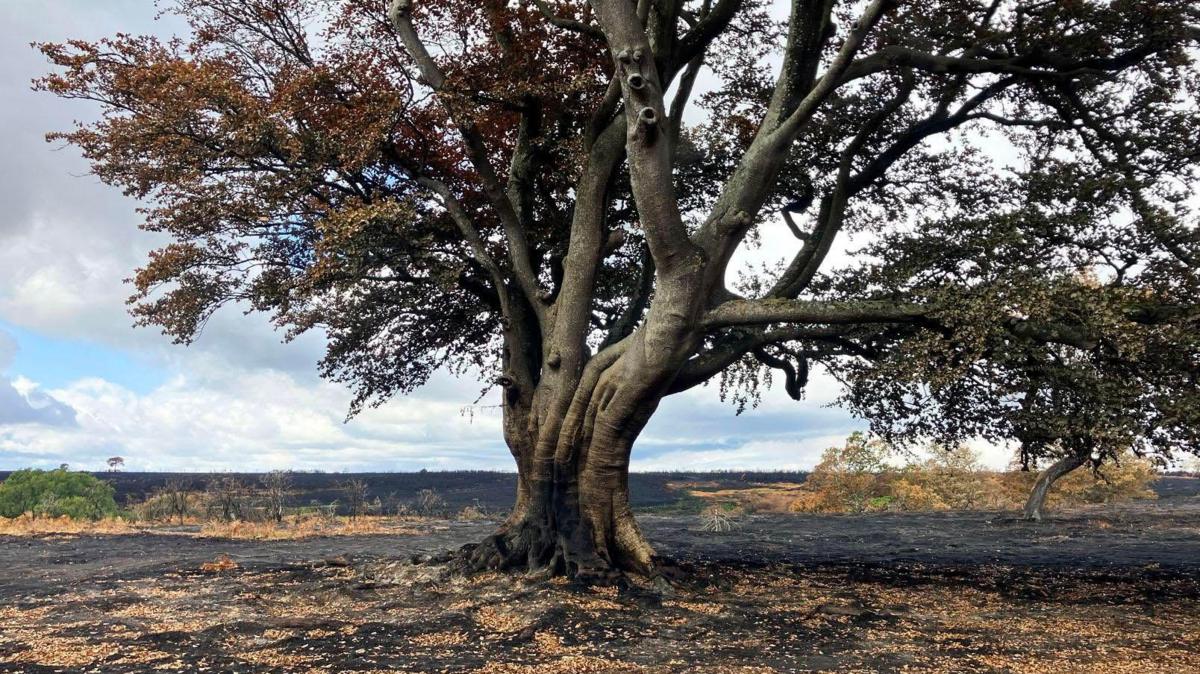
- Forestry England teams are exploring ways to protect vulnerable roots of ancient beech and oak trees damaged in the summer fire.
- Dave Morris said plants and wildlife are already returning in the New Forest’s boggy areas, which acted as a barrier, sustained the least damage and recovered quickest.
Why it matters: For Forestry England and the New Forest, the stakes go beyond charred vegetation: the 9 August fire damaged more than 1 sq km, closed the A31 for nearly two weeks and cost the fire service an estimated £600,000. Peat loss also reduced carbon storage, while recovery of the burned area will take many decades, making this long-term ecological repair.
Ask SkimNews