Trump's '57 Nukes' Remark Undermines Denuclearisation Goal — SkimNews
Get the Geopolitics newsletter
Daily geopolitics — wars, elections, sanctions, the diplomatic moves that move markets. Free.
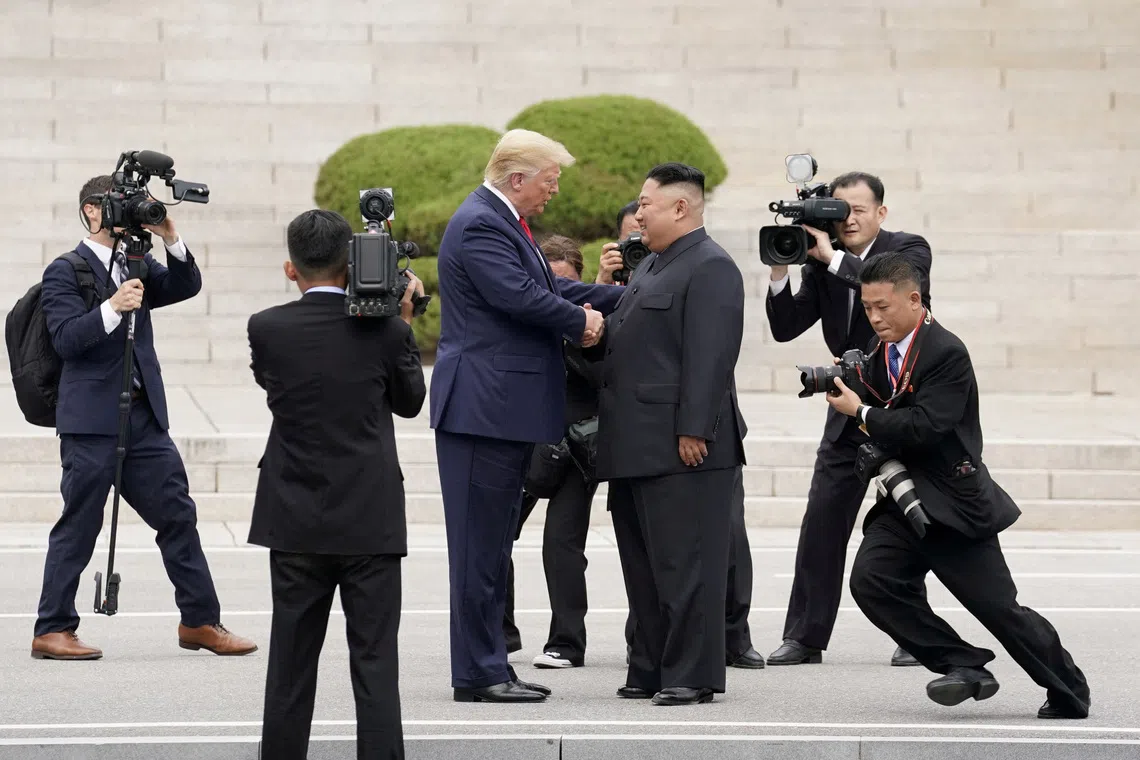
- Trump publicly acknowledged North Korea possesses "57 very powerful nuclear weapons," framing it as pragmatic threat management while expressing expectation to meet Kim Jong Un again this year, possibly at the November APEC summit in Shenzhen.
- The November 2025 Joint Fact Sheet between Trump and South Korean President Lee Jae Myung reiterated commitment to "the complete denuclearisation of the DPRK," creating a fundamental contradiction with Trump's current rhetoric.
- South Korea's Defence Minister Ahn Gyu-back was forced to officially maintain the policy of non-recognition of North Korea's nuclear status while carefully navigating questions about Trump's specific "57 nukes" assessment.
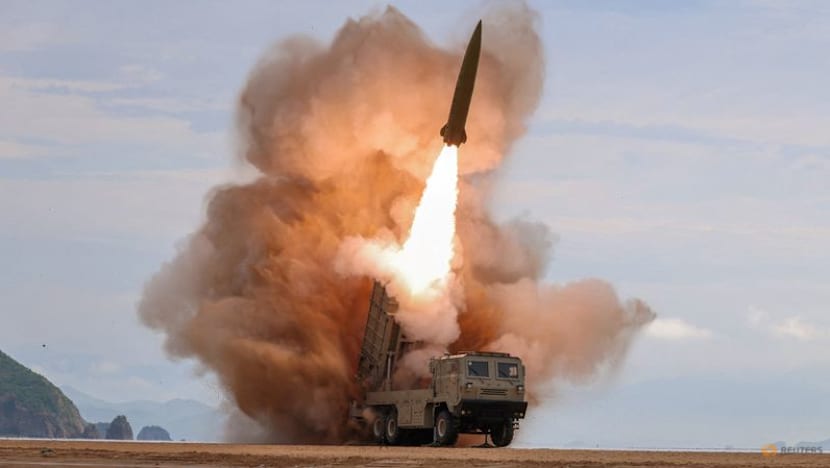
- Chinese Foreign Minister Wang Yi visited Seoul for the first time in five years, and his readout welcomed "peaceful coexistence" but entirely omitted the word "denuclearisation" — shortly after his departure, Pyongyang launched ~10 short-range ballistic missiles assessed as 600mm super-large MLRS.
- Ulchi Freedom Shield exercises were ordered "substantially reduced" by Trump, who framed them as costly and explicitly linked the cut to his relationship with Kim and his irritation over South Korea declining to join US actions against Iran.
- Kim Yo Jong responded to Trump's exercise cut by mocking the South Korean military as a "scarecrow army" that had "entrusted command to its master" — providing Pyongyang a wedge to bypass Seoul rather than triggering a peace process.
Why it matters: South Korea is caught in the contradiction: its defence minister must uphold non-recognition of North Korea's nuclear status while Trump treats the arsenal as a baseline fact. A deal freezing capabilities at "57 nukes" would turn denuclearisation from policy into diplomatic fiction — exactly the status quo China prefers to manage over pursuing disarmament.
Ask SkimNews