Sindoor's true scorecard: Pakistan ahead on more fronts — SkimNews

Get the Geopolitics newsletter
Daily geopolitics — wars, elections, sanctions, the diplomatic moves that move markets. Free.
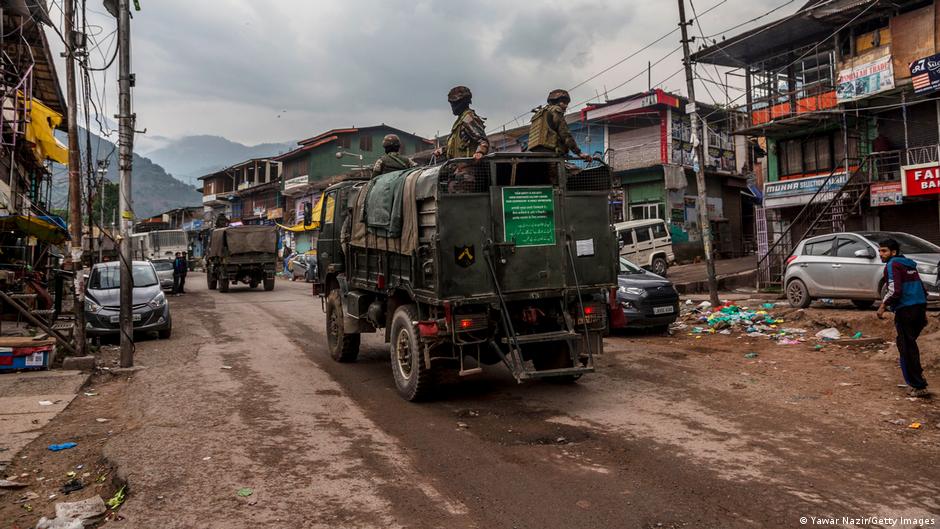
- Discovery Channel India released "Declassified: Operation Sindoor" on August 15, 2026 as New Delhi's most polished retelling of the 88-hour May 7–10, 2025 India-Pakistan confrontation; the analysis argues that when each front is scored separately, Pakistan's case holds up better than the film suggests.
- Pakistan won the air battle: Reuters, citing two US officials, reported Pakistani aircraft shot down at least two Indian jets, with RUSI's Justin Bronk assessing India lost a Rafale, a MiG-29 and probably a Su-30MKI, and India's own chief of defense staff Anil Chauhan acknowledging initial Indian losses.
- India won on standoff strikes: a Washington Post satellite investigation confirmed damage at six Pakistani airfields (Nur Khan, Bholari, Shahbaz, Mushaf, Sukkur and Rahim Yar Khan), with Pakistan's toll at 40 civilians and 11 military killed versus India's 16 civilians and 5 military.
- India's strikes did not translate into the doctrine it was actually testing — the Pakistan Air Force remained operational, its command structure and nuclear deterrent intact, no territory was lost, and the piece frames the operation as failing to establish the ability to "punish Pakistan without cost or consequence."
- Pakistan's defense-manufacturing sector was "running red hot" by January 2026 per Reuters, with weapons discussions active across 13 countries; the JF-17 fighter ($30–40 million) anchored reported deals including a roughly $4B Libya package (16 JF-17s), 40-plus in Indonesia, a ~$2B Saudi loan conversion into a squadron deployment, and a $900M Somalia order for 24 Block III aircraft.
- Pakistan expanded its diplomatic footprint after the guns fell silent — taking a mediation role sought by both sides in Libya, continuing US-Iran diplomacy, and earning the Financial Times's label as an emerging "hinge power" that the documentary has no footage to show.
Why it matters: If the air battle, standoff-strike follow-through, defense-industry and diplomatic fronts all tilt toward Pakistan as the article argues, India's claimed demonstration of a new ability to punish Pakistan without cost collapses — leaving New Delhi's deterrent narrative weaker and effectively handing Islamabad's JF-17 line the commercial dividend of the war.
Ask SkimNews