Joint U.S.-Israeli Strike Kills Iran's Khamenei — SkimNews

SkimNews Take
Wars in the Persian Gulf have historically redrawn energy markets, but the immediate fertilizer disruption suggests food-supply chains may react faster than oil futures — hitting import-dependent economies before any protracted energy crunch materializes.
Get the Geopolitics newsletter
Daily geopolitics — wars, elections, sanctions, the diplomatic moves that move markets. Free.
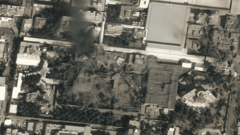
- Israel and the United States launched massive joint airstrikes on Iran on February 28, 2026, hitting government offices and military installations in a campaign the U.S. dubbed "Epic Fury" and Israel called "Roaring Lion," with stated goals of ending Iran's nuclear program, eliminating its missile stockpiles, and "creating conditions" for regime change
- Ayatollah Ali Khamenei was killed when an early Israeli missile struck a Tehran building, taking out the supreme leader and several senior government and military officials — the operation's immediate objective of "decapitating" Iran's leadership
- Iran retaliated with barrages of missiles and armed drones against U.S. bases in Bahrain, Kuwait, Oman, Qatar, Saudi Arabia, the UAE, Iraq, Jordan, and Türkiye, as well as a British base in Cyprus, while drones struck the U.S. embassies in Riyadh and Kuwait City and two drones landed in Azerbaijan
- Casualty figures as of March 6 included 1,300+ killed in Iran — at least 150 of them children at an elementary school in Minab — 80 Iranian sailors dead when a U.S. submarine sank an Iranian frigate off Sri Lanka, 11 Israelis, six U.S. military personnel killed in Kuwait, and 200+ dead in Lebanon
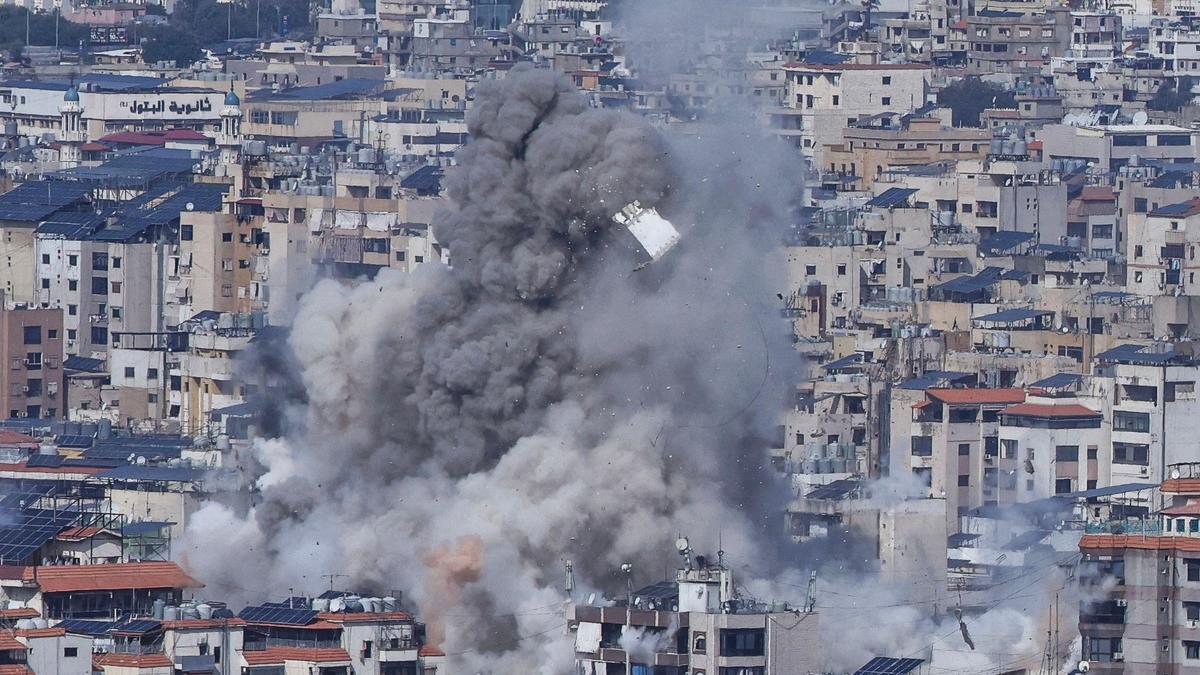
- Hizbollah fired salvoes at Israel as part of Iran's "forward defence" strategy, prompting Israel to send ground forces into southern Lebanon on March 5 and commence heavy bombing of Beirut's southern suburbs, while Iran-backed groups in Iraq launched rockets at U.S. bases and diplomatic installations
- Secretary of State Marco Rubio justified the U.S. attack as preemptive self-defense — arguing Israel was set to strike Iran, Iran would respond against U.S. bases, so Washington had to act first — a rationale the source describes as "transparently circular" that administration officials have struggled to defend
- The war is stifling oil and gas exports through the Strait of Hormuz, and European allies have offered little pushback despite Norway, Sweden, and Spain questioning the international legal basis — a restraint Crisis Group attributes to fears the U.S. will cut off support for Ukraine
Why it matters: Iran's retaliation struck military and civilian infrastructure across at least nine host countries and two U.S. embassies — a scope the source notes was "broader than many expected." With oil and gas exports through the Strait of Hormuz already stifled and European allies unwilling to challenge the operation's legal basis for fear of losing U.S. backing for Ukraine, the U.S.-Israeli axis is waging a multi-front war with limited external constraint.
Ask SkimNews