Single Cohesin Motors Form 60-70% of DNA Loops — SkimNews

Get the Health newsletter
Daily health & science — research, biotech, public health, the studies worth knowing. Free.
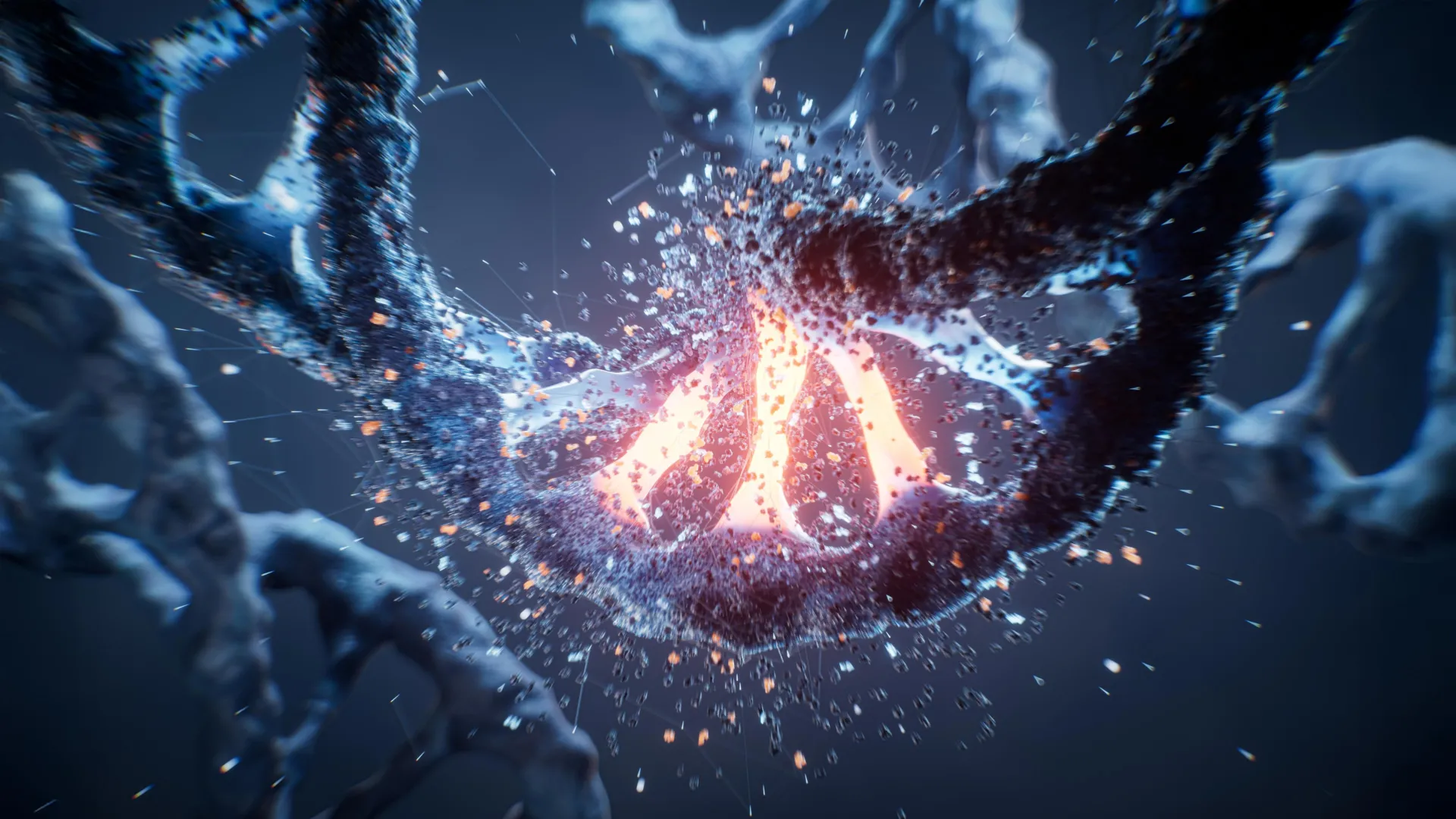
- Kirill Polovnikov and colleagues at Skoltech and the University of Potsdam used polymer physics and computer simulations to show that 60-70% of all DNA in a cell sits within loops, each formed by exactly one cohesin motor.
- The PNAS study analyzed 30+ Hi-C datasets from human and mouse cells and found approximately 6 loops per million base pairs — matching independent counts of 5-7 cohesin complexes per million base pairs almost one-to-one.
- The team built a physical model that separates real chromosome structure from artifacts of the Hi-C protocol (crosslinking, fragmentation, ligation), predicting a characteristic "dip" in contact probability at short genomic distances.
- In mouse cells with artificially degraded cohesin, loop density dropped in direct proportion to the amount of remaining protein — experimental confirmation of the theory.
- Polovnikov said the near-perfect match is "strong evidence" that individual cohesin complexes possess motor activity and extrude DNA loops on their own, challenging the textbook view that cohesin's main job is holding sister chromatids together.
- The authors released open-source code for extracting loop density from any Hi-C dataset, giving researchers a quantitative handle on genome architecture changes linked to cancer and developmental disorders.
Why it matters: The finding reframes cohesin from passive "molecular Velcro" into an active single-molecule motor that organizes 3D genome architecture throughout most of the cell's lifetime. For cancer biology — where disrupted spatial genome organization is increasingly seen as a driver of disease, not just a side effect — having a concrete loop-density metric (six per million base pairs) and open-source extraction tools turns Hi-C data, already sitting in public repositories, into a diagnostic resource it wasn't before.
Ask SkimNews