Smelling chocolate helped men complete more reps without feeling more tired — SkimNews
Get the Health newsletter
Daily health & science — research, biotech, public health, the studies worth knowing. Free.
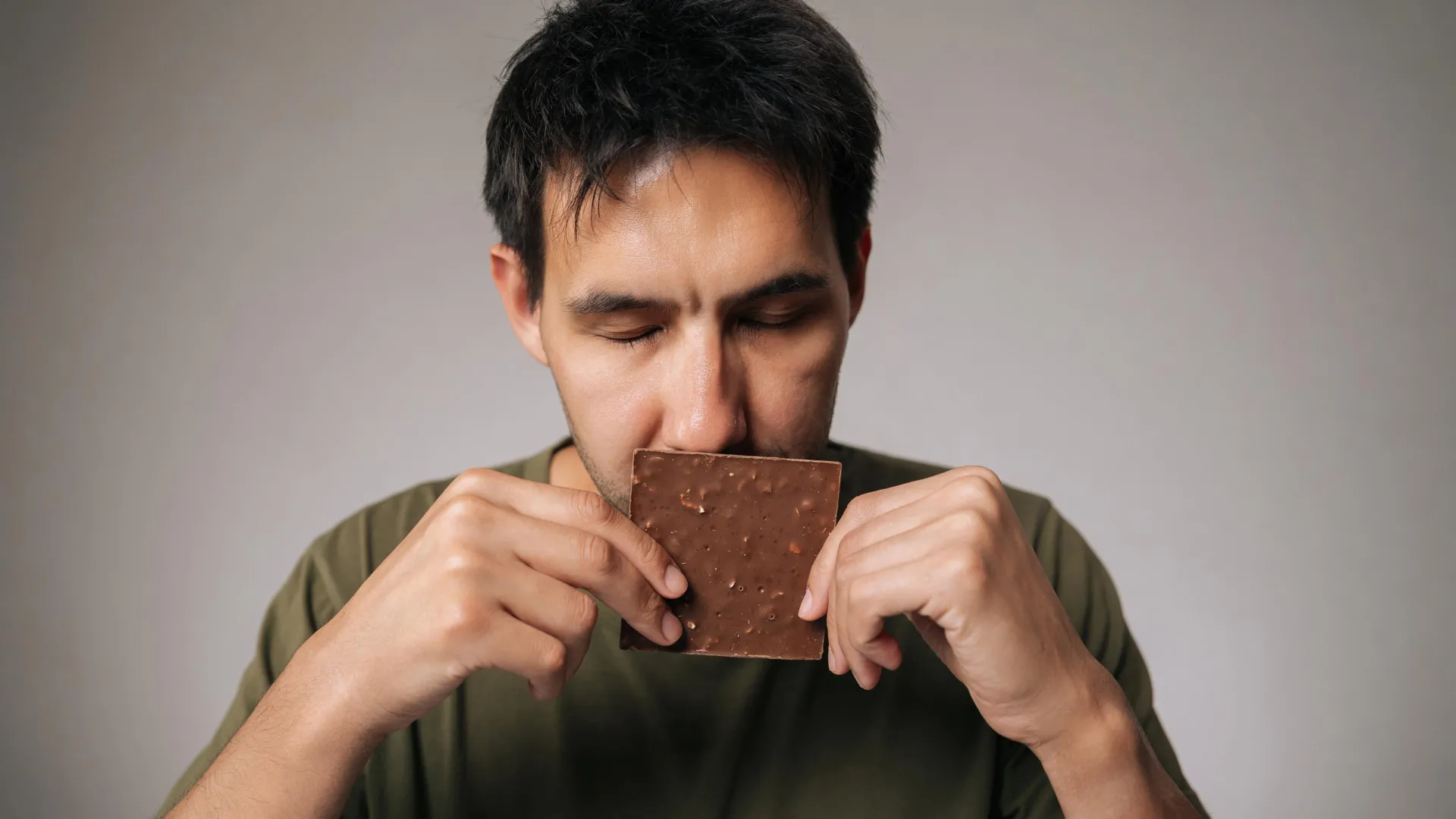
- Mohamed Nashrudin bin Naharudin and colleagues at the University of Malaya published a Frontiers in Physiology study in which 23 fasted, moderately trained men (early-to-mid 20s) completed significantly more leg extension reps when exposed to chocolate odors before and between sets, without reporting greater perceived exertion.
- Dark chocolate aroma (90% cocoa, liquefied) added approximately 18 leg extension repetitions and was associated with lower hunger and greater pre-exercise fullness, while milk chocolate (60% cocoa) added about 9 reps and was rated more pleasant — but did not significantly shift hunger, fullness, or desire to eat.
- The researchers attribute the split to learned food-odor associations: the dark chocolate scent acts as a 'learned cue for a rich, bitter, and highly satiating food' that tricks the system into anticipatory fullness, while milk chocolate operates as a 'hedonic reward cue' that enhances the sensory environment rather than metabolic hunger signals.
- Study limitations are substantial: only 23 healthy young men were tested, no blood hormones or neural activity were measured to confirm the proposed biological pathway, and the odorless water control was likely distinguishable from chocolate conditions, potentially unblinding participants.
- Senior author Naharudin said chocolate is 'not entirely unique,' suggesting other familiar, appealing food odors might yield comparable performance effects — a hypothesis the team has not yet tested.
Why it matters: For strength coaches and sports scientists, the finding points to olfactory priming — non-caloric scent exposure — as a candidate ergogenic aid worth pursuing. The 18-rep dark-chocolate gain in fasted men shows appetitive odors can alter both subjective hunger and resistance output, but the 23-person, all-male sample limits generalization until larger, more diverse trials replicate the result.
Ask SkimNews