Heritage: US Would Run Out of China-Fight Interceptors in Days — SkimNews
Get the Geopolitics newsletter
Daily geopolitics — wars, elections, sanctions, the diplomatic moves that move markets. Free.
- Heritage Foundation report warns the US would run out of interceptors "within days" of a China conflict, finding current stockpiles sit at "less than 10 percent" of what's required for a protracted high-intensity fight
- Operation Epic Fury consumed approximately 1,738 theater surface-to-air munitions in its first four days to defend against 565 Iranian ballistic missiles and 57 cruise missiles, according to the report
- Tom Karako, director of CSIS's Missile Defense Project, said the Pentagon's January production targets were set before the Iran war and are now too low after "we just lit off billions of dollars in a decade worth of production"
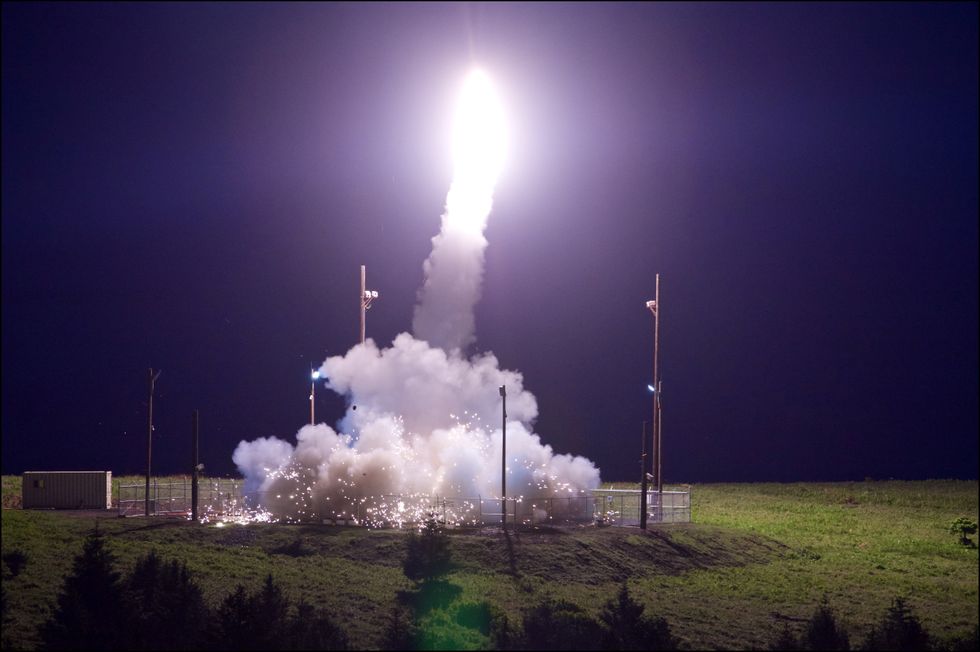
- Northrop Grumman, Lockheed Martin, and the Department of Defense announced a $3 billion agreement to quadruple THAAD interceptor production over seven years and triple solid rocket motor output by 2027
- Adm. Sam Paparo, head of US Indo-Pacific Command, told Congress in April that "current production timelines are misaligned with operational expenditures and the threats we face," flagging both missile shortfalls and the lack of solutions for cheap drones
- Volodymyr Zelenskyy met with Lockheed Martin on July 28 to discuss licensing Ukrainian production of PAC-3 missiles, but such an agreement would not yield usable interceptors until 2030
- The Heritage report notably omits how China could deploy low-cost drone warfare to further strain US interceptor supplies, a gap Adm. Paparo and Ukrainian commanders have already flagged on the battlefield
Why it matters: The Pentagon set its tripling-PAC-3 goal in January 2026 — before the Iran war burned through ~1,738 interceptors in four days — meaning even if contractors hit those targets, the math no longer adds up against a China scenario that demands sustained, high-volume missile defense. Ukraine's parallel struggle for Patriots shows the gap isn't theoretical, and any US-China contingency now inherits an interceptor deficit the Iran conflict made visible.
Ask SkimNews